
1. Introduction
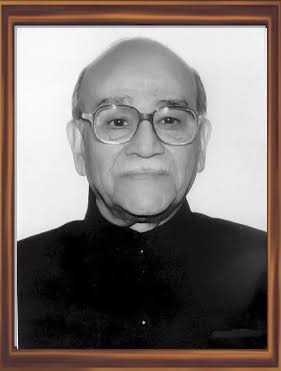
K. P. Kesava Menon was an Indian freedom fighter, nationalist, journalist, writer and social reformer who played an important role in Kerala’s contribution to India’s freedom movement.
He is best remembered as the founder-editor of Mathrubhumi, one of Kerala’s most influential Malayalam newspapers. Founded during the freedom struggle, Mathrubhumi became an important platform for spreading nationalist ideas and supporting the Indian National Congress movement in Malabar.
Kesava Menon was also an important participant in the Home Rule movement, the Non-Cooperation and Khilafat movements, and the Vaikom Satyagraha. He advocated social equality and was among the early leaders in Kerala to speak against untouchability.
In recognition of his contribution to public life, the Government of India awarded him the Padma Bhushan in 1966 in the field of Public Affairs. The official Gazette identifies him as the editor of Mathrubhumi in Kozhikode.
He was also an accomplished Malayalam writer. His autobiography Kazhinja Kaalam received the Sahitya Akademi Award in 1958.
2. Quick Facts
| Particular | Information |
|---|---|
| Full Name | Kizhakke Potta Kesava Menon |
| Commonly Known As | K. P. Kesava Menon |
| Malayalam Name | കെ. പി. കേശവ മേനോൻ |
| Date of Birth | 1 September 1886 |
| Place of Birth | Tharoor, Palakkad, Kerala |
| Nationality | Indian |
| Profession | Freedom Fighter, Journalist, Writer, Lawyer and Social Activist |
| Field of Achievement | Public Affairs, Journalism, Literature and India’s Freedom Movement |
| Known For | Founder-Editor of Mathrubhumi; Freedom Movement; Vaikom Satyagraha |
| Political Association | Indian National Congress |
| Years Active | Approximately 1915–1978 |
| Major Civilian Award | Padma Bhushan |
| Padma Bhushan Year | 1966 |
| Padma Bhushan Category | Public Affairs |
| Major Literary Award | Sahitya Akademi Award, 1958 |
| Autobiography | Kazhinja Kaalam |
| Date of Death | 9 November 1978 |
His date of birth, death, education and major activities are documented by the K. P. Kesava Menon Memorial Trust and other historical sources.
3. Award Information
Padma Bhushan – 1966
The most important national honour associated with K. P. Kesava Menon is the Padma Bhushan, which he received in 1966.
| Award Detail | Information |
| Award Name | Padma Bhushan |
| Award Category | Public Affairs |
| Award Year | 1966 |
| Awardee | Shri Kizhakke Potte Kesava Menon |
| State | Kerala |
| Presented By | President of India |
| Official Notification Date | 26 January 1966 |
| Exact Investiture Ceremony Date | Not independently verified from the official online record |
| Official Gazette Description | Editor, Mathrubhumi, Kozhikode |
The Government of India’s official Padma Awards database records him as a 1966 Padma Bhushan recipient in Public Affairs from Kerala.
The official Gazette issued on 26 January 1966 lists:
“Shri Kizhakke Potte Kesava Menon, Editor, Mathrubhumi, Kozhikode.”
Citation / Official Reason
The 1966 Gazette does not provide a long-form citation in the modern format. It identifies Kesava Menon as the Editor of Mathrubhumi, Kozhikode, while the official Padma database classifies his field as Public Affairs.
His recognition is best understood in the context of his decades of public service, nationalist journalism, participation in India’s freedom movement, social reform activities and leadership in public affairs.
Previous and Next Recipients
The Padma Bhushan is awarded to several people each year, so there is no single previous or next recipient.
For comparison, the 1965 Padma Bhushan recipients included people such as Air Vice Marshal Ramaswamy Rajaram, P. Chandra Lal and Dr. Bhalchandra Babaji Dikshit.
In 1967, Padma Bhushan recipients included Ramanathan Krishnan, Ravi Shankar, Vasantrao Bandoji Patil, Pupul Jayakar and Tara Cherian.
4. Why Did K. P. Kesava Menon Receive the Award?
K. P. Kesava Menon received the Padma Bhushan in 1966 in Public Affairs.
His public contribution developed over several decades.
He participated in India’s nationalist movement, worked within the Indian National Congress, supported the Home Rule movement, participated in the Non-Cooperation and Khilafat movements, and played a prominent role in the Vaikom Satyagraha.
His contribution to journalism was equally important. He helped establish Mathrubhumi in 1923 as a newspaper associated with the national movement. Under his leadership, the publication became an important voice for freedom and social reform in Kerala.
Therefore, his Padma Bhushan can be viewed as recognition of a lifetime of public service, nationalist leadership and journalism in the public interest.
5. Early Life
K. P. Kesava Menon was born on 1 September 1886 in Tharoor village near Palakkad, then part of the Malabar District of the Madras Presidency.
He was born to Bheeman Achan and Meenakshi Amma. The family was connected to the former Palakkad royal family.
His early education took place in the Palakkad and Kozhikode areas before he went to Madras for higher studies. He eventually travelled to England to study law.
His exposure to political ideas and the Indian nationalist movement strongly influenced his later life.
6. Education
Kesava Menon received his higher education in Madras and later went to England for legal training.
Arts Education
He graduated in Arts from the University of Madras.
Legal Education
He subsequently studied law in England and obtained his Bar-at-Law from Middle Temple.
His legal education prepared him for a career as a barrister, but his growing involvement in India’s nationalist movement eventually became a much more important part of his life.
His autobiography, Kazhinja Kaalam, also provides valuable information about his educational experiences and his time in England. The University of Kerala library catalog identifies the work as his autobiography.
7. Career Journey
Early Political Activities
After completing his education, Kesava Menon became associated with the Malabar Home Rule League.
He joined the Indian National Congress in 1915 and became active in nationalist politics. He also worked with the Home Rule movement associated with Annie Besant.
In 1917, he was part of the Home Rule League delegation that went to London to present a memorandum to the Secretary of State for India.
Lawyer and Nationalist
Kesava Menon practised law in Calicut/Kozhikode while simultaneously becoming increasingly involved in political activities.
He participated in the Non-Cooperation and Khilafat movements and became an important figure in the Kerala Pradesh Congress organisation.
Vaikom Satyagraha
In 1924, he played a leading role in the Vaikom Satyagraha in Travancore.
The movement began on 30 March 1924 and sought to secure access to the roads surrounding the Vaikom Mahadeva Temple for people who had been excluded because of caste restrictions.
Kesava Menon was among the leaders arrested during the agitation.
Founding of Mathrubhumi
One of his greatest contributions was the establishment of Mathrubhumi.
The Mathrubhumi Printing and Publishing Company was registered in February 1922, and the first issue of the newspaper appeared on 18 March 1923. Kesava Menon served as its founder-editor.
The newspaper was conceived as a platform for the national movement at a time when existing newspapers in Malabar did not sufficiently support the Congress-led freedom struggle.
Years in Malaya and Singapore
Kesava Menon spent several years in Malaya and Singapore, where he practised as a barrister and remained involved in Indian nationalist activities.
During the Second World War, he became involved with the Indian Independence League and the activities surrounding the Indian National Army. However, he later disagreed with aspects of the Japanese approach and was imprisoned by the Japanese in Singapore.
Return to India
After the Second World War, he returned to India and resumed his association with Mathrubhumi.
He also became involved in the movement for a united Kerala, contributing to the Aikya Kerala movement.
High Commissioner to Ceylon
After independence, Kesava Menon served as India’s High Commissioner in Ceylon (now Sri Lanka) for a period.
Correspondence preserved in the Nehru Archive confirms his role as India’s High Commissioner in Ceylon in 1952.
Later Years
He continued his association with Mathrubhumi and remained a prominent public figure, writer and elder statesman of Kerala.
He died on 9 November 1978.
8. Major Achievements
1. Founder of Mathrubhumi
His most visible institutional contribution was the establishment of Mathrubhumi.
The first issue appeared in March 1923, and the newspaper became closely associated with Kerala’s freedom movement.
2. Leadership in the Freedom Movement
He was an active participant in the Indian National Congress and the Home Rule movement and contributed to the nationalist movement in Malabar.
3. Vaikom Satyagraha
He was one of the prominent leaders of the Vaikom Satyagraha and was imprisoned for his participation.
4. Opposition to Untouchability
Kesava Menon was among the early leaders in Kerala who argued for the abolition of untouchability and social discrimination.
5. Journalism for Nationalism
He used journalism as a tool for spreading ideas of freedom, political awareness and social reform.
6. Contribution to Aikya Kerala
He supported the movement for the formation of a united Kerala and wrote extensively on the subject.
7. Literary Contribution
He wrote numerous books and essays in Malayalam, including his autobiography Kazhinja Kaalam.
9. Contribution to the Nation
K. P. Kesava Menon’s contribution to India can be understood through four major areas.
Freedom Struggle
He devoted a substantial part of his life to India’s struggle for independence.
Journalism
Through Mathrubhumi, he helped create a powerful Malayalam-language platform for nationalist ideas.
The newspaper’s official history describes it as having been conceived as a mouthpiece of India’s freedom movement.
Social Reform
He supported the struggle against untouchability and caste discrimination and participated in movements that sought greater social equality.
Nation Building
After independence, his public service continued through diplomatic responsibilities, support for the Aikya Kerala movement and his continued contribution to journalism and public life.
His career therefore extended from anti-colonial activism to post-independence nation building.
10. Other Awards and Honours
Sahitya Akademi Award – 1958
Kesava Menon received the Sahitya Akademi Award in 1958 for his Malayalam autobiography Kazhinja Kaalam.
He was one of the earliest recipients of the Sahitya Akademi Award for Malayalam literature.
Padma Bhushan – 1966
He received the Padma Bhushan in 1966 in the field of Public Affairs.
Honorary Doctorate
The University of Calicut conferred an honorary D.Litt. posthumously in 1987 according to biographical records.
Important Note
Some secondary sources contain inconsistent claims about additional honours. For a blog, it is safest to list the Sahitya Akademi Award, Padma Bhushan and posthumous honorary D.Litt. unless you have archival documentation for other awards.
11. Legacy and Influence
K. P. Kesava Menon’s legacy is particularly strong in Kerala’s political, journalistic and literary history.
His most enduring institutional legacy is Mathrubhumi. The newspaper that began during the freedom struggle eventually became a major Malayalam media organisation. Its own historical account identifies Kesava Menon as its prominent founding editor and describes its origins in the national movement.
His legacy also survives through the ideals associated with his public life:
- National independence
- Freedom of expression
- Social equality
- Opposition to untouchability
- Democratic values
- Malayalam journalism
- Literary writing
- Public service
- Kerala’s linguistic and cultural identity
He is therefore remembered not merely as a journalist, but as one of the important public figures who connected Kerala’s social reform, journalism and freedom struggle.
12. Interesting Facts
- K. P. Kesava Menon was born in 1886, decades before Indian independence.
- He studied Arts at the University of Madras.
- He qualified as a Barrister-at-Law from Middle Temple.
- He joined the Indian National Congress in 1915.
- He was associated with Annie Besant’s Home Rule movement.
- He participated in the Vaikom Satyagraha and was imprisoned.
- He was one of the founders behind Mathrubhumi.
- The first issue of Mathrubhumi appeared on 18 March 1923.
- Mahatma Gandhi visited the Mathrubhumi office in Kozhikode on 13 January 1934.
- Kesava Menon spent several years practising law in Malaya and Singapore.
- He was imprisoned by the Japanese during the Second World War.
- He served as India’s High Commissioner in Ceylon after independence.
- His autobiography is titled Kazhinja Kaalam.
- Kazhinja Kaalam won the Sahitya Akademi Award in 1958.
- He received the Padma Bhushan in 1966.
- His Padma Bhushan category was Public Affairs.
- He died on 9 November 1978.
- A road in Kozhikode is associated with his name, reflecting his importance to the history of Mathrubhumi and the city.
13. Quotes
One of the best-documented statements associated directly with Kesava Menon’s vision for Mathrubhumi concerns the influence of Mahatma Gandhi’s Young India.
He explained:
“When Mathrubhumi was started, the best model to run a newspaper was ‘Young India’, published under the editorship of Gandhiji.”
This statement is useful for understanding the philosophy behind Mathrubhumi: Kesava Menon regarded journalism as an instrument that could support the national movement and educate the public.
Blogger’s Legacy Quote
You can also use the following as a blogger-written summary, but do not attribute it directly to Kesava Menon:
“K. P. Kesava Menon used journalism, public service and social activism as instruments for India’s freedom and Kerala’s social awakening.”
14. Timeline
| Year | Event |
| 1886 | Born on 1 September at Tharoor near Palakkad |
| Early 1900s | Pursued higher education in Madras |
| 1910s | Studied law in England and qualified from Middle Temple |
| 1915 | Joined the Indian National Congress |
| 1917 | Associated with the Home Rule League delegation to London |
| 1910s–1920s | Participated in nationalist, Non-Cooperation and Khilafat activities |
| 1922 | Mathrubhumi Printing and Publishing Company registered |
| 1923 | First issue of Mathrubhumi published on 18 March |
| 1924 | Played a leading role in the Vaikom Satyagraha and was arrested |
| 1920s–1930s | Continued nationalist journalism and public activities |
| 1934 | Mahatma Gandhi visited the Mathrubhumi office in Kozhikode |
| 1940s | Spent time in Malaya and Singapore and remained involved in nationalist activities |
| 1945–1946 | Returned to India after the Second World War |
| Late 1940s | Resumed leadership and editorial work at Mathrubhumi |
| Late 1940s/early 1950s | Served as India’s High Commissioner in Ceylon |
| 1958 | Received Sahitya Akademi Award for Kazhinja Kaalam |
| 1966 | Received Padma Bhushan for Public Affairs |
| 1970s | Continued writing and public service |
| 1978 | Died on 9 November |
| 1987 | University of Calicut reportedly conferred an honorary D.Litt. posthumously |
The chronology combines records from Mathrubhumi, the K. P. Kesava Menon Memorial Trust, University of Calicut-related records and government/academic sources.
15. References
1. Government of India – Padma Awards
The official Padma Awards database confirms that K. P. Kesava Menon received the Padma Bhushan in 1966 under Public Affairs, Kerala.
2. Gazette of India – Padma Awards 1966
The official Gazette dated 26 January 1966 lists him as:
“Shri Kizhakke Potte Kesava Menon, Editor, Mathrubhumi, Kozhikode.”
3. Mathrubhumi – History
This is useful for information about the founding of Mathrubhumi and Kesava Menon’s role as founder-editor.
4. Mathrubhumi – Birth of Mathrubhumi
This provides detailed historical information about the establishment and first publication of the newspaper.
5. K. P. Kesava Menon Memorial Trust
K. P. Kesava Menon Memorial Trust
This source provides biographical information about his life, education, political activities and writing.
6. University of Kerala Library
The University of Kerala library catalog identifies Kazhinja Kaalam as Kesava Menon’s autobiography.
7. Nehru Archive
The Nehru Archive contains correspondence between Jawaharlal Nehru and K. P. Kesava Menon concerning Ceylon, confirming Menon’s diplomatic role there.
8. University of Calicut / Academic Sources
University-related records and academic sources document Kesava Menon’s role in Kerala’s freedom movement, Aikya Kerala movement and literature.
16. Related Personalities
Mahatma Gandhi
Gandhi’s ideas strongly influenced Kesava Menon and the philosophy behind Mathrubhumi. Gandhi also visited the Mathrubhumi office in Kozhikode in 1934.
K. Madhavan Nair
K. Madhavan Nair was one of the important colleagues involved in establishing Mathrubhumi and served as its first Managing Director.
K. Kelappan
Known as the “Kerala Gandhi,” K. Kelappan was another major figure in Kerala’s nationalist movement and was associated with the Vaikom Satyagraha and Mathrubhumi.
T. K. Madhavan
T. K. Madhavan was one of the leading figures associated with the Vaikom Satyagraha and the campaign against caste-based restrictions.
George Joseph
George Joseph was another prominent leader associated with the Vaikom Satyagraha and the wider nationalist movement.
Periyar E. V. Ramasamy
Periyar participated in the Vaikom Satyagraha and became one of its most prominent leaders.
Mannathu Padmanabhan
Mannathu Padmanabhan was another major social reformer and freedom movement leader from Kerala. He was also a 1966 Padma Bhushan recipient, in the field of Social Work.
17. Frequently Asked Questions (FAQ)
Who was K. P. Kesava Menon?
K. P. Kesava Menon was an Indian freedom fighter, journalist, writer, lawyer and social activist. He was the founder-editor of Mathrubhumi and an important figure in Kerala’s freedom movement.
When was K. P. Kesava Menon born?
He was born on 1 September 1886 at Tharoor near Palakkad in present-day Kerala.
What is K. P. Kesava Menon famous for?
He is best known for founding and editing Mathrubhumi and for his participation in India’s freedom struggle, especially the Vaikom Satyagraha.
Which award did K. P. Kesava Menon receive?
He received the Padma Bhushan in 1966.
In which category did K. P. Kesava Menon receive the Padma Bhushan?
His Padma Bhushan was awarded in the field of Public Affairs.
Why did K. P. Kesava Menon receive the Padma Bhushan?
He was recognised for his long contribution to public affairs, nationalist activities, journalism and public life. The official Gazette identifies him as the editor of Mathrubhumi, while the Padma database classifies the award under Public Affairs.
What was Mathrubhumi’s role in the freedom struggle?
Mathrubhumi was founded as a publication supporting India’s national movement. Its first issue appeared on 18 March 1923, and it became an important Malayalam voice for the freedom struggle.
Did K. P. Kesava Menon participate in the Vaikom Satyagraha?
Yes. He was one of the prominent leaders of the Vaikom Satyagraha and was arrested during the movement.
What was K. P. Kesava Menon’s educational qualification?
He graduated in Arts from the University of Madras and obtained his Bar-at-Law from Middle Temple in England.
What was K. P. Kesava Menon’s autobiography?
His autobiography is called Kazhinja Kaalam.
Did he receive the Sahitya Akademi Award?
Yes. He received the Sahitya Akademi Award in 1958 for Kazhinja Kaalam in Malayalam.
Did K. P. Kesava Menon serve as a diplomat?
Yes. He served as India’s High Commissioner in Ceylon, now Sri Lanka. Correspondence preserved in the Nehru Archive confirms his diplomatic role.
When did K. P. Kesava Menon die?
He died on 9 November 1978.
What is K. P. Kesava Menon’s greatest legacy?
His greatest legacy is the combination of nationalist journalism, public service and social activism. Through Mathrubhumi, he helped make journalism an important instrument of Kerala’s freedom movement.
Conclusion
K. P. Kesava Menon occupies an important place in the history of Kerala and India’s freedom movement. He was not only a freedom fighter but also a lawyer, journalist, writer and public servant.
His decision to establish Mathrubhumi in 1923 gave Kerala’s national movement an influential Malayalam-language newspaper. His participation in the Vaikom Satyagraha demonstrated his commitment to social equality, while his involvement in the Home Rule and Congress movements reflected his dedication to India’s independence.
His literary achievements were also significant. His autobiography Kazhinja Kaalam received the Sahitya Akademi Award in 1958, demonstrating that his influence extended beyond politics and journalism into Malayalam literature.
In 1966, the Government of India honoured him with the Padma Bhushan in Public Affairs, recognising a lifetime of contribution to public life.
K. P. Kesava Menon’s life ultimately represents the powerful connection between freedom, journalism, social reform and public service. His legacy continues through Mathrubhumi and through the historical memory of Kerala’s role in India’s struggle for independence.
About the Author