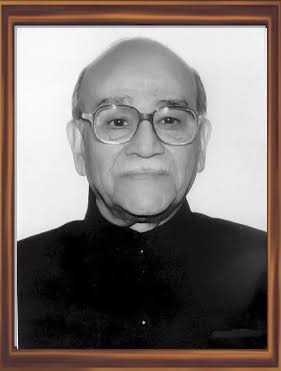


Jainendra Kumar (2 January 1905 – 24 December 1988) was a seminal pioneer of modern Hindi literature. Renowned as one of the finest psychological fiction writers of the 20th century, he deeply explored human relationships, individual freedom, existential angst, and moral dilemmas, steering Hindi fiction away from conventional realism toward deep introspection.
2. Quick Facts
- Full Name: Jainendra Kumar
- Native Name: जैनेंद्र कुमार
- Date of Birth: 2 January 1905
- Place of Birth: Kodiyaganj, Aligarh district, United Provinces, British India
- Nationality: Indian
- Occupation/Profession: Novelist, Short Story Writer, Essayist, Philosopher
- Field of Achievement: Hindi Literature and Psychological Fiction
- Years Active: 1920s–1980s
3. Award Information
- Award Name: Padma Bhushan
- Award Category: Civil Honour (Third-Highest Civilian Award in India)
- Award Year: 1971
- Presented By: Government of India (President of India)
- Date of Ceremony: Republic Day Honours List, 1971
- Citation/Official Reason: Recognized for distinguished and exceptional service to literature and education.
- Previous Recipients: Eminent literary figures, artists, and public intellectuals of India.
- Next Recipients: Notable figures of subsequent annual civilian honours lists.
4. Why He Received the Award
Jainendra Kumar was awarded the Padma Bhushan in 1971 in recognition of his monumental contributions to Hindi literature. Through epoch-making psychological novels like Sunita and Tyagapatra, along with reflective essays deeply influenced by Gandhian philosophy and existential humanism, he fundamentally reshaped the intellectual canvas of modern Indian writing.
5. Early Life
Born as Anandi Lal in Kodiyaganj, Uttar Pradesh, he lost his father at an early age and was raised by his mother and maternal uncle (Abol Chand) in Hastinapur. Influenced intensely by the Indian independence movement, he dropped out of college in response to Mahatma Gandhi’s Non-Cooperation Movement in 1921, joining the national struggle and spending time in nationalist institutions like the Kashi Vidyapith.
6. Education
- Schooling: Completed early education under the care of his family and local pathshalas.
- Higher Education: Attended the Banaras Hindu University (BHU) and later the nationalist-run Kashi Vidyapith, where he studied political science, philosophy, and literature alongside iconic contemporaries.
7. Career Journey
- National Movement & Journalism (1920s): Active participant in India’s freedom struggle; later engaged with Hindi journalism and editorial work.
- Literary Breakthrough (1928–1930s): Rose to sudden fame with his debut psychological novel Parakh (1929), which won the Hindustan Academy Award.
- Prolific Publishing (1930s–1970s): Authored dozens of novels, short story collections, and philosophical essays, including milestones like Sunita (1935) and Tyagapatra (1937).
- Literary Leadership: Served as an influential voice in pan-Indian literary forums, championing individual freedom and Gandhian human values.
8. Major Achievements
- Authored Tyagapatra (The Resignation), widely regarded as a masterpiece of psychological realism in Indian literature.
- Received the Sahitya Akademi Award in 1966 for his novelette Muktibodh.
- Conferred the Sahitya Akademi Fellowship in 1979, the highest honor bestowed by India’s national academy of letters.
- Awarded the Padma Bhushan by the Government of India in 1971.
9. Contribution to the Nation
Jainendra Kumar brought deep philosophical introspection and psychoanalytical depth to Hindi literature, shifting narrative focus from external social events to internal human consciousness. His works examined the conflict between societal norms and individual morality with absolute fearlessness. Furthermore, his active involvement in the freedom movement and his lifelong dedication to Gandhian ideology—reflected in works like Akal Purush Gandhi—helped anchor moral integrity within modern Indian civic discourse.
10. Other Awards and Honours
- Hindustan Academy Award (1929) – For his novel Parakh.
- Sahitya Akademi Award (1966) – For Muktibodh.
- Padma Bhushan (1971) – Conferred by the President of India.
- Sahitya Akademi Fellowship (1979) – Highest literary fellowship in India.
11. Legacy and Influence
Jainendra Kumar is universally credited with introducing the psychological and philosophical novel (Manovigyanik Upanyas) to Hindi literature, paving the way for later legends like Agyeya and Ila Chandra Joshi. His exploration of female psychology, moral autonomy, and individual suffering in novels like Tyagapatra remains vital to modern literary criticism and feminist discourse in South Asia.
12. Interesting Facts
- He was originally named Anandi Lal by his family before he chose the pen name “Jainendra.”
- He shared a close, lifelong personal bond with Mahatma Gandhi and prominent national figures, frequently translating Gandhian economic and social theories into literary narratives.
- Despite writing heavy, philosophical texts dealing with complex guilt, morality, and desire, he was known in person for his gentle, soft-spoken, and ascetic demeanor.
13. Quotes
“True freedom does not mean doing whatever one pleases; it means having the moral strength to choose what is right, even when the entire world expects you to conform.” — Jainendra Kumar (Reflecting his philosophy of individual autonomy)
14. Timeline
| Year | Milestone |
| 1905 | Born on January 2 in Kodiyaganj, United Provinces. |
| 1921 | Left college to join the Non-Cooperation Movement launched by Mahatma Gandhi. |
| 1929 | Published his breakthrough novel Parakh, winning the Hindustan Academy Award. |
| 1937 | Published his iconic psychological masterpiece, Tyagapatra. |
| 1966 | Awarded the Sahitya Akademi Award for Muktibodh. |
| 1971 | Conferred the Padma Bhushan by the Government of India. |
| 1979 | Awarded the highest Sahitya Akademi Fellowship. |
| 1988 | Passed away on December 24 in New Delhi at the age of 83. |
15. References
- Wikipedia contributors. “Jainendra Kumar.” Wikipedia, The Free Encyclopedia.
- Sahitya Akademi – Official Award Archives and Fellowship Records.
- Ministry of Home Affairs, Government of India – Padma Awards Directory.
- Ram Swarup Chaturvedi. A History of Hindi Literature. Sahitya Akademi.
16. Related Personalities
- Agyeya (S.H. Vatsyayan) – Iconic Hindi poet, novelist, and close contemporary who advanced psychological fiction.
- Mahatma Gandhi – Guiding philosophical influence on Kumar’s essays and life perspective.
- Premchand – Legendary Hindi novelist and literary peer with whom Kumar shared deep intellectual exchanges.
- Muktibodh – Noted Hindi poet and writer, the subject of Kumar’s Sahitya Akademi-winning study.
17. Frequently Asked Questions (FAQ)
Q: Who was Jainendra Kumar?
A: Jainendra Kumar was a celebrated 20th-century Indian author and philosopher who revolutionized Hindi literature with his psychological and introspective novels.
Q: What are his most famous literary works?
A: His most celebrated works include the novels Tyagapatra, Sunita, and Parakh, alongside the short story collection Pajeb.
Q: What prestigious awards did he receive?
A: He received the Sahitya Akademi Award (1966), the Padma Bhushan (1971), and the Sahitya Akademi Fellowship (1979).
Q: When did he pass away?
A: He passed away on December 24, 1988, at the age of 83.
About the Author