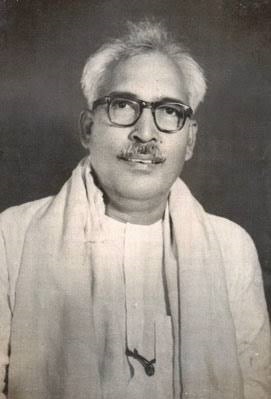
1. Introduction
Hazari Prasad Dwivedi (19 August 1907 – 19 May 1979) was one of the most influential Hindi writers, literary critics, historians, and scholars of the 20th century. He made remarkable contributions to Hindi literature through his essays, novels, criticism, and research on medieval Indian literature, especially the Bhakti movement and the works of Kabir.
A renowned scholar of Sanskrit, Hindi, and Indian culture, Dwivedi served as a professor and head of the Hindi department at Banaras Hindu University and later at Visva-Bharati University. For his outstanding contribution to literature and education, he was awarded the Padma Bhushan in 1957.
2. Quick Facts
| Item | Details |
|---|---|
| Full Name | Acharya Hazari Prasad Dwivedi |
| Native Name | आचार्य हजारी प्रसाद द्विवेदी (Hindi) |
| Date of Birth | 19 August 1907 |
| Place of Birth | Dubey Ka Chhapra, Ballia District, United Provinces, British India (present-day Uttar Pradesh, India) |
| Date of Death | 19 May 1979 |
| Nationality | Indian |
| Occupation / Profession | Writer, Literary Critic, Scholar, Professor, Historian |
| Field of Achievement | Hindi Literature, Literary Criticism, Indian Cultural Studies |
| Years Active | 1930s–1979 |
| Known For | Research on Bhakti literature, Hindi criticism, historical novels |
3. Award Information
| Item | Details |
|---|---|
| Award Name | Padma Bhushan |
| Award Category | Literature & Education |
| Award Year | 1957 |
| Presented By | President of India |
| Date of Ceremony | 26 January 1957 (award announced; investiture held later) |
| Citation / Official Reason | Distinguished contribution to literature, education, and Hindi scholarship |
| Previous Recipients | Not applicable (annual civilian honour) |
| Next Recipients | The Padma Bhushan continued to be awarded annually |
4. Why Did Hazari Prasad Dwivedi Receive the Award?
Hazari Prasad Dwivedi received the Padma Bhushan for his outstanding contributions to Hindi literature and education.
His achievements included:
- Research and interpretation of medieval Hindi literature.
- Major contributions to literary criticism.
- Promotion of Hindi language and Indian cultural studies.
- Scholarly work on the Bhakti movement.
- Development of modern Hindi prose and academic writing.
His writings helped create a deeper understanding of India’s literary and cultural traditions.
5. Early Life
Hazari Prasad Dwivedi was born on 19 August 1907 in Dubey Ka Chhapra village, Ballia district, Uttar Pradesh. He belonged to a traditional scholarly family with a strong background in Sanskrit learning.
His early environment exposed him to Indian scriptures, classical literature, astrology, and philosophy, which influenced his later academic career.
6. Education
Dwivedi received traditional education in Sanskrit and Indian philosophy.
He studied:
- Sanskrit literature.
- Astrology and classical Indian texts.
- Hindi literature.
- Indian philosophy and culture.
He later became a highly respected scholar and educator, combining traditional Indian knowledge with modern literary criticism.
7. Career Journey
Early Career
- Began his academic career at Visva-Bharati University in 1930.
- Worked closely with Rabindranath Tagore and other scholars.
- Developed deep interest in Indian culture and comparative literature.
Academic Career
- Served as a professor and later Head of the Hindi Department at Banaras Hindu University.
- Guided research scholars and promoted Hindi studies.
- Became one of India’s leading literary historians.
Literary Career
He wrote:
- Essays.
- Literary criticism.
- Historical novels.
- Research works.
- Cultural studies.
His writing style combined scholarship with creativity.
8. Major Achievements
- Recognized as one of the greatest Hindi literary critics.
- Produced important studies on the Bhakti movement.
- Wrote famous novels:
- Banabhatta Ki Atmakatha
- Charuchandralekha
- Anamdas Ka Potha
- Punarnava
- Authored important critical works:
- Kabir
- Hindi Sahitya Ki Bhumika
- Ashok Ke Phool
- Received the Padma Bhushan (1957).
- Received the Sahitya Akademi Award (1973) for Alok Parva.
9. Contribution to the Nation
Hazari Prasad Dwivedi contributed to India by:
- Preserving and interpreting India’s literary heritage.
- Promoting Hindi as a major language of scholarship.
- Researching the Bhakti tradition and Indian cultural movements.
- Educating generations of students and researchers.
- Connecting classical Indian knowledge with modern literary studies.
His works strengthened India’s cultural and intellectual identity.
10. Other Awards and Honours
Major honours received by Hazari Prasad Dwivedi:
- Padma Bhushan (1957)
- Sahitya Akademi Award (1973) for Alok Parva
- Honorary recognition from several academic institutions
- Respected as Acharya (a title given for his scholarly excellence)
11. Legacy and Influence
Hazari Prasad Dwivedi’s legacy continues through:
- His influential literary criticism.
- His research on Kabir and Bhakti literature.
- His historical novels and essays.
- His contribution to Hindi academic studies.
- His influence on generations of Hindi writers and scholars.
He remains one of the most respected figures in modern Hindi literature.
12. Interesting Facts
- He was popularly known as Acharya Hazari Prasad Dwivedi because of his scholarly achievements.
- He spent many important years at Santiniketan under Rabindranath Tagore’s influence.
- His book “Kabir” is considered one of the finest studies of the medieval saint-poet.
- He wrote both creative literature and academic criticism.
- He played an important role in establishing Hindi literary history as an academic discipline.
13. Quotes
One of Hazari Prasad Dwivedi’s famous thoughts is:
“साहित्य मनुष्य को संकीर्णताओं से ऊपर उठाकर व्यापक मानवता से जोड़ता है।”
(“Literature elevates human beings beyond narrow boundaries and connects them with universal humanity.”)
(The exact wording varies across published sources.)
14. Timeline
| Year | Event |
|---|---|
| 1907 | Born in Ballia, Uttar Pradesh |
| 1930 | Joined Visva-Bharati University, Santiniketan |
| 1940s | Became a major scholar of Hindi literature |
| 1950s | Served as Head of Hindi Department at BHU |
| 1957 | Awarded Padma Bhushan |
| 1973 | Received Sahitya Akademi Award for Alok Parva |
| 1979 | Passed away on 19 May |
15. References
- Sahitya Akademi – Information on Hindi literature and award records.
- Government of India Padma Awards archives.
- Banaras Hindu University – Academic history and Hindi studies.
- Visva-Bharati University – Historical records.
- Books and biographies on Hazari Prasad Dwivedi and modern Hindi literature.
16. Related Personalities
- Rabindranath Tagore
- Kabir
- Ramchandra Shukla
- Mahadevi Varma
- Jaishankar Prasad
17. Frequently Asked Questions (FAQ)
Q1. Who was Hazari Prasad Dwivedi?
Hazari Prasad Dwivedi was a renowned Hindi writer, scholar, literary critic, and historian known for his research on Indian literature and the Bhakti movement.
Q2. When was Hazari Prasad Dwivedi born?
He was born on 19 August 1907 in Ballia district, Uttar Pradesh.
Q3. Which award did Hazari Prasad Dwivedi receive?
He received the Padma Bhushan in 1957.
Q4. Why did Hazari Prasad Dwivedi receive the Padma Bhushan?
He received it for his outstanding contributions to Hindi literature, education, literary criticism, and cultural studies.
Q5. What are Hazari Prasad Dwivedi’s famous works?
His famous works include Banabhatta Ki Atmakatha, Kabir, Hindi Sahitya Ki Bhumika, Anamdas Ka Potha, and Alok Parva.
Q6. Which universities was he associated with?
He was associated with Visva-Bharati University and Banaras Hindu University.
Q7. When did Hazari Prasad Dwivedi die?
He passed away on 19 May 1979.
Q8. What is Hazari Prasad Dwivedi’s legacy?
He is remembered as one of India’s greatest Hindi scholars who enriched literary criticism, preserved cultural traditions, and inspired generations of writers and researchers.
About the Author