
1. Introduction
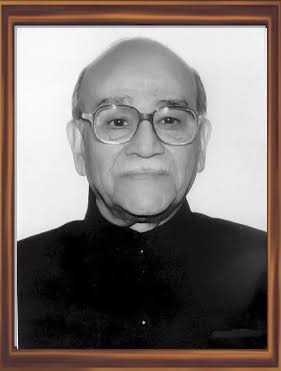
Habib Rahman was a pioneering Indian architect who played a foundational role in shaping the modern architectural landscape of post-independence India. A student of Bauhaus legend Walter Gropius at the Massachusetts Institute of Technology (MIT), Rahman introduced International Modernism to India while intelligently fusing it with indigenous traditional elements. As a chief architect within the government sector, he designed numerous iconic public buildings, memorials, and institutional complexes in New Delhi and Calcutta that defined the democratic identity of a young nation.
2. Quick facts
- Full Name: Habib Rahman
- Native Name: হাবিব রহমান
- Date of birth: 1915
- Place Of birth: Calcutta, Bengal Presidency, British India (now Kolkata, West Bengal, India)
- Nationality: Indian
- Occupation/ Profession: Architect and Engineer
- Field of Achievement: Modern Architecture and Urban Planning
- Years Active: 1944–1995
3. Award Information
- Award Name: Padma Bhushan
- Award Category: Civilian Award (Science and Engineering / Architecture)
- Award Year: 1974
- Presented By: Government of India
- Date of Ceremony: 1974 (Annual national investiture ceremony at Rashtrapati Bhavan)
- Citation/Official Reason: In recognition of his distinguished services and pioneering contributions to modern Indian architecture and public infrastructure.
- Previous Recipient: Notable civilian honorees of the 1973/1974 national awards cycle
- Next Recipient: Subsequent honorees of the 1975 civilian awards cycle
4. Why they Receive the award?
Rahman received the Padma Bhushan for his immense contribution to defining the architectural vocabulary of independent India, his landmark public buildings and national memorials under the Central Public Works Department (CPWD), and his role in translating Prime Minister Jawaharlal Nehru’s vision of a modern, progressive secular state into concrete and steel.
5. Early Life
Born in Calcutta in 1915 to a judicial family, Rahman grew up with a deep appreciation for the arts, structural discipline, and logic. Even before pursuing architecture, he possessed an innate flair for music, sketching, and photography. Witnessing the political transition of India toward independence, he belonged to a rare league of early Indian professionals who sought global technical expertise to help build a newly liberated nation.
6. Education
- Earned a Bachelor’s degree in Mechanical Engineering from the University of Calcutta in 1939.
- Traveled to the United States and earned a Bachelor in Architecture (1943) followed by a Master in Architecture (1944) from the Massachusetts Institute of Technology (MIT), making him the first Indian graduate of MIT’s architecture program.
- Worked and trained under modern masters including Walter Gropius, Lawrence B. Anderson, and Ely Jacques Kahn in Boston and New York between 1944 and 1946.
7. Carrier Journey
- Early Practice in Boston & New York (1944–1946): Gained valuable design experience working in prominent American architectural offices.
- Senior Architect, Govt. of West Bengal (1947–1953): Returned to a newly independent India to design landmark regional projects, including the pioneering 14-storied New Secretariat building in Calcutta.
- CPWD, New Delhi (1953–1970): Recruited by Jawaharlal Nehru to move to Delhi, serving as Senior Architect and eventually rising to Chief Architect of the Central Public Works Department (CPWD).
- Secretary, Delhi Urban Arts Commission (1974–1977): Guided urban planning, aesthetic policies, and development layouts for the capital city.
8. Major Achievements
- Designed Gandhi Ghat (1948) in West Bengal, which was India’s first major memorial project for Mahatma Gandhi following his assassination.
- Designed Calcutta’s New Secretariat Building (1954), which stood as India’s first steel-frame high-rise.
- Created prominent New Delhi landmarks including Rabindra Bhavan (housing India’s three national arts academies), the University Grants Commission (UGC) building, Dak Bhavan, and the National Zoological Park.
- Designed historic national memorials including the Tomb of Maulana Azad near Jama Masjid, as well as the tombs of former Presidents Dr. Zakir Husain and Fakhruddin Ali Ahmed.
9. Contribution to the nation
Habib Rahman broke away from colonial architectural styles to invent a fresh, secular, and functional modernist vocabulary for public buildings in independent India. His designs balanced economic realities and structural efficiency with cultural dignity. By standing firm against politically driven urban modifications later in his career, he also protected the heritage character and visual corridors of central New Delhi.
10. Other Awards and Honours
- Padma Shri (1955): Conferred by the Government of India, making him the first architect ever to receive a Padma award.
- Padma Bhushan (1974): India’s third-highest civilian honor.
- JK Cement Architect of the Year Chairman’s Award for Life Achievement (1995): Honoring his monumental career.
11. Legacy and influence
Habib Rahman is remembered as the primary architect who visualized Nehruvian Delhi, bridging the gap between Western high-modernism and Indian traditional spatial needs (such as using jalis and concrete sunshades or chajjas for climate control). His legacy is also preserved through his exceptional architectural photography, which documented the birth of Indian postcolonial modernism.
12. Interesting Facts
- The First Padma Architect: In 1955, when he was awarded the Padma Shri, he became the very first architect in independent India to be honored with a national civilian award.
- Star-Studded Family: He was married to Indrani Rahman, a trailblazing icon of Indian classical dance (Bharatanatyam, Odissi, Kuchipudi), and their son is the well-known photographer and cultural critic Ram Rahman.
- Principled Stance: In 1977, he chose to cut short his active government engagement when he strongly opposed government plans that threatened to alter historical view corridors or block heritage zones in Delhi—such as placing a statue under the India Gate canopy or building commercial structures near Jama Masjid.
13. Quotes
“A building becomes architecture when it not only works effectively but also touches the human soul.” — Habib Rahman
14. Timeline
- 1915: Born in Calcutta, British India.
- 1939: Graduated with a degree in Mechanical Engineering from Calcutta University.
- 1944: Obtained his Master in Architecture from MIT, USA.
- 1948: Designed Gandhi Ghat, his breakthrough memorial project.
- 1953: Moved to New Delhi to join the CPWD at the invitation of Prime Minister Jawaharlal Nehru.
- 1955: Awarded the Padma Shri (the first architect to receive it).
- 1961: Completed the iconic Rabindra Bhavan complex in New Delhi.
- 1974: Conferred the Padma Bhushan by the Government of India.
- 1995: Passed away in New Delhi at the age of 80.
15. References
- Akhtar, S. M. Habib Rahman: The Architect of Independent India. 2016.
- Wikipedia contributors. “Habib Rahman (architect).” Wikipedia, The Free Encyclopedia.
- Lalwani, Vijayta. “In photos: Architect Habib Rahman and the making of New Delhi in Nehru’s vision.” Scroll.in.
- Bauhaus Imaginista Archives. “Habib Rahman – Articles.”
16. Related Personalities
- Jawaharlal Nehru
- Walter Gropius
- Indrani Rahman (wife)
- Ram Rahman (son)
- Maulana Abul Kalam Azad
17. Frequently Asked Questions (FAQ)
Q: Who was Habib Rahman?
A: Habib Rahman was a pioneering Indian architect and engineer who introduced Bauhaus-inspired International Modernism to independent India and designed numerous prominent public buildings and national memorials.
Q: What are some of Habib Rahman’s most famous works?
A: His notable works include Rabindra Bhavan, the Tomb of Maulana Azad, Dak Bhavan, the University Grants Commission building in New Delhi, and the New Secretariat building in Calcutta.
Q: What major national honors did he receive?
A: He was awarded the Padma Shri in 1955 (making him the first architect to receive the honor) and the Padma Bhushan in 1974.
Q: Where did Habib Rahman study architecture?
A: After earning an engineering degree in Calcutta, he studied at the Massachusetts Institute of Technology (MIT), completing his Master in Architecture in 1944 under modernist mentors like Walter Gropius.
About the Author