

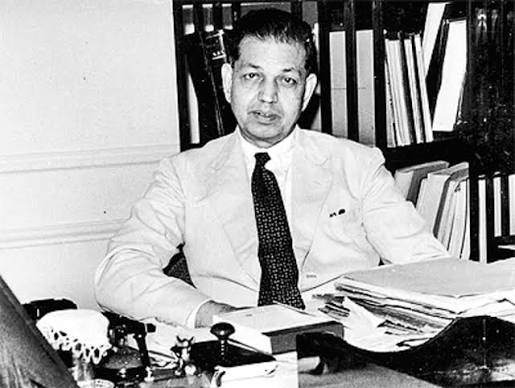
Introduction
H. V. R. Iyengar (Hoti Venkatachalam Ranga Iyengar; 1902–1983) was a distinguished Indian civil servant, economist, and administrator who made significant contributions to India’s financial administration and public service. He is best known for serving as the 6th Governor of the Reserve Bank of India (RBI) from 1957 to 1962, a period that witnessed important developments in India’s banking system and economic planning. Throughout his career, he was recognized for his integrity, administrative excellence, and commitment to strengthening India’s financial institutions.
Why Did H. V. R. Iyengar Receive the Padma Vibhushan Award?
H. V. R. Iyengar was awarded the Padma Vibhushan in 1962 for his exceptional service in civil service and public affairs. The award recognized his:
- Outstanding leadership as the Governor of the Reserve Bank of India.
- Contributions to India’s banking and monetary system.
- Distinguished career in the Indian Civil Service.
- Role in strengthening India’s financial administration during the early decades after Independence.
- Lifelong dedication to public service and institution-building.
Career and Achievements
H. V. R. Iyengar had an illustrious career in public administration, finance, and banking.
Some of his major achievements include:
- Joined the Indian Civil Service (ICS) in the 1920s.
- Held several senior administrative positions in the Government of India.
- Served as Governor of the Reserve Bank of India from 1957 to 1962.
- Supervised the implementation of important monetary and banking policies.
- Played a key role in strengthening India’s central banking system.
- Contributed to the development of financial institutions and public administration.
- Served in various advisory and administrative roles after retiring from the RBI.
Early Life
H. V. R. Iyengar was born in 1902 in Tamil Nadu, India, into a family that valued education and public service. From a young age, he excelled academically and demonstrated exceptional analytical abilities. His dedication to learning and administration eventually led him to qualify for the prestigious Indian Civil Service.
Education and Career
Education
H. V. R. Iyengar received an excellent education before successfully qualifying for the Indian Civil Service (ICS) examination, one of the most competitive examinations of its time.
Professional Career
- Entered the Indian Civil Service.
- Served in several important administrative positions under the Government of India.
- Worked in financial and economic administration.
- Appointed as the Governor of the Reserve Bank of India.
- Continued contributing to public institutions and national development after completing his tenure.
Field of Achievement
H. V. R. Iyengar made significant contributions in the following fields:
- Civil Service
- Banking
- Economics
- Public Administration
- Monetary Policy
- Financial Governance
- Institutional Development
His leadership helped strengthen India’s financial system during a crucial period of economic growth.
Awards and Honours
- Padma Vibhushan (1962) – Awarded for exceptional service in civil service and public affairs.
- Widely respected for his distinguished career in public administration and banking.
- Remembered as one of the most capable Governors of the Reserve Bank of India.
Interesting Facts
- H. V. R. Iyengar served as the 6th Governor of the Reserve Bank of India.
- His tenure at the RBI coincided with India’s early Five-Year Plan era, when financial institutions played a vital role in national development.
- Before joining the RBI, he had an accomplished career in the Indian Civil Service.
- He was known for his disciplined administration, integrity, and sound financial judgment.
- He contributed significantly to strengthening India’s central banking framework.
Legacy and Inspiration
H. V. R. Iyengar’s legacy is reflected in the strong financial and administrative institutions he helped build. His dedication to ethical governance, efficient administration, and sound financial management continues to inspire economists, bankers, policymakers, and civil servants. His leadership during the formative years of India’s economy remains an important chapter in the country’s financial history.
Contribution to the Nation
H. V. R. Iyengar made several lasting contributions to India, including:
- Strengthening the Reserve Bank of India’s role as the country’s central bank.
- Supporting the implementation of effective monetary and banking policies.
- Enhancing financial governance during India’s early years of planned economic development.
- Promoting stability and confidence in India’s banking sector.
- Contributing to efficient public administration through his civil service career.
- Helping build strong financial institutions that continue to support India’s economic growth.
Conclusion
H. V. R. Iyengar was one of India’s most respected civil servants and financial administrators. His distinguished service as the Governor of the Reserve Bank of India and his contributions to public administration played a crucial role in strengthening the nation’s financial system. Awarded the Padma Vibhushan in 1962, he is remembered for his integrity, leadership, and commitment to nation-building. His legacy continues to inspire professionals in banking, economics, and public service, highlighting the importance of strong institutions in a developing nation.
About the Author




