

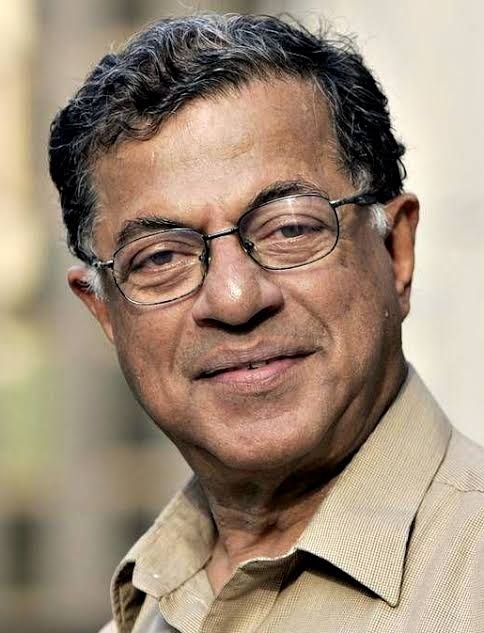
1. Introduction
Girish Raghunath Karnad (1938–2019) was a colossus of modern Indian literature, a legendary playwright who wrote primarily in Kannada, a celebrated film director, and an acclaimed actor. Blending ancient mythology, folklore, and history with contemporary psychological and socio-political dilemmas, his landmark plays—such as Tughlaq, Hayavadana, and Nagamandala—transformed modern Indian theatre. He was honored with the Padma Bhushan in 1992 and India’s highest literary honor, the Jnanpith Award, in 1998.
2. Quick Facts
- Full Name: Girish Raghunath Karnad
- Native Name: ಗಿರೀಶ್ ಕಾರ್ನಾಡ್ (Kannada)
- Date of Birth: May 19, 1938
- Place of Birth: Matheran, Bombay Presidency, British India (now Maharashtra, India)
- Date of Death: June 10, 2019 (aged 81) in Bengaluru, Karnataka, India
- Nationality: Indian
- Occupation / Profession: Playwright, Author, Actor, Film Director, Public Intellectual
- Field of Achievement: Kannada and Indian Theatre, Cinema, Literature
- Years Active: c. 1961 – 2019
3. Award Information (Focus: Padma Bhushan)
- Award Name: Padma Bhushan
- Award Category: Civil Honour (India’s third-highest civilian award)
- Award Year: 1992 (Preceded by the Padma Shri in 1974)
- Presented By: The President of India
- Date of Ceremony: 1992
- Citation / Official Reason: For exceptional and distinguished service to literature, theatre, and the arts, acknowledging his profound role in shaping contemporary Indian dramaturgy.
- Previous Recipients: Eminent literary figures, dramatists, and artists of India.
- Next Recipients: Succeeding national civilian honorees.
4. Why They Received the Award
Girish Karnad received the Padma Bhushan in 1992 in recognition of his extraordinary contributions to Indian literature and performing arts. Through brilliant theatrical compositions that explored historical metaphors to critique modern politics, alongside stellar parallel cinema direction and acting performances, he elevated the global stature of Indian creative expression.
5. Early Life
Born on May 19, 1938, in Matheran to Dr. Raghunath Karnad and Krishnabai, Karnad spent his formative years in Karnataka. Growing up in a culturally vibrant Konkani-speaking family exposed to traditional Yakshagana theater, he developed a deep fascination for folk forms, literature, and storytelling from an early age.
6. Education
- Undergraduate Degree: Earned his Bachelor of Arts (BA) in Mathematics and Statistics from Karnatak Arts College, Dharwad, in 1958.
- Rhodes Scholar: Selected as a prestigious Rhodes Scholar, moving to the United Kingdom to attend Magdalen College, Oxford, where he secured his Master of Arts (MA) in Philosophy, Politics, and Economics (PPE) in 1963.
7. Career Journey
- Early Literary Breakthrough: Published his debut play, Yayati, at the age of 26 in 1961, which won immediate critical acclaim. Followed this with his masterwork Tughlaq in 1964.
- Publishing & Administration: Worked with Oxford University Press (OUP) in Chennai for several years before serving as Director of the Film and Television Institute of India (FTII) and Chairman of the Sangeet Natak Akademi.
- Filmmaking Pioneer: Co-directed the landmark Kannada film Vamsha Vriksha (1971) with B. V. Karanth, winning the National Film Award for Best Direction. Directed other acclaimed films like Ustadad and Ondanondu Kaladalli.
- Actor & Public Figure: Acted in numerous iconic parallel and commercial films—including Samskara (1970), Manthan (1976), Swami (1977), and Ek Tha Tiger (2012)—while remaining a vocal and fearless public intellectual.
8. Major Achievements
- Jnanpith Award (1998): Awarded India’s highest literary recognition for his lifetime contribution to literature and theatre.
- Double National Civil Honours: Conferred the Padma Shri (1974) and the Padma Bhushan (1992).
- Playwriting Masterpieces: Authored world-renowned plays translated into multiple global languages, including Tughlaq, Hayavadana, Nagamandala, Bali: The Sacrifice, and Tale-Danda.
- Multiple National Film Awards: Won National Awards for direction, screenplay, and acting across various cinematic categories.
9. Contribution to the Nation
Girish Karnad revitalized Indian theatre by proving that traditional folklore and history could effectively articulate contemporary existential and political anxieties. By bridging regional Kannada literature with international audiences, he placed Indian playwriting on the global map. As a public intellectual, he championed secularism, freedom of expression, and scientific temper without fear or favor.
10. Other Awards and Honours
- Jnanpith Award (1998)
- Padma Bhushan (1992)
- Padma Shri (1974)
- Sahitya Akademi Award
- Sangeet Natak Akademi Award and Fellowship (Ratna Sadsya)
- Multiple National Film Awards and Filmfare Awards South.
11. Legacy and Influence
Girish Karnad is remembered as a modern Renaissance man of Indian letters. His plays remain staples of university syllabi and repertory theatre companies worldwide. He successfully erased the boundaries between “regional” and “national” literature, demonstrating that deep local roots can yield universally resonant artistic truths.
12. Interesting Facts
- Math Wizard turned Playwright: Though he initially majored in Mathematics and planned a career in science, his profound passion for literature and Oxford’s theatrical environment steered him permanently toward letters.
- Multilingual Genius: Though he wrote almost exclusively in Kannada, he translated his own works into English, ensuring global circulation and staging across Europe and the United States.
- Iconic Face of Indian Media: Millions of television viewers across India also recognized him warmly for hosting the famous science magazine show Turning Point on Doordarshan during the early 1990s.
13. Quotes
“History is not merely a chronicle of the past; it is a mirror reflecting the moral conflicts, ambitions, and frailties of our present age.” — Girish Karnad
14. Timeline
- 1938: Born on May 19 in Matheran, Bombay Presidency.
- 1961: Publishes his debut play, Yayati.
- 1964: Publishes his historical masterpiece, Tughlaq.
- 1971: Makes his directorial debut with Vamsha Vriksha, winning a National Award.
- 1974: Conferred the Padma Shri by the Government of India.
- 1992: Awarded India’s prestigious Padma Bhushan.
- 1998: Awarded the Jnanpith Award, India’s highest literary honor.
- 2019: Passes away on June 10 in Bengaluru at the age of 81.
15. References
- Wikipedia contributors. “Girish Karnad.” Wikipedia, The Free Encyclopedia.
- Encyclopaedia Britannica. “Girish Karnad – Indian playwright and actor”.
- Sahitya Akademi Archives. “Girish Karnad: Works, Plays, and Life Journey”.
- Ministry of Home Affairs, Government of India. “Padma Awards Directory”.
16. Related Personalities
- B. V. Karanth: Legendary theatre director and collaborator who co-directed Vamsha Vriksha with Karnad.
- Ebrahim Alkazi: Pioneering theatre director who famously staged Karnad’s Tughlaq at the National School of Drama (NSD).
- Satyadev Dubey: Eminent theatre exponent who translated and directed Karnad’s plays in Hindi.
17. Frequently Asked Questions (FAQ)
Q1: Who was Girish Karnad?
A: He was a legendary Indian playwright, actor, film director, and writer who penned iconic plays in Kannada and made immense contributions to modern Indian theatre and cinema.
Q2: What major national honors did he receive?
A: He received the Padma Shri (1974), the Padma Bhushan (1992), and India’s highest literary award, the Jnanpith Award (1998).
Q3: What are some of his most famous plays?
A: His most famous plays include Tughlaq, Hayavadana, Nagamandala, and Tale-Danda, many of which explore historical and mythological themes to critique modern society.
About the Author




