
Introduction
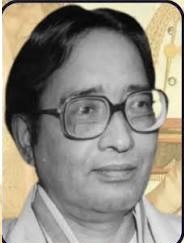
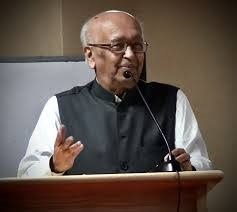
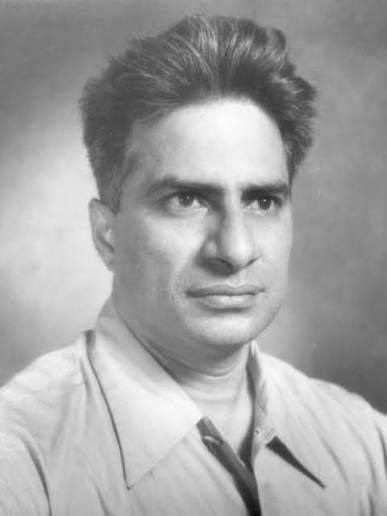
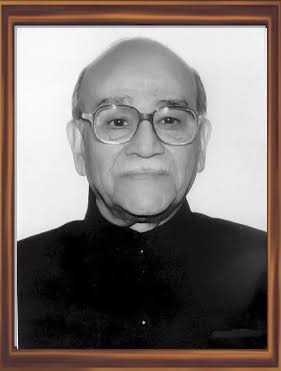
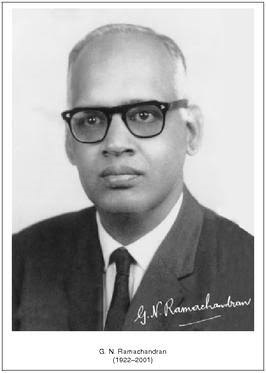
Gopalasamudram Narayana Ramachandran, popularly known as G. N. Ramachandran (8 October 1922 – 7 April 2001), was one of India’s most celebrated scientists and a pioneer in the field of biophysics. He is best known for developing the Ramachandran Plot, a groundbreaking tool used to understand the three-dimensional structures of proteins. His research transformed structural biology and helped scientists gain deeper insights into protein folding and molecular architecture.
Ramachandran’s contributions earned him international recognition and established India as an important center for biophysical research.
Early Life and Education
G. N. Ramachandran was born on October 8, 1922, in Ernakulam, Kerala, India. He was raised in an academically inclined family, and his father was a mathematics professor who encouraged his intellectual curiosity.
Ramachandran completed his early education in Kerala and later joined University of Madras, where he earned a Bachelor’s degree in Physics. He subsequently obtained a Master’s degree and demonstrated exceptional talent in theoretical and experimental sciences.
He later joined the prestigious Indian Institute of Science (IISc), Bengaluru, where he worked under Nobel Prize-winning physicist C. V. Raman. This experience shaped his scientific outlook and introduced him to advanced research techniques.
Scientific Career & Research
After completing his doctoral work, Ramachandran pursued research in X-ray crystallography and molecular structure analysis. He later joined the University of Madras as a professor and established one of India’s leading centers for molecular biophysics.
His major research areas included:
- Biophysics
- Structural Biology
- X-ray Crystallography
- Protein Structure Analysis
- Molecular Modeling
- Collagen Structure
- Biomolecular Geometry
Ramachandran combined principles of physics, chemistry, and biology to solve fundamental questions about the structure of biological molecules.
Major Discoveries and Inventions
The Ramachandran Plot
Ramachandran’s most famous contribution is the Ramachandran Plot, developed in 1963 with his colleagues. This graphical representation predicts the allowed rotational angles of amino acid residues in proteins.
The Ramachandran Plot became one of the most important tools in structural biology and is still widely used to:
- Analyze protein structures.
- Validate protein models.
- Study protein folding.
- Understand molecular conformations.
Today, virtually every structural biology laboratory uses the Ramachandran Plot in protein research.
Discovery of the Triple-Helical Structure of Collagen
Ramachandran and his team proposed the triple-helical structure of collagen, a major protein found in connective tissues. This discovery was a landmark achievement in molecular biology and significantly advanced understanding of biological tissues.
Contributions to Molecular Modeling
His research pioneered computational and geometric approaches to understanding biomolecular structures, laying the groundwork for modern structural bioinformatics.
X-ray Crystallography Research
Ramachandran applied X-ray diffraction techniques to study biological macromolecules, helping scientists determine the arrangement of atoms within complex molecules.
Advancement of Structural Biology in India
He established one of India’s first major schools of molecular biophysics and trained numerous students who later became leading researchers.
Awards and Honours
G. N. Ramachandran received numerous national and international honors throughout his career.
Fellowship of the Royal Society (FRS)
He was elected a Fellow of the Royal Society, one of the highest honors for a scientist.
Shanti Swarup Bhatnagar Prize
He received the prestigious Shanti Swarup Bhatnagar Prize for Science and Technology for his outstanding scientific contributions.
Padma Bhushan
The Government of India awarded him the Padma Bhushan, one of the country’s highest civilian honors.
International Recognition
His discoveries in structural biology earned worldwide recognition, and many scientists considered his work Nobel Prize-worthy.
Academic Distinctions
He received honorary degrees, fellowships, and memberships from several prestigious scientific institutions around the world.
Later Life and Death
In his later years, Ramachandran continued his scientific work and mentoring activities. He remained actively involved in research and scientific education, inspiring younger generations of researchers.
He spent part of his later career at the Indian Institute of Science and other leading institutions, where he continued promoting interdisciplinary science.
G. N. Ramachandran passed away on April 7, 2001, at the age of 78. His death marked the loss of one of India’s greatest scientific minds.
Legacy and Impact
The legacy of G. N. Ramachandran continues to shape modern biology and medicine.
Foundation of Structural Biology
His work helped establish structural biology as a major scientific discipline.
Universal Scientific Tool
The Ramachandran Plot remains an indispensable tool for protein research worldwide.
Contributions to Biomedical Research
His discoveries have applications in medicine, biotechnology, pharmaceutical development, and bioinformatics.
Scientific Institution Building
He helped create a strong research culture in molecular biophysics within India.
Inspiration for Future Scientists
Generations of scientists have been inspired by his innovative approach to combining physics, chemistry, and biology.
Conclusion
G. N. Ramachandran was a visionary biophysicist whose discoveries revolutionized the understanding of biological molecules. His creation of the Ramachandran Plot and his pioneering work on collagen structure transformed structural biology and continue to influence scientific research worldwide. Through his research, teaching, and institution-building efforts, he established a lasting legacy that places him among the greatest scientists in Indian history. His contributions remain fundamental to modern biophysics, molecular biology, and biomedical science.
About the Author