

1. Introduction
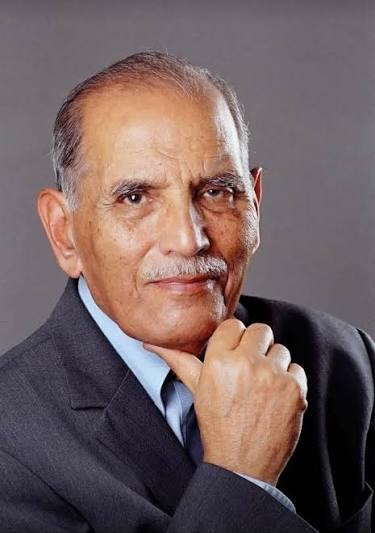
Faqir Chand Kohli, universally known as F.C. Kohli, was an Indian industrialist, systems engineer, and business tycoon who is celebrated as the “Father of the Indian Software Industry.” As the founder and first CEO of Tata Consultancy Services (TCS), Kohli laid the foundational stone for India’s rise as a global software superpower. Through his visionary leadership, unshakeable engineering discipline, and unwavering belief in Indian talent, he transformed a nascent consulting department into a multi-billion-dollar global giant, changing the economic trajectory of modern India.
2. Quick Facts
- Full Name: Faqir Chand Kohli
- Native Name: فقیر چند کوہلی (Urdu), फ़क़ीर चंद कोहली (Hindi)
- Date of birth: March 19, 1924
- Place Of birth: Peshawar, North-West Frontier Province, British India (now Pakistan)
- Nationality: Indian
- Occupation/ Profession: Industrialist, Software Engineer, Business Executive
- Field of Achievement: Information Technology, Software Engineering, and Corporate Leadership
- Years Active: 1951–2020 (Spanning nearly seven decades)
3. Award Information
| Award Name | Award Category | Award Year | Presented By | Date of Ceremony | Official Reason / Citation |
| Padma Bhushan | Trade and Industry | 2002 | Government of India (President of India) | 2002 | In recognition of his pioneering contributions to the Indian software industry and national industrial development. |
- Previous Recipients (Padma Bhushan in Trade & Industry): Notable corporate leaders and industrial pioneers.
- Next Recipients: Subsequent prominent figures in Indian industry and commerce.
4. Why Did He Receive These Awards?
F.C. Kohli received the Padma Bhushan and numerous other accolades because he single-handedly envisioned and built the architecture of India’s multi-billion-dollar IT services sector. At a time when India was primarily viewed as an agricultural and developing nation with limited technological infrastructure, Kohli foresaw the potential of software engineering. He pioneered computer literacy, built indigenous capabilities, created massive high-tech employment, and earned India global respect as a technological powerhouse.
5. Early Life
Born in Peshawar in British India (now Pakistan) in 1924, Kohli grew up during a turbulent era of the Indian independence movement. He completed his early education in Peshawar before moving to Lahore, where he earned a B.A. and a Bachelor of Science (B.Sc.) (Hons) in Physics from Government College Lahore. Following the Partition of India, his family relocated. Demonstrating exceptional academic brilliance, he won a government scholarship to study abroad, traveling to Canada where he earned a Bachelor of Science in Electrical Engineering from Queen’s University in 1948, followed by a Master of Science in Electrical Engineering from the Massachusetts Institute of Technology (MIT) in 1950.
6. Education
- Government College, Lahore: B.A. and B.Sc. (Hons) in Physics.
- Queen’s University (Canada): B.Sc. in Electrical Engineering (1948).
- Massachusetts Institute of Technology (MIT, USA): M.S. in Electrical Engineering (1950).
- His top-tier technical education in the United States exposed him to early electronic computing concepts, which he later brought back to India.
7. Career Journey
- Early Career in India (1951): Upon returning to India, Kohli initially worked for the Tata Electric Companies, where he pioneered the use of digital computers for power system load dispatching and automation, marking a massive leap for Indian engineering.
- Founding TCS (1968–1996): In 1968, J.R.D. Tata asked Kohli to lead Tata Consultancy Services (TCS) as its general manager. Under his leadership from day one, Kohli built the company from a small internal management consultancy into a global software powerhouse.
- Advocating Domestic IT Use: Beyond exports, Kohli fiercely advocated for the use of computers in local Indian languages, literacy programs, and electronic governance to solve societal issues.
8. Major Achievements
- Father of Indian IT: Spearheaded the creation of an industry that currently generates over $200 billion in revenue and employs millions of Indians.
- Building TCS: Turned TCS into India’s largest software services firm, setting the standard for quality, delivery, and global scaling.
- NASSCOM Leadership: Served as the president of NASSCOM (National Association of Software and Service Companies) in the 1990s, shaping national policy for the software sector.
- Pioneering Computer Literacy: Championed mass computer literacy programs across Indian states to bridge the digital divide.
9. Contribution to the Nation
F.C. Kohli transformed India’s global identity from a nation of brain drain into a nation of brain gain. He proved to the world that Indian engineers could deliver world-class software solutions reliably and at scale. Furthermore, by creating millions of high-paying white-collar jobs, he single-handedly fueled the rise of India’s ambitious middle class in the post-liberalization era.
10. Other Awards and Honours
- IEEE Third Millennium Medal (2000)
- The Dataquest Lifetime Achievement Award
- Honorary Doctorates from several prestigious universities, including Queen’s University and IIT Bombay.
- BMA (Bombay Management Association) Lifetime Achievement Award.
11. Legacy and Influence
Kohli’s legacy lives on every time an Indian tech professional writes a line of code or an international company relies on Indian IT architecture. He instilled a culture of rigorous engineering, corporate ethics, and continuous learning. Business leaders across the globe remember him not just as a corporate executive, but as a nation-builder who looked at raw computing power and saw a tool to lift a billion people forward.
12. Interesting Facts
- The J.R.D. Tata Partnership: Kohli often credited J.R.D. Tata with giving him complete operational freedom, noting that Tata believed in hiring the best minds and letting them build without corporate interference.
- A Passion for Adult Literacy: In his later years, Kohli dedicated immense personal time and resources to tackling adult illiteracy in India, developing a computer-based functional literacy (CBFL) method to teach adults to read in just 40 hours using software.
- Hands-On Engineer: Even when running a multi-billion dollar company, Kohli remained an engineer at heart, constantly evaluating technical algorithms and system architectures himself.
13. Quotes
“If we want to build a developed nation, we must use technology to empower our people, not just build businesses.”
“India has the finest minds in the world; our job was never to teach them how to code, but to give them an institution where they could build global dreams.”
“Software is not just about writing lines of code; it is about solving complex human and organizational problems.”
14. Timeline
- 1924: Born on March 19 in Peshawar, British India.
- 1950: Completes his Master’s degree in Electrical Engineering from MIT.
- 1951: Returns to India and joins Tata Electric Companies.
- 1968: Takes charge as the head of the newly formed Tata Consultancy Services (TCS).
- 1991–1994: Serves as President of NASSCOM, steering India’s tech policy during economic liberalization.
- 2002: Conferred the Padma Bhushan by the Government of India.
- 2020: Passes away on November 26 in Mumbai at the age of 96, leaving behind an immortal legacy.
15. References
- Tata Consultancy Services (TCS) Official Corporate Archives
- NASSCOM Historical Documentation on the Indian IT Industry
- Economic Times & Business Standard Archival Profiles
- MIT Electrical Engineering Alumni Records
16. Related Personalities
- J.R.D. Tata (Legendary industrialist who entrusted Kohli with TCS)
- S. Ramadorai (Kohli’s successor who expanded TCS into a global titan)
- Nandan Nilekani (Co-founder of Infosys and fellow pioneer of Indian IT)
- Faqir Chand Kohli’s contemporaries across the Tata Group ecosystem.
17. Frequently Asked Questions (FAQ)
Q1: Why is F.C. Kohli called the Father of the Indian Software Industry?
A: Because he founded and built Tata Consultancy Services (TCS) into India’s first major software services exporter, pioneering the business model, engineering standards, and global outreach that shaped the entire Indian IT sector.
Q2: What was F.C. Kohli’s educational background?
A: He was a brilliant engineer who studied physics at Government College Lahore, earned an electrical engineering degree from Queen’s University in Canada, and completed his Master’s degree from MIT (USA).
Q3: How did F.C. Kohli contribute outside of corporate IT?
A: He heavily invested his time and technological expertise into social development, notably creating a Computer-Based Functional Literacy (CBFL) software system designed to rapidly teach illiterate adults how to read in regional Indian languages.
About the Author




