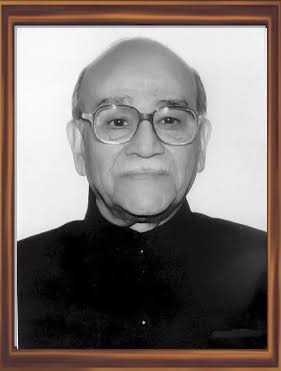

Ennackal Chandy George Sudarshan (widely known as E. C. G. Sudarshan) was one of the 20th century’s most brilliant and influential theoretical physicists. He made foundational contributions to quantum optics, particle physics, and quantum information theory, bridging deep scientific inquiry with a profound appreciation for philosophy.
1. Introduction
E. C. George Sudarshan (1931–2018) was a titan of modern physics whose theoretical breakthroughs altered our understanding of light, subatomic particles, and quantum systems. Despite being repeatedly passed over for the Nobel Prize—most famously when his co-developed quantum optics model was awarded exclusively to Roy J. Glauber—Sudarshan remained internationally revered by peers as a scientific visionary. Dividing his academic life primarily between the University of Texas at Austin and premier Indian institutions like the Indian Institute of Science (IISc) and the Institute of Mathematical Sciences (IMSc), he shaped generations of physicists.
2. Quick facts
- Full Name: Ennackal Chandy George Sudarshan
- Native Name: എണ്ണയ്ക്കൽ ചാണ്ടി ജോർജ് സുദർശൻ
- Date of birth: September 16, 1931
- Place Of birth: Pallam, Kottayam, Kerala, India
- Nationality: Indian
- Occupation/ Profession: Theoretical Physicist, University Professor
- Field of Achievement: Quantum Optics, Particle Physics, and Quantum Foundations
- Years Active: 1950s – 2018
3. Award Information (Focus: Padma Vibhushan)
- Award Name: Padma Vibhushan
- Award Category: Civil Honour (Second Highest Civilian Award in India)
- Award Year: 2007
- Presented By: President of India
- Date of Ceremony: 2007 (Formal Investiture Ceremony)
- Citation/Official Reason: Recognized for exceptional and distinguished service to science, literature, and education, particularly for his lifelong contributions to theoretical physics.
- Previous Recipients: Eminent leaders, scientists, and artists from prior civilian honors cycles.
- Next Recipients: Subsequent distinguished civilian honorees in later years.
4. Why they Receive the award?
Sudarshan received India’s highest civilian distinctions—including the Padma Bhushan (1976) and the Padma Vibhushan (2007)—alongside global honors like the ICTP Dirac Medal (2010), because his mathematical and theoretical insights built the framework for modern quantum optics and particle physics. His formulation of the V-A theory of weak interactions, the Sudarshan-Glauber representation, and the Quantum Zeno effect revolutionized how scientists manipulate light, study open quantum systems, and look at subatomic forces.
5. Early Life
Born in Pallam, a small town in Kottayam, Kerala, into a Syrian Christian family, Sudarshan displayed an extraordinary aptitude for mathematics and numbers from an early age. His father, E. I. Chandy, served as a revenue inspector, and his mother, Achamma, was a school teacher. Growing up in pre-independence Travancore, his innate curiosity stretched beyond standard schooling, setting the stage for a lifetime dedicated to deep scientific and philosophical inquiry.
6. Education
- CMS College, Kottayam: Completed his intermediate education in 1948.
- Madras Christian College (MCC), Tambaram: Earned his B.Sc. (Honours) in Physics in 1951, followed by an M.A. from the University of Madras in 1952.
- University of Rochester, New York: Moved to the United States to pursue doctoral studies, completing his Ph.D. in 1958 under the guidance of Robert Marshak.
7. Carrier Journey
- Research Assistant, Tata Institute of Fundamental Research (TIFR): Worked under cosmic-ray pioneers in Bombay early in his career (1952–1955).
- Postdoctoral and Faculty Roles: Served as a Corporation Fellow at Harvard University alongside Julian Schwinger, followed by faculty stints at the University of Rochester and Syracuse University.
- Professor of Physics, University of Texas at Austin: Maintained a legendary 47-year tenure starting in 1969, serving as the Director of the Center for Particle Theory.
- Academic Leadership in India: Divided his time internationally to serve as Senior Professor at the Indian Institute of Science (IISc), Bangalore, and as Director of the Institute of Mathematical Sciences (IMSc), Chennai, during the 1980s.
8. Major Achievements
- V-A Theory of Weak Interactions: Developed the Universal Fermi Interaction with V-A (Vector-axial vector) coupling alongside Robert Marshak, solving long-standing anomalies in particle decay. (Note: Though Richard Feynman and Murray Gell-Mann published a parallel formulation shortly after, Sudarshan was the primary originator).
- Sudarshan-Glauber Representation: Proved the quantum equivalence of classical wave optics and established a mathematical representation for light fields that predicted non-classical optical phenomena.
- Quantum Zeno Effect: Theoretically demonstrated that an unstable quantum system, if continuously observed, may never change state—a phenomenon later verified experimentally.
9. Contribution to the nation
Sudarshan bridged the global scientific community and Indian academia. By actively splitting his career between Austin, Texas, and institutions like IISc Bangalore and IMSc Chennai, he mentored hundreds of Indian physicists, modernizing the country’s theoretical research infrastructure. His advocacy for scientific independence and his deep roots in Indian philosophical traditions established a unique cultural footprint in international science.
10. Other Awards and Honours
- ICTP Dirac Medal (2010): Awarded for his fundamental contributions to physics.
- Padma Vibhushan (2007): India’s second-highest civilian honor.
- Majorana Prize (2006): Honored for theoretical physics excellence.
- Padma Bhushan (1976): Third-highest civilian award from the Government of India.
- TWAS Prize (1985): First prize in physics awarded by the World Academy of Sciences.
- Bose Medal (1977): Awarded by the Indian National Science Academy.
11. Legacy and influence
Sudarshan is remembered as one of the most unjustly overlooked giants in Nobel Prize history. His work forms the absolute backbone of modern quantum computing, quantum optics, and particle physics. Beyond formulas, he was a renaissance thinker who comfortably traversed advanced quantum mechanics and Eastern philosophy, often lecturing on how ancient Indian epistemology intersected with modern theoretical physics.
12. Interesting Facts
- The Nobel Controversy: In 2005, the Nobel Prize in Physics was awarded to Roy J. Glauber for quantum optics work. The scientific community widely pointed out that Sudarshan had derived the core mathematical representation first (the P-representation), sparking global debates on oversight by the Nobel Committee. Sudarshan famously remarked, “The prize that I didn’t get is the validation of my work by my students and community.”
- Philosophical Synthesis: Raised in a Christian household, he later embraced Advaita Vedanta and Eastern philosophical texts, viewing science and spirituality not as contradictory, but as complementary paths to understanding reality.
- Tachyons: He was among the earliest physicists to rigorously study faster-than-light hypothetical particles known as “tachyons”.
13. Quotes
“In science, the reward is the discovery itself. There is no greater joy than seeing nature reveal a secret that no one else has understood before.” — E. C. George Sudarshan
14. Timeline
- 1931: Born in Pallam, Kerala, India
- 1951: Earns B.Sc. (Hons) from Madras Christian College
- 1952–1955: Works as a research assistant at TIFR, Bombay
- 1958: Completes Ph.D. at the University of Rochester
- 1961: Formulates the diagonal representation of quantum optics (Sudarshan representation)
- 1969: Joins the University of Texas at Austin as a Professor of Physics
- 1976: Awarded the Padma Bhushan
- 2007: Awarded the Padma Vibhushan
- 2010: Receives the ICTP Dirac Medal
- 2018: Passes away in Austin, Texas, at age 86
15. References
- Sudarshan, E. C. G., & Marshak, R. E. (1958). Chirality Invariance and the Universal Fermi Interaction. Physical Review.
- Wikipedia contributors. “E. C. George Sudarshan.” Wikipedia, The Free Encyclopedia.
- Indian Academy of Sciences (IAS). “The Life and Work of E. C. George Sudarshan”, Resonance Journal.
- University of Texas at Austin — Department of Physics Historical Archives.
16. Related Personalities
- Robert Marshak: Sudarshan’s Ph.D. advisor and co-author on the V-A theory.
- Roy J. Glauber: American physicist who shared overlapping discoveries in quantum optics.
- Julian Schwinger: Nobel laureate with whom Sudarshan collaborated closely at Harvard.
- J. Krishnamurti: Noted philosopher with whom Sudarshan held deep intellectual discussions on consciousness and reality.
17. Frequently Asked Questions (FAQ)
Q: Who was E. C. George Sudarshan?
A: He was an iconic Indian theoretical physicist renowned for foundational work in quantum optics and particle physics.
Q: What is the Sudarshan-Glauber representation?
A: It is a mathematical model in quantum optics that describes light states, proving the bridge between classical wave optics and quantum mechanics.
Q: Did E. C. George Sudarshan win a Nobel Prize?
A: No, despite being nominated multiple times and creating theories that won Nobel Prizes for others (such as Glauber’s optics work and electroweak theory foundations), Sudarshan was never awarded the Nobel Prize.
Q: What were his highest civilian awards?
A: He received India’s Padma Bhushan in 1976 and the Padma Vibhushan in 2007.
About the Author