

Introduction
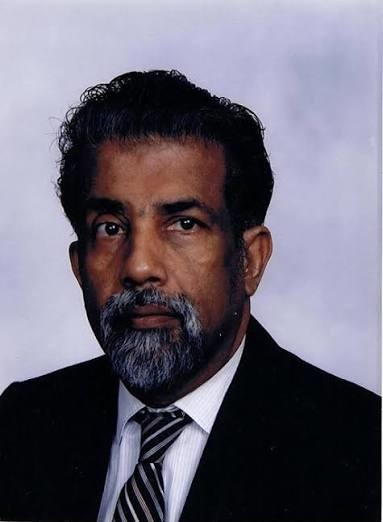
E. C. George Sudarshan (Ennackal Chandy George Sudarshan) was one of the world’s most distinguished theoretical physicists. Renowned for his groundbreaking work in quantum optics, particle physics, quantum theory, and the foundations of modern physics, he made significant contributions that influenced scientific research across the globe. His innovative ideas and pioneering discoveries earned him international recognition as one of the leading physicists of the twentieth century. In recognition of his exceptional contributions to science and engineering, he was awarded the Padma Vibhushan, India’s second-highest civilian honour.
Why Did He Receive the Padma Vibhushan Award?
E. C. George Sudarshan was awarded the Padma Vibhushan in 2007 for his outstanding contributions to science and engineering, particularly in theoretical physics. The award recognized his:
- Groundbreaking research in quantum optics and quantum mechanics.
- Contributions to particle physics and high-energy physics.
- Development of influential theories that shaped modern physics.
- Outstanding achievements in scientific research and education.
- International recognition for advancing fundamental physics.
His research has had a lasting impact on both theoretical and experimental physics.
Early Life
E. C. George Sudarshan was born on 16 September 1931 in Pallam, Kottayam, Kerala, India. From an early age, he displayed exceptional talent in mathematics and science. His curiosity about the laws of nature inspired him to pursue a career in physics, eventually becoming one of India’s most celebrated scientists.
Birth Date and Death
- Full Name: Ennackal Chandy George Sudarshan
- Date of Birth: 16 September 1931
- Place of Birth: Pallam, Kottayam, Kerala, India
- Date of Death: 13 May 2018
- Age at Death: 86 years
He spent more than six decades making remarkable contributions to theoretical physics and scientific education.
Education and Career
Education
E. C. George Sudarshan pursued his education at some of the world’s leading institutions:
- Bachelor’s and Master’s studies at the University of Madras.
- Doctoral studies at the University of Rochester, where he worked under the renowned physicist Robert E. Marshak.
Career
Throughout his distinguished career, he held academic and research positions at several prestigious institutions, including:
- University of Texas at Austin.
- University of Rochester.
- Indian Institute of Science.
- Tata Institute of Fundamental Research.
He mentored numerous students and collaborated with scientists around the world.
Career and Achievements
E. C. George Sudarshan made several groundbreaking contributions that transformed modern physics.
Major Achievements
- Co-developed the V–A (Vector minus Axial Vector) theory of weak interactions, a cornerstone of particle physics.
- Made pioneering contributions to quantum optics, including the Glauber–Sudarshan P representation, a fundamental concept in quantum optics.
- Conducted influential research in quantum mechanics, tachyon theory, and open quantum systems.
- Published more than 500 scientific papers and numerous books.
- Mentored generations of physicists and advanced scientific research through teaching and collaboration.
- Received worldwide recognition for his original ideas and theoretical innovations.
His discoveries continue to influence research in physics, quantum information science, and optics.
Field of Achievements
E. C. George Sudarshan excelled in:
- Theoretical Physics
- Quantum Mechanics
- Quantum Optics
- Particle Physics
- High-Energy Physics
- Mathematical Physics
- Scientific Research
- Higher Education
Awards and Honours
E. C. George Sudarshan received numerous prestigious honours during his career.
- Padma Bhushan (1976) – For contributions to science.
- Padma Vibhushan (2007) – India’s second-highest civilian honour for exceptional contributions to science and engineering.
- Dirac Medal (1977).
- Majorana Prize (2006).
- Kerala Sastra Puraskaram.
- Honorary doctorates and numerous international scientific awards.
Although many scientists believed his work was worthy of a Nobel Prize, he never received one, despite making several discoveries that profoundly influenced modern physics.
Interesting Facts
- E. C. George Sudarshan co-developed the V–A theory, which became a key part of the Standard Model of particle physics.
- The Glauber–Sudarshan P representation is widely used in quantum optics and quantum computing research.
- He published more than 500 research papers throughout his career.
- He taught at leading universities in both India and the United States.
- He made significant contributions to the study of tachyons, hypothetical particles that could travel faster than light.
- Many physicists regarded him as one of the greatest theoretical physicists never to receive the Nobel Prize.
Legacy and Inspiration
E. C. George Sudarshan’s legacy is defined by his pioneering research, intellectual brilliance, and commitment to scientific inquiry. His discoveries continue to influence modern research in quantum physics, optics, and particle theory.
He remains an inspiration to physicists, researchers, and students worldwide, demonstrating the importance of creativity, rigorous thinking, and perseverance in advancing scientific knowledge.
Contribution to the Nation
E. C. George Sudarshan made lasting contributions to India by:
- Advancing India’s reputation in global scientific research.
- Making groundbreaking discoveries in theoretical physics.
- Mentoring young scientists and promoting higher education.
- Strengthening international collaboration in physics.
- Inspiring future generations to pursue careers in science and research.
- Enhancing India’s standing in the global scientific community.
His work continues to benefit scientific research and technological innovation around the world.
Conclusion
E. C. George Sudarshan was one of the greatest theoretical physicists of his generation. His pioneering work in quantum optics, particle physics, and quantum mechanics transformed modern science and earned him worldwide respect. Honoured with the Padma Vibhushan in 2007, he left behind a remarkable legacy of scientific excellence, innovation, and education. His discoveries continue to shape the future of physics, inspiring scientists and students to explore the fundamental mysteries of the universe.
About the Author




