

1. Introduction
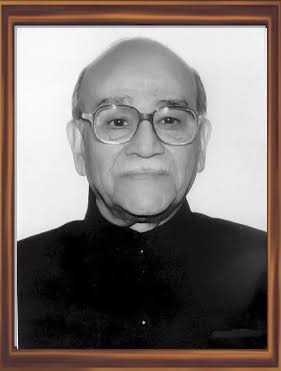
Dr. Syed Abdul Latif was a prominent Indian scholar, educationist, and writer of English and Urdu literature. Renowned for his deep intellectual contributions to Islamic culture, history, and comparative religion, he bridged traditional eastern scholarship with modern English literature. As a visionary professor at Osmania University and the founder of key cultural research institutes, his literary legacy continues to guide students of philosophy and history.
2. Quick Facts
- Full Name: Dr. Syed Abdul Latif
- Native Name: سید عبد اللطیف
- Date of Birth: 1891
- Place of Birth: Kurnool, Madras Presidency, British India (now Andhra Pradesh)
- Nationality: Indian
- Occupation / Profession: Writer, Scholar, Professor, Editor
- Field of Achievement: Islamic Culture, English Literature, and Cultural History
- Years Active: c. 1910s – 1971
3. Award Information
- Award Name: Padma Bhushan
- Award Category: Civilian Award (Third Highest Civilian Award in India)
- Award Year: 1970
- Presented By: Government of India
- Date of Ceremony: 1970 (In accordance with annual Rashtrapati Bhavan investiture announcements)
- Citation / Official Reason: For his remarkable, lifelong contributions to literature, education, and the promotion of Islamic and cultural studies.
- Previous Recipients (Optional): Prominent scholars, educators, and public figures recognized in preceding years.
- Next Recipients: Succeeding batches of cultural and literary icons honored in subsequent years.
4. Why He Received the Award
Dr. Syed Abdul Latif received the Padma Bhushan in recognition of his extensive literary output and his dedication to illuminating cross-cultural understanding. He was honored for his definitive English renderings and commentaries on religious texts, his academic leadership at Osmania University, and his efforts to document the multi-layered cultural history of India.
5. Early Life
Born in Kurnool into a deeply learned family, young Syed received his early foundations in Arabic and Persian under the personal tutelage of his father, Syed Shah Hussaini. Growing up in the multicultural environment of southern and central India, he developed an early affinity for both classical oriental languages and Western literature, setting the stage for his dual-stream academic career.
6. Education
- Undergraduate Degree: Graduated from Madras Christian College.
- Doctorate (Ph.D.): Earned his Ph.D. in English Literature from the University of London in 1924, making him part of an elite tier of globally trained Indian scholars during the British Raj.
7. Career Journey
- Academic Tenure: Served for many years as a respected Professor of English at Osmania University, Hyderabad, nurturing generations of students.
- Journalism & Editing: Actively engaged in public discourse, editing progressive and cultural weeklies such as New Era (1937) and Clarion (1947).
- Institutional Leadership: Served as the President of the Institute of Indo-Middle East Cultural Studies and the Academy of Islamic Studies in Hyderabad.
8. Major Achievements
- The Mind al-Qur’an Builds (1952): One of his most widely read philosophical works, examining the psychological, ethical, and societal framework established by Quranic teachings.
- Translation of Tarjuman al-Quran: Undertook the monumental task of translating Maulana Abul Kalam Azad’s incomplete Urdu commentary into a comprehensive English edition (published across multiple volumes, 1962–1967).
- An Outline of the Cultural History of India (1979): A foundational text detailing the synthesis of diverse cultural streams that shaped Indian civilization.
- Explanatory Quranic Translation: Produced a unique English rendering focusing on the unified thematic flow of sentences rather than rigid word-for-word translation.
9. Contribution to the Nation
Dr. Latif contributed to national intellectual life by promoting secular, syncretic scholarship and deep academic rigor. Through his interactions with national leaders like Mahatma Gandhi, Maulana Abul Kalam Azad, and Muhammad Ali Jinnah, he remained deeply engaged in the socio-political evolution of mid-20th-century India, using his pen to advocate for intellectual harmony, cultural clarity, and educational advancement.
10. Other Awards and Honours
- Padma Bhushan (1970): Conferred India’s third-highest civilian honor by the President of India.
- Dr. Syed Abdul Latif Trust: A dedicated trust established in his honor (Dr. Syed Abdul Latif’s Trust for Quranic and other Cultural Studies) continues to print and archive his vital literary works.
11. Legacy and Influence
Dr. Latif is remembered as a bridge-builder between Islamic heritage and English-speaking global scholarship. His distinct methodology of translating and interpreting texts prioritized conceptual synthesis, influencing contemporary Islamic studies and comparative literature. His books remain essential reading material for research scholars exploring South Asian Muslim thought.
12. Interesting Facts
- He had close professional and personal connections with premier figures of the Indian independence movement, reflecting his active interest in national affairs alongside his academic pursuits.
- His English translation of the Quran utilized parenthetical clarifications to help Western readers grasp the holistic context of passages without altering traditional interpretations.
- Despite retiring from active formal classrooms decades prior, he spent his later years actively publishing specialized lecture series delivered at universities like Madras.
13. Quotes
“True cultural synthesis is born not from the erasure of differences, but from an earnest, intellectual desire to understand the deeper human values that unite us.” — Dr. Syed Abdul Latif (archival sentiment)
14. Timeline
- 1891: Born in Kurnool, Andhra Pradesh.
- 1924: Completes his Ph.D. from the University of London.
- 1937 & 1947: Edits prominent socio-political weeklies like New Era and Clarion.
- 1952: Publishes his landmark philosophical book, The Mind al-Qur’an Builds.
- 1962–1967: Publishes his English translation of Maulana Abul Kalam Azad’s Tarjuman al-Quran.
- 1970: Conferred the Padma Bhushan by the Government of India.
- 1971: Passes away, leaving behind a rich archive of literary and cultural works.
15. References
- Wikipedia & Wikidata Biographical Profiles on Syed Abdul Latif (writer).
- Ministry of Home Affairs, Government of India (Padma Awards Directory – 1970 records).
- Islamic Book Trust & Worldcat bibliographic archives for Dr. Syed Abdul Latif.
- Bibliography of English Translations of the Quran (William A. Bijlefeld reviews).
16. Related Personalities
- Maulana Abul Kalam Azad
- Mahatma Gandhi
- Muhammad Ali Jinnah
- Sir Mirza Ismail
17. Frequently Asked Questions (FAQ)
Q1: Who was Dr. Syed Abdul Latif?
A: Dr. Syed Abdul Latif was an Indian writer, English professor at Osmania University, and scholar who wrote extensively on Islamic culture, literature, and Indian history.
Q2: What are some of Dr. Syed Abdul Latif’s major works?
A: His notable works include The Mind al-Qur’an Builds, An Outline of the Cultural History of India, and his English translation of Maulana Abul Kalam Azad’s Tarjuman al-Quran.
Q3: When did Dr. Syed Abdul Latif receive the Padma Bhushan?
A: He was honored with the Padma Bhushan by the Government of India in the year 1970.
About the Author