

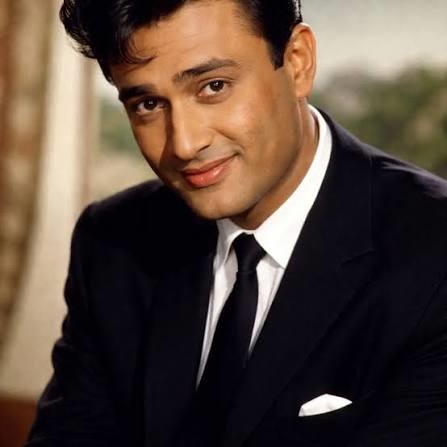
1. Introduction
Dharamdev Pishorimal Anand, universally known as Dev Anand, was an iconic Indian actor, writer, director, and producer who shaped the golden era of Hindi cinema. Recognized globally as Bollywood’s original “Evergreen Star”, he captivated millions with his signature swagger, fast-paced dialogue delivery, charismatic head tilts, and inimitable style. Spanning over six decades, his career redefined romanticism and cinematic entrepreneurship in India.
2. Quick Facts
- Full Name: Dharamdev Pishorimal Anand
- Native Name: ದೇವ್ ಆನಂದ್ (Kannada), देव आनंद (Hindi)
- Date of Birth: September 26, 1923
- Place of Birth: Shakargarh, Punjab, British India (now Pakistan)
- Nationality: Indian
- Occupation / Profession: Actor, Filmmaker, Writer, Producer
- Field of Achievement: Hindi Cinema (Acting and Directorial Ventures)
- Years Active: 1946–2011
3. Award Information (Focus: Padma Bhushan & Dadasaheb Phalke)
- Award Name: Padma Bhushan (2001) & Dadasaheb Phalke Award (2002)
- Award Category: Arts / Cinema (Lifetime Contribution)
- Award Year: 2001 (Padma Bhushan); 2002 (Dadasaheb Phalke)
- Presented By: Government of India (President of India)
- Date of Ceremony: Rashtrapati Bhavan, New Delhi
- Citation / Official Reason: For his distinguished service of a high order to the growth, development, and global projection of Indian cinema through landmark performances and pioneering production values.
- Previous Recipients (Examples): Legendary pillars of Indian film and arts.
- Next Recipients: Succeeding batches of cinematic icons.
4. Why He Received the Award
Dev Anand received India’s prestigious civilian and artistic honors for his monumental, multi-decade footprint on the cultural fabric of the nation. As part of Hindi cinema’s legendary “Golden Trinity” (alongside Dilip Kumar and Raj Kapoor), he introduced a new urban, stylish, and anti-hero archetype to the screen. Furthermore, through his production house, Navketan Films, he launched numerous fresh talents, pathbreaking musical compositions, and thriller genres that revolutionized Bollywood storytelling.
5. Early Life
Born in Shakargarh (now in Pakistan) into a well-to-do lawyer’s family, Dev Anand spent his formative years deeply immersed in literature, arts, and dreams of the silver screen. Influenced deeply by cinematic greats of Hollywood during his youth, he left his hometown with very little money in his pocket, boarding a train to Bombay (Mumbai) in the 1940s to chase his cinematic ambitions against his father’s wishes.
6. Education
- Completed his early schooling in Punjab.
- Graduated with a Bachelor of Arts (BA) degree in English Literature from the prestigious Government College, Lahore (now in Pakistan).
7. Career Journey
- The Struggle and Breakthrough: Started working with the Military Censor Office in Bombay before joining the legendary Pioneer Theatre. His big break came when he was cast as the lead in Hum Ek Hain (1946), followed by the massive commercial success of Ziddi (1948), which established him as a leading star.
- Navketan Films (1949): Alongside his brother Chetan Anand, he founded Navketan Films, giving birth to trendsetting noir-thrillers and urban dramas like C.I.D., Taxi Driver, and Baazi.
- Directorial Ventures: Transitioned smoothly into direction with films like Prem Pujari, Hare Rama Hare Krishna, and Des Pardes.
8. Major Achievements
- The Evergreen Romantic Lead: Starred in back-to-back mega-hits that defined romantic cinema, including Guide, Jewel Thief, CID, Kala Bazaar, and Johny Mera Naam.
- Critical Acclaim for Guide (1965): Produced, co-wrote, and starred in the cinematic masterpiece Guide (adapted from R.K. Narayan’s novel), which swept major Filmfare awards and was India’s official entry to the Academy Awards.
- Talent Incubator: Known for discovering and launching legendary stars and artists into the film industry, including Zeenat Aman, Tina Munim, and music director S.D. Burman (to a large extent).
9. Contribution to the Nation
Dev Anand modernized the aesthetic language of post-independence Indian cinema. Through characters that were ambitious, flawed, street-smart, yet deeply moral, he mirrored the aspirations of a young, newly independent India. His films also frequently tackled progressive social themes, breaking conventional stereotypes and setting high benchmarks for cinematic production, music, and international collaborations.
10. Other Awards and Honours
- Padma Bhushan (2001) by the Government of India.
- Dadasaheb Phalke Award (2002) for lifetime contribution to Indian cinema.
- Filmfare Best Actor Awards for kala Paani (1958) and Guide (1965).
- Filmfare Lifetime Achievement Award (1993).
11. Legacy and Influence
Dev Anand’s charm was immortalized in popular culture—from his iconic black trench coats and tilted caps to his bouncy gait. He famously continued writing, producing, and acting in films well into his 80s, driven by an unyielding passion for creation. When he passed away on December 3, 2011, he left behind an immortal legacy encapsulated by his lifelong philosophy: “Main zindagi ka saath nibhata chala gaya…” (I kept walking along with life, whatever came my way).
12. Interesting Facts
- The Black Suit Ban: A popular urban legend claims that Dev Anand was banned from wearing black suits in public because women would reportedly faint or try to jump from buildings just to catch a glimpse of him.
- Unstoppable Optimism: He never truly retired; he was planning a sequel to his cult classic Jewel Thief right up until his final days in London.
- Refusal to Slow Down: He authored his autobiography titled Romancing with Life in 2007, detailing his journey from the streets of Gurdaspur to cinematic immortality.
13. Quotes
“I don’t look back. Why should I? The best is always yet to come.” — Dev Anand
14. Timeline
- 1923: Born on September 26 in Shakargarh, Punjab.
- 1945–46: Moved to Bombay; made his acting debut in Hum Ek Hain.
- 1949: Co-founded Navketan Films with his brother.
- 1965: Released the classic magnum opus Guide.
- 2001: Conferred the Padma Bhushan by the Government of India.
- 2002: Awarded the Dadasaheb Phalke Award.
- December 3, 2011: Passed away in London at the age of 88.
15. References
- Wikipedia Contributors. “Dev Anand.” Wikipedia, The Free Encyclopedia.
- Dev Anand. Romancing with Life (Autobiography). HarperCollins Publishers India.
- National Film Archive of India (NFAI) Archives.
- Ministry of Information and Broadcasting, Government of India. Dadasaheb Phalke Award Archives.
16. Related Personalities
- Raj Kapoor & Dilip Kumar (The other two members of Hindi cinema’s Golden Trinity)
- Suraiya & Kalpana Kartik (Co-stars and major figures in his personal/professional life)
- S.D. Burman & R.D. Burman (Legendary music directors closely tied to Navketan films)
17. Frequently Asked Questions (FAQ)
Q1: Who was Dev Anand?
A: Dev Anand was a legendary Indian actor, director, and producer known as Bollywood’s “Evergreen Star”, famous for his iconic romantic roles and charismatic screen presence.
Q2: What was the name of his production company?
A: He co-founded Navketan Films in 1949, under which many critically acclaimed cinematic classics were produced.
Q3: When did Dev Anand receive the Dadasaheb Phalke Award?
A: He was honored with the Dadasaheb Phalke Award—India’s highest award in cinema—in the year 2002.
Q4: Which was his debut film?
A: His acting debut was in the film Hum Ek Hain (1946
About the Author




