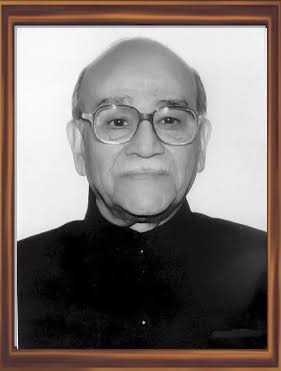

D. C. Pavate, popularly known as Dr. D. C. Pavate, was an Indian mathematician, educationist, academic administrator and statesman. He played a major role in the development of Karnatak University, Dharwad, served as its Vice-Chancellor for many years, and later became the Governor of Punjab.
He was also a distinguished Cambridge-trained mathematician and was recognised with the Padma Bhushan in 1967 in the field of Literature and Education. The Government of India’s official Padma Awards database lists him as “Dr. Dadasaheb Chintamani Pavate.”
1. Introduction
Dadasaheb Chintamani Pavate, better known as D. C. Pavate, was born on 2 August 1899 in Mamadapur, in the Gokak region of present-day Karnataka. Coming from a farming family, he went on to build an exceptional academic career in mathematics.
His academic achievements took him to Cambridge University, where he became a Mathematical Tripos Wrangler in 1927. He subsequently worked as a mathematics teacher and education administrator before becoming the Vice-Chancellor of Karnatak University in Dharwad.
Pavate is particularly remembered as one of the principal architects of the university’s early development. He later served as Governor of Punjab from 1967 to 1973.
2. Quick Facts
| Particular | Information |
|---|---|
| Full Name | Dadappa Chintappa Pavate / Dadasaheb Chintamani Pavate |
| Popular Name | D. C. Pavate |
| Native Name | ಡಿ. ಸಿ. ಪಾವಟೆ |
| Date of Birth | 2 August 1899 |
| Place of Birth | Mamadapur, Gokak region, Karnataka |
| Date of Death | 31 January 1979* |
| Place of Death | Bengaluru, Karnataka* |
| Nationality | Indian |
| Profession | Mathematician, professor, educationist, administrator and statesman |
| Field of Achievement | Mathematics, education and public administration |
| Major Academic Position | Vice-Chancellor, Karnatak University |
| Major Constitutional Position | Governor of Punjab |
| Years as Vice-Chancellor | 1954–1967 |
| Governor of Punjab | 1967–1973 |
| Major Award | Padma Bhushan |
| Award Year | 1967 |
| Padma Field | Literature and Education |
*There is some inconsistency in secondary online sources concerning Pavate’s exact date of death. The commonly cited date is 31 January 1979; for a publication requiring archival-level precision, it is worth checking contemporary government or newspaper records before treating the date as definitive.
The Padma Awards database confirms his name, award and category.
3. Award Information
Padma Bhushan
Award Name
Padma Bhushan
Award Category
Literature and Education
Award Year
1967
Presented By
Government of India, formally conferred by the President of India.
Date of Ceremony
The official Padma database confirms the 1967 award year, but I could not verify an authoritative source giving the exact investiture date specifically for Pavate. Therefore, it is preferable for your blog to state “Awarded in 1967” rather than publish an uncertain ceremony date.
Official Record
The Government of India’s Padma Awards database records:
Dr. Dadasaheb Chintamani Pavate — Padma Bhushan (1967) — Literature and Education — Karnataka.
Citation / Official Reason
The official database categorises Pavate’s Padma Bhushan under Literature and Education.
His recognition reflected his distinguished contribution to mathematics, education and educational administration.
Previous Recipients
The Padma Bhushan is awarded to multiple individuals each year, so there is no single previous recipient.
Next Recipients
The following year, 1968, saw a new group of Padma Bhushan recipients.
4. Why Did D. C. Pavate Receive the Padma Bhushan?
D. C. Pavate received the Padma Bhushan in 1967 in the field of Literature and Education.
His recognition was closely associated with his remarkable career in education, mathematics and university administration.
He contributed through:
- Teaching mathematics
- Advanced mathematical study and scholarship
- Educational administration
- University development
- Leadership in higher education
- Promotion of academic standards
- Service on national and international educational bodies
- Writing mathematical works
His long leadership of Karnatak University was particularly significant. The D. C. Pavate Memorial Foundation describes him as a visionary in education and notes his roles as President of the Inter-University Board, member of the University Grants Commission and member of the Executive Council of Commonwealth Universities.
5. Early Life
D. C. Pavate was born on 2 August 1899 in Mamadapur, a small village in the Gokak area of the former Bombay Presidency, now in Karnataka.
He came from a poor farming family. His father was a farmer, while his uncle, Siddaramappa Pavate, a Sanskrit scholar, encouraged his education.
His early life is an important part of his story because he rose from a rural background to become an internationally recognised mathematician and university administrator.
His academic abilities became evident at a young age, particularly in mathematics.
6. Education
Pavate’s educational journey was extraordinary.
Early Schooling
He received his early schooling in and around Mamadapur and Gokak and later studied in Dharwad. A biographical account records that he performed exceptionally well in his matriculation examination.
College Education
He studied mathematics at Karnataka College, Dharwad, and later completed his undergraduate studies with outstanding results.
Cambridge University
His greatest academic achievement came when he went to Sidney Sussex College, Cambridge University.
He studied mathematics at Cambridge and became a Mathematical Tripos Wrangler in 1927, a distinction associated with high achievement in the Cambridge Mathematical Tripos.
This Cambridge achievement established his reputation as a distinguished mathematician.
7. Career Journey
Early Teaching Career
After completing his studies, Pavate began his professional career in mathematics education.
He worked as a teacher and later became associated with Banaras Hindu University, where he earned a reputation as a mathematics teacher. The D. C. Pavate Memorial Foundation notes his reputation as a great teacher of mathematics at the university.
Education Administration
Pavate subsequently entered educational administration in the former Bombay Presidency.
He rose to senior positions in the education department and became an important education administrator.
His experience as both a teacher and administrator later shaped his approach to university leadership.
Vice-Chancellor of Karnatak University
One of the most important stages of his career began in 1954, when he became Vice-Chancellor of Karnatak University, Dharwad.
He served from 1954 to 1967.
The university was still developing, and Pavate played a major role in expanding its academic and institutional foundations.
His leadership helped establish the university as an important centre of higher education in Karnataka.
He is consequently remembered as one of the architects of Karnatak University.
Governor of Punjab
In 1967, Pavate moved from university administration to constitutional office.
He was appointed Governor of Punjab, serving from 1967 to 1973.
His tenure coincided with an important period in Punjab’s political history following the reorganisation of the state.
He continued to maintain a strong interest in education and public affairs.
8. Major Achievements
1. Mathematical Scholarship
Pavate was an accomplished mathematician who earned the prestigious distinction of Cambridge Mathematical Tripos Wrangler in 1927.
2. Distinguished Teacher
He developed a reputation as an effective mathematics teacher, including during his time at Banaras Hindu University.
3. Development of Karnatak University
His greatest institutional contribution was his leadership of Karnatak University from 1954 to 1967.
He helped expand the university’s academic programmes and institutional infrastructure.
4. Educational Administration
He served in senior educational administration before becoming Vice-Chancellor, giving him considerable experience in policy and institutional management.
5. Leadership of National Educational Bodies
Pavate served as President of the Inter-University Board and was associated with the University Grants Commission. He was also a member of the Executive Council of Commonwealth Universities.
6. Governor of Punjab
His appointment as Governor demonstrated the confidence placed in him as an experienced administrator and public figure.
7. Padma Bhushan
He received India’s Padma Bhushan in 1967 in Literature and Education.
9. Contribution to the Nation
D. C. Pavate’s contribution to India was primarily in the field of education.
Promoting Mathematics
At a time when India was developing its modern higher-education system, Pavate helped strengthen mathematics teaching and scholarship.
Building Universities
His leadership at Karnatak University demonstrated his ability to develop a relatively young institution into a significant centre of higher learning.
Training Future Generations
Through his teaching and administrative work, he influenced generations of students and academics.
Educational Administration
His work extended beyond the classroom into educational policy and university governance.
Public Service
His appointment as Governor of Punjab allowed him to contribute to public administration at the highest constitutional level.
His career therefore combined scholarship, teaching, institution-building and public service.
10. Other Awards and Honours
Padma Bhushan – 1967
This remains his most prominent national honour.
Category: Literature and Education
Year: 1967
State: Karnataka
D. C. Pavate Memorial Foundation
The D. C. Pavate Memorial Foundation was established to preserve his memory and promote academic exchange and scholarship.
A particularly notable initiative is the D. C. Pavate Memorial Visiting Fellowship at Cambridge, established in 1999 in connection with his centenary and the Golden Jubilee of Karnatak University.
The fellowship connects scholars from Karnataka with Sidney Sussex College, Cambridge, the institution with which Pavate himself had a strong academic connection.
11. Legacy and Influence
D. C. Pavate’s legacy is particularly strong in Karnataka’s educational history.
Karnatak University
His name is closely associated with the development of Karnatak University, Dharwad.
He served as Vice-Chancellor for 13 years, from 1954 to 1967, and is widely remembered as one of the university’s principal architects.
Mathematics Education
His career helped strengthen mathematics as a field of higher education in Karnataka and India.
Pavate Memorial Fellowship
The memorial fellowship at Cambridge allows scholars to continue the academic tradition associated with him.
Pavate Foundation
The foundation continues activities associated with his educational legacy. Its work demonstrates the continuing interest in promoting scholarship in his name.
Academic Institutions and Chairs
Karnatak University has also maintained memorial initiatives associated with Pavate, including the Dr. D. C. Pavate Chair and other academic activities.
12. Interesting Facts
1. He was a Cambridge Wrangler
Pavate became a Mathematical Tripos Wrangler at Cambridge in 1927, one of the most notable achievements of his academic career.
2. He came from a farming family
Despite his modest rural background, he reached the highest levels of academic and public life.
3. He was both a mathematician and administrator
His career successfully combined mathematics with educational management.
4. He led Karnatak University for many years
He was Vice-Chancellor from 1954 to 1967.
5. He became Governor of Punjab
In the same year he received the Padma Bhushan, he also became Governor of Punjab.
6. He maintained a connection with Cambridge
His later memorial fellowship at Sidney Sussex College reflects the importance of Cambridge in his life and career.
7. He wrote about his experiences
He authored works including “My Days as Governor” and “Memoirs of an Educational Administrator.”
13. Quotes
For a fact-based biography, it is better to avoid quotations attributed to Pavate unless they can be traced to his published books or speeches.
A useful editorial summary of his philosophy would be:
D. C. Pavate’s career demonstrated how mathematics, education and public administration could be combined in the service of nation-building.
Important: This is a biographical summary, not a verified direct quotation by D. C. Pavate. It should not be presented as his exact words.
14. Timeline
| Year | Event |
|---|---|
| 1899 | Born on 2 August at Mamadapur in the Gokak region |
| Early 1900s | Received primary and secondary education in Karnataka |
| 1923 | Completed undergraduate studies in mathematics with outstanding results |
| 1924 | Went to Cambridge University/Sidney Sussex College |
| 1927 | Became a Mathematical Tripos Wrangler at Cambridge |
| Late 1920s | Began professional career in mathematics and education |
| 1930s–40s | Worked in teaching and educational administration |
| 1954 | Became Vice-Chancellor of Karnatak University |
| 1954–1967 | Led the development of Karnatak University |
| 1967 | Received the Padma Bhushan for Literature and Education |
| 1967 | Appointed Governor of Punjab |
| 1967–1973 | Served as Governor of Punjab |
| 1970s | Continued writing and contributing to educational thought |
| 1979 | Died in Bengaluru, according to commonly cited biographical records |
| 1999 | Memorial fellowship established in his name at Cambridge in connection with his centenary |
The Cambridge Wrangler achievement, Vice-Chancellorship and Punjab governorship are independently documented in several biographical sources.
15. References
Government of India – Padma Awards
The official Padma Awards database confirms that Dr. Dadasaheb Chintamani Pavate received the Padma Bhushan in 1967 under Literature and Education, representing Karnataka.
D. C. Pavate Memorial Foundation
The foundation provides biographical information about Pavate’s academic career, Vice-Chancellorship, educational administration, Punjab governorship and Padma Bhushan.
Karnatak University
Karnatak University’s institutional records document memorial chairs and funds associated with Dr. D. C. Pavate.
National Law School of India University
NLSIU has published information about the D. C. Pavate Memorial Visiting Fellowship and his academic legacy.
Cambridge Fellowship Reports
Contemporary reports from India Today and Indian Express describe Pavate’s Cambridge education, Wrangler distinction, Vice-Chancellorship, Padma Bhushan and governorship.
16. Related Personalities
Sir C. V. Raman
A pioneering Indian physicist and Nobel laureate whose career represents the development of modern science in India.
Dr. Satish Dhawan
A renowned Indian mathematician, aerospace scientist and former Chairman of ISRO, also associated with Karnataka’s scientific and educational tradition.
Dr. M. S. Subbulakshmi
A major Indian cultural figure and Padma award recipient from the same broad generation of nationally honoured Indians.
D. D. Kosambi
An important Indian mathematician and historian whose work provides another example of the intersection between mathematics and scholarship in modern India.
Dr. Sarvepalli Radhakrishnan
Philosopher, educationist and former President of India, whose career similarly connected higher education with public service.
Dr. Vikram Sarabhai
Scientist and institution-builder who, like Pavate, played an important role in developing India’s post-independence educational and scientific institutions.
17. Frequently Asked Questions (FAQ)
Who was D. C. Pavate?
D. C. Pavate was an Indian mathematician, educationist, university administrator and statesman who served as Vice-Chancellor of Karnatak University and Governor of Punjab.
What was D. C. Pavate’s full name?
He is variously recorded as Dadappa Chintappa Pavate and Dadasaheb Chintamani Pavate. The Government of India’s Padma database uses Dr. Dadasaheb Chintamani Pavate.
When was D. C. Pavate born?
He was born on 2 August 1899.
Where was D. C. Pavate born?
He was born in Mamadapur, in the Gokak region of present-day Karnataka.
What was D. C. Pavate famous for?
He was famous for his work as a mathematician and educationist, his leadership of Karnatak University and his service as Governor of Punjab.
Which award did D. C. Pavate receive?
He received the Padma Bhushan in 1967.
What was the category of his Padma Bhushan?
The official Government of India record places his award under Literature and Education.
Why did D. C. Pavate receive the Padma Bhushan?
He was recognised for his distinguished contributions to education, mathematics and educational administration.
When was D. C. Pavate Vice-Chancellor of Karnatak University?
He served as Vice-Chancellor from 1954 to 1967.
When was D. C. Pavate Governor of Punjab?
He served as Governor of Punjab from 1967 to 1973.
What was a Mathematical Tripos Wrangler?
At Cambridge, Wrangler was a term associated with students who achieved high honours in the Mathematical Tripos. Pavate achieved this distinction in 1927.
Where did D. C. Pavate study in England?
He studied at Sidney Sussex College, Cambridge University.
Did D. C. Pavate write any books?
Yes. Works associated with him include “My Days as Governor” and “Memoirs of an Educational Administrator.”
What is the D. C. Pavate Memorial Fellowship?
It is an academic fellowship associated with the D. C. Pavate Memorial Foundation, Karnatak University and Sidney Sussex College, Cambridge. It was established around 1999, the centenary of Pavate’s birth.
Why is D. C. Pavate important to Karnataka?
He played a major role in the development of Karnatak University and contributed significantly to mathematics and higher education in the state.
Conclusion
D. C. Pavate was a remarkable Indian mathematician, educationist and administrator whose career extended from a rural upbringing in Karnataka to Cambridge University, university leadership and constitutional office.
His most important educational contribution was his long tenure as Vice-Chancellor of Karnatak University from 1954 to 1967, during which he helped shape the institution’s development. He subsequently served as Governor of Punjab from 1967 to 1973.
His Padma Bhushan in 1967, officially recorded under Literature and Education, recognised a lifetime devoted to education and intellectual development.
His legacy continues through Karnatak University, the D. C. Pavate Memorial Foundation and the Cambridge fellowship established in his memory, ensuring that his contribution to mathematics and higher education remains part of India’s academic history.
About the Author