Early Life and Education
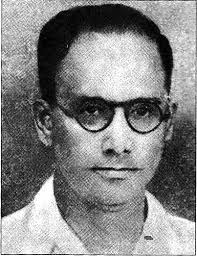
Chakravarti Rajagopalachari Narasimhan, popularly known as C. R. Narasimhan, was born in 1909 in Salem, Tamil Nadu. He was the son of the renowned freedom fighter and statesman Chakravarti Rajagopalachari and Alamelu Mangamma.
Growing up in a family deeply involved in India’s struggle for independence had a profound influence on Narasimhan’s outlook. The ideals of nationalism, social service, and public duty shaped his early years.
Although detailed records of his formal education are limited, it is evident that his upbringing exposed him to political discussions, social reform movements, and the principles of leadership from a young age.
Education & Skills
C. R. Narasimhan developed practical skills that later defined his public career:
- Leadership and organizational ability, acquired through participation in nationalist activities.
- Public speaking and political communication, which aided him in parliamentary debates.
- Administrative experience, gained through service in legislative and local government bodies.
- Commitment to Gandhian values, including social welfare, prohibition, and rural development.
His political maturity and administrative competence enabled him to transition smoothly from freedom activism to democratic governance after Independence.
Contribution to Tamil Literature
Unlike several Tamil freedom fighters who were noted authors or literary figures, C. R. Narasimhan’s direct contribution to Tamil literature was limited. His influence was primarily political and social.
However, being raised in the household of Rajaji—who himself translated classical texts and encouraged Tamil scholarship—Narasimhan supported the preservation of Tamil cultural values. His involvement in public institutions indirectly promoted educational and cultural initiatives within Tamil society.
Therefore, his contribution is best understood as supportive rather than literary in nature.
Role in India’s Freedom Movement
C. R. Narasimhan actively participated in the Indian freedom struggle from an early age. Inspired by his father’s example, he joined nationalist activities while still young.
One of his most notable contributions was his participation in the Vedaranyam Salt Satyagraha of 1930, a movement led by Rajaji in the Madras Presidency as part of the larger Civil Disobedience Movement initiated by Mahatma Gandhi.
For his involvement in this protest against British salt laws, Narasimhan was imprisoned by the colonial government.
His imprisonment demonstrated his commitment to India’s independence and aligned him with thousands of nationalists who willingly faced hardships for the cause of freedom.
After India attained independence in 1947, he continued to serve the nation through democratic institutions rather than revolutionary activism.
Political Career After Independence
C. R. Narasimhan became an important political figure in post-independence Tamil Nadu.
Some highlights of his career include:
- Elected to the First Lok Sabha from the Krishnagiri constituency in 1952.
- Re-elected to the Second Lok Sabha in 1957.
- Served as a Member of Parliament from 1952 to 1962.
- Initially associated with the Indian National Congress.
- Later joined the Swatantra Party, founded by Rajaji.
- Served as a member of the Corporation of Madras during the 1970s.
- Worked with organizations promoting Gandhian ideals and prohibition policies.
His parliamentary career reflected his dedication to public service and constitutional democracy.
Personal Life
C. R. Narasimhan belonged to one of Tamil Nadu’s most distinguished public-service families. Despite being the son of Rajaji, he established his own identity through political activism and electoral success.
He remained committed to Gandhian principles throughout his life and was involved in social organizations, including the Gandhi Ashram at Tiruchengode.
Those who knew him described him as a disciplined individual devoted to ethical politics and national development.
Death
C. R. Narasimhan passed away in 1989 at the age of 80 following a stroke.
His death marked the end of a life dedicated to both the struggle for independence and the strengthening of India’s parliamentary democracy.
Conclusion
C. R. Narasimhan occupies an important place in the history of Tamil Nadu’s contribution to India’s nation-building process. From participating in the Vedaranyam Salt Satyagraha and enduring imprisonment during British rule to serving two terms in the Lok Sabha, his life exemplified the transition from freedom fighter to democratic leader.
Although he was overshadowed by the towering legacy of his father, Rajaji, Narasimhan carved out his own path through public service, political integrity, and unwavering commitment to Gandhian ideals. His contributions remain a valuable chapter in the history of India’s independence movement and early parliamentary democracy.
About the Author