Introduction
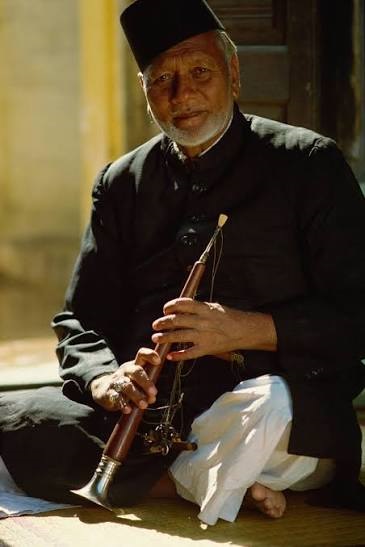
Bismillah Khan was one of India’s greatest classical musicians and is widely regarded as the legendary shehnai maestro. He transformed the shehnai—once considered primarily a ceremonial instrument—into a respected instrument of Indian classical music. Through his extraordinary talent and lifelong dedication to music, he earned worldwide recognition and became a symbol of India’s rich cultural heritage. In recognition of his immense contribution to Indian classical music, he was awarded the Padma Vibhushan in 1980. He later received the country’s highest civilian honour, the Bharat Ratna, in 2001.
Why Did He Receive the Padma Vibhushan Award?
Bismillah Khan was awarded the Padma Vibhushan in 1980 for his exceptional contributions to:
- Indian classical music.
- Popularizing the shehnai as a solo concert instrument.
- Preserving and promoting India’s musical traditions.
- Representing Indian culture on prestigious international stages.
- Inspiring generations of musicians through his artistry and dedication.
His performances helped bring Indian classical music to audiences across the world and elevated the status of the shehnai in the classical music tradition.
Career and Achievements
Bismillah Khan enjoyed a remarkable musical career spanning more than seven decades.
Some of his major achievements include:
- Became the world’s most celebrated shehnai player.
- Performed at the historic Red Fort in Delhi on 15 August 1947, immediately after India’s first Independence Day speech by Jawaharlal Nehru.
- Gave memorable performances across Asia, Europe, the Middle East, and North America.
- Played a key role in making the shehnai a respected instrument in Indian classical concerts.
- Performed at major national events, cultural festivals, and international music festivals.
- Dedicated his entire life to promoting Indian classical music and preserving traditional musical heritage.
Early Life
Bismillah Khan was born into a family of traditional musicians. His father and ancestors were court musicians, and music became a part of his life from an early age. As a child, he moved to Varanasi, where he received rigorous training from his maternal uncle, the renowned shehnai player Ali Bux ‘Vilayatu’. Years of disciplined practice along the banks of the Ganges shaped him into one of India’s greatest musicians.
Birth Date and Death
- Born: 21 March 1916
- Birthplace: Dumraon
- Died: 21 August 2006
- Place of Death: Varanasi
- Age at Death: 90 years
Education and Career
Education
- Received his early education at home.
- Learned music through the traditional guru-shishya (teacher-disciple) system.
- Trained under his maternal uncle, Ali Bux ‘Vilayatu’, a distinguished shehnai player at the Kashi Vishwanath Temple.
Career
- Began performing publicly as a young musician.
- Became India’s leading shehnai exponent.
- Performed extensively across India and around the world.
- Received numerous national and international honours.
- Continued performing almost until the end of his life.
Field of Achievement
Bismillah Khan made extraordinary contributions in:
- Indian Classical Music
- Instrumental Music
- Hindustani Classical Music
- Cultural Heritage
- Music Education and Preservation
- Promotion of Indian Arts Worldwide
Awards and Honours
Bismillah Khan received many prestigious awards throughout his career, including:
- Sangeet Natak Akademi Award (1956)
- Padma Shri (1961)
- Padma Bhushan (1968)
- Padma Vibhushan (1980)
- Bharat Ratna (2001) – India’s highest civilian award.
- Several honorary doctorates from Indian universities.
Interesting Facts
- He performed at the Red Fort during India’s first Independence Day celebrations on 15 August 1947.
- He is credited with bringing the shehnai into mainstream Indian classical music.
- Despite receiving international offers to settle abroad, he chose to remain in India because of his deep love for Varanasi and Indian culture.
- He believed music was a form of prayer and promoted harmony among different communities.
- He practiced for hours every day throughout his life.
- His life inspired several documentaries and books on Indian classical music.
Legacy and Inspiration
Bismillah Khan’s legacy lives on through his timeless recordings and his transformative contribution to Indian classical music. He elevated the shehnai from a ceremonial instrument to one recognized on prestigious concert stages around the world. His dedication, humility, and devotion to music continue to inspire musicians and music lovers across generations.
He remains a symbol of India’s cultural diversity, artistic excellence, and the unifying power of music.
Contribution to the Nation
Bismillah Khan made lasting contributions to India by:
- Popularizing the shehnai as a classical concert instrument.
- Preserving India’s rich musical traditions.
- Representing Indian culture at international events.
- Inspiring generations of classical musicians.
- Promoting communal harmony through music.
- Enhancing India’s cultural identity on the global stage.
His music became a source of national pride and helped showcase India’s artistic heritage to the world.
Conclusion
Bismillah Khan was one of India’s greatest musical legends whose extraordinary talent transformed the shehnai into an internationally respected classical instrument. His lifelong dedication to music, deep spirituality, and commitment to preserving India’s cultural heritage earned him the Padma Vibhushan in 1980 and later the Bharat Ratna in 2001. His timeless melodies continue to inspire musicians and audiences worldwide, ensuring that his legacy remains an integral part of India’s rich cultural history.
About the Author