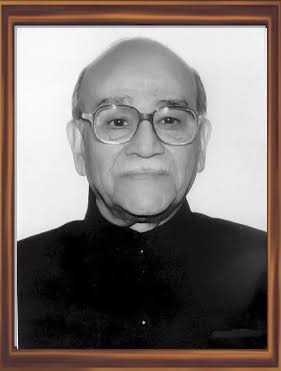


Bhalchandra Digamber Garware (21 December 1903 – 2 November 1990), widely known as Abasaheb Garware, was a pioneering Indian industrialist and the visionary founder of the Garware Group of Industries. Starting from humble beginnings and overcoming severe financial distress, he became a trailblazer who introduced the plastics and synthetic manufacturing industry to India, laying down strong corporate roots in the state of Maharashtra.
2. Quick Facts
- Full Name: Bhalchandra Digamber Garware (Abasaheb Garware)
- Native Name: भालचंद्र दिगंबर गरवारे
- Date of Birth: 21 December 1903
- Place of Birth: Tasgaon, Sangli district, British India
- Nationality: Indian
- Occupation/Profession: Industrialist, Entrepreneur, Business Leader
- Field of Achievement: Business, Industry, and Philanthropy
- Years Active: 1920s–1990
3. Award Information
- Award Name: Padma Bhushan
- Award Category: Civil Honour (Third-Highest Civilian Award in India)
- Award Year: 1971
- Presented By: Government of India (President of India)
- Date of Ceremony: Republic Day Honours List, 1971
- Citation/Official Reason: Recognized for his overall, distinguished contributions to trade, industry, and social service in India.
- Previous Recipients: Prominent nation-builders, industrialists, and public servants.
- Next Recipients: Notable figures of subsequent annual civilian honours lists.
4. Why He Received the Award
Abasaheb Garware was honored with the Padma Bhushan for his pioneering role in shaping India’s domestic industrial landscape. By introducing advanced sectors like thermoplastics, nylon bristles, synthetic fishing nets, and polyester films, he reduced India’s reliance on foreign imports. Furthermore, his extensive philanthropic contributions to education, healthcare, and public infrastructure cemented his status as a pillar of modern economic development.
5. Early Life
Born into a middle-class family in Tasgaon, Maharashtra, Abasaheb experienced severe early hardships. His family faced abrupt financial ruin after his father lost accumulated wealth and incurred heavy debts. These harsh financial realities forced a young Bhalchandra to cut short his formal schooling and migrate first to Sangli and later to Bombay (Mumbai) in search of a livelihood.
6. Education
- Schooling: Completed up to the 6th standard before financial pressures compelled him to discontinue formal education and enter the workforce.
- Self-Taught Acumen: Mastered international trade dynamics, commerce, and corporate management entirely through hands-on experience, grit, and global business exposure.
- Honorary Doctorate: Later in life, recognized academically when the University of Pune conferred upon him an honorary Doctor of Letters (D.Litt.) degree in 1989.
7. Career Journey
- Second-Hand Car Market (1920s): Began his career handling odd jobs in Bombay before recognizing the potential of the automobile sector, eventually launching the Deccan Motor Agency in Girgaon, Bombay.
- International Expansion (1933): Traveled to England to capitalize on post-recession asset sales, trading automobiles and acquiring cheap surplus stock to build strong capital reserves.
- Pioneering Plastics (1940s): Foreseeing the global shift toward synthetics, he started manufacturing plastic buttons for the Indian Navy during World War II, planting the seeds for the Garware plastics empire.
- Industrial Scaling (1950s–1980s): Established massive manufacturing plants spanning nylon yarn, polyester films, synthetic ropes, and technical textiles, steering the Garware Group into a multi-plant conglomerate.
8. Major Achievements
- Founded the Garware Group of Industries, single-handedly introducing the thermoplastic and synthetic manufacturing sector to India.
- Appointed as the Sheriff of Bombay for the term 1959–1960.
- Served in critical administrative capacities, including leading delegations abroad and guiding financial bodies like the Maharashtra State Financial Corporation.
- Honored with a commemorative postage stamp issued by the Department of Posts, Government of India, in 2004.
9. Contribution to the Nation
Abasaheb Garware actively championed import substitution by engineering domestic manufacturing capabilities for items previously unavailable or heavily imported into India. He generated thousands of jobs and built vital institutional infrastructure. Embracing Mahatma Gandhi’s philosophy of trusteeship, he plowed substantial portions of his corporate wealth back into society, setting up nearly 75 charitable trusts focusing on education, health, and sports.
10. Other Awards and Honours
- Padma Bhushan (1971): Conferred by the President of India.
- Udyog Ratna Award (1989): Presented by the Institute of Economic Studies, New Delhi.
- Honorary D.Litt. (1989): Awarded by the University of Pune.
- Commemorative Postage Stamp (2004): Issued by India Post in recognition of his legacy.
11. Legacy and Influence
Garware’s legacy thrives through prominent educational institutions and corporate entities bearing his name—such as Abasaheb Garware College in Pune, the Garware Institute of Career Education and Development (GICED) at the University of Mumbai, and Smt. Vimlabai Garware High School. His descendants expanded his industrial blueprint into global markets, particularly in technical textiles and high-performance polymers.
12. Interesting Facts
- He had to drop out of school after passing only the 6th standard due to extreme poverty, yet he went on to build one of India’s most advanced chemical and polymer empires.
- He took a massive risk by traveling to recession-hit England in 1933 with minimal resources, turning clever automobile acquisitions into the foundational capital for his future industrial ventures.
- He established roughly 75 distinct public trusts during his lifetime to manage structured philanthropy.
13. Quotes
“True industrial success is measured not merely by the wealth accumulated in a balance sheet, but by the stability and dignity we provide to the hands that build our enterprises.” — B. D. Garware (Reflecting his trusteeship-driven corporate philosophy)
14. Timeline
| Year | Milestone |
| 1903 | Born on December 21 in Tasgaon, British India. |
| 1920s | Moved to Bombay, took up odd jobs, and later founded the Deccan Motor Agency. |
| 1933 | Traveled to the UK to expand business operations and trade assets. |
| 1940s | Entered the plastic manufacturing space, producing essential goods during WWII. |
| 1959–1960 | Appointed as the Sheriff of Bombay. |
| 1971 | Awarded the prestigious Padma Bhushan by the Government of India. |
| 1984 | Co-founded the Garware Institute of Career Education and Development (GICED) in Mumbai. |
| 1989 | Conferred the Udyog Ratna and an honorary D.Litt. degree by Pune University. |
| 1990 | Passed away on November 2 in Pune, Maharashtra, at the age of 86. |
| 2004 | India Post released a commemorative postage stamp in his honor. |
15. References
- Wikipedia contributors. “Abasaheb Garware.” Wikipedia, The Free Encyclopedia.
- Ministry of Home Affairs, Government of India – Padma Awards Directory.
- Press Information Bureau (PIB), Government of India – Archives on B.D. Garware.
- Harish Damodaran. India’s New Capitalists: Caste, Business, and Industry in a Modern Nation. Hachette UK.
16. Related Personalities
- Walchand Hirachand – Legendary Maharashtrian industrialist and contemporary pioneer.
- Mahatma Gandhi – Influential leader whose economic and trusteeship philosophies deeply shaped Garware’s philanthropic outlook.
- Shashikant Garware – Eldest son and successor who expanded the group’s polyester and film operations.
- Ram Joshi – Former Vice-Chancellor of the University of Mumbai who collaborated with Garware on educational institution building.
17. Frequently Asked Questions (FAQ)
Q: Who was Bhalchandra Digamber Garware?
A: Commonly known as Abasaheb Garware, he was a legendary self-made Indian industrialist and the founder of the Garware Group, credited with pioneering the plastic and synthetic industry in India.
Q: What were his primary business milestones?
A: He transitioned from dealing in second-hand automobiles during the 1920s to establishing large-scale manufacturing facilities for plastics, nylon, technical textiles, and polyester films in India.
Q: When did he receive the Padma Bhushan?
A: He was awarded the Padma Bhushan by the Government of India in 1971 for his exceptional contributions to trade and industry.
Q: What educational institutions are linked to his name?
A: His philanthropic endowments led to the creation and renaming of several institutions, including Abasaheb Garware College in Pune and the Garware Institute of Career Education and Development (GICED) in Mumba
About the Author