
Introduction
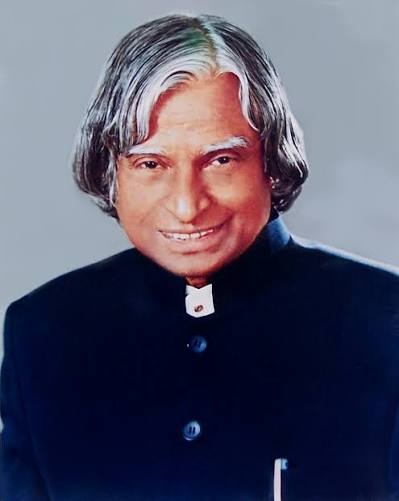
Dr. Avul Pakir Jainulabdeen Abdul Kalam was one of India’s most respected scientists, leaders, and visionaries. Known as the “Missile Man of India,” he made remarkable contributions to India’s space and defence programmes. He also served as the 11th President of India from 2002 to 2007.
Through his scientific achievements, inspiring speeches, and dedication to education, Dr. Kalam became a role model for millions of people, especially young students. His life represents the power of hard work, determination, and dreams.
Why Did A. P. J. Abdul Kalam Receive the Padma Vibhushan Award?
Dr. A. P. J. Abdul Kalam received the Padma Vibhushan in 1990 for his outstanding contribution to science and technology, particularly in the areas of space research and defence development.
He was honoured for his leadership in India’s missile and aerospace programmes, including his important role in developing indigenous defence technologies. His work helped strengthen India’s scientific capabilities and national security.
Early Life
A. P. J. Abdul Kalam was born on 15 October 1931 in Rameswaram, Tamil Nadu, India. He came from a humble family and faced financial difficulties during his childhood.
Despite challenges, he had a strong desire to learn and worked hard to achieve his goals. His early experiences taught him the values of discipline, honesty, and perseverance.
Birth Date and Death
- Full Name: Avul Pakir Jainulabdeen Abdul Kalam
- Birth Date: 15 October 1931
- Birth Place: Rameswaram, Tamil Nadu, India
- Death Date: 27 July 2015
- Place of Death: Shillong, Meghalaya, India
He passed away while delivering a lecture to students, reflecting his lifelong passion for education and inspiring young minds.
Education and Career
Dr. Kalam completed his schooling in Rameswaram and later studied physics at St. Joseph’s College, Tiruchirappalli. He then studied aerospace engineering at the Madras Institute of Technology (MIT), Chennai.
He began his career at the Defence Research and Development Organisation (DRDO) and later joined the Indian Space Research Organisation (ISRO).
Important roles in his career include:
- Project Director of India’s first Satellite Launch Vehicle (SLV-III)
- Leading scientist in India’s Integrated Guided Missile Development Programme
- Scientific Adviser to the Defence Minister of India
- Principal Scientific Adviser to the Government of India
- 11th President of India (2002–2007)
Career and Achievements
Dr. Kalam made many important contributions to Indian science and technology:
- Played a key role in the development of India’s first indigenous satellite launch vehicle.
- Led the development of missiles such as Agni and Prithvi.
- Contributed to India’s defence self-reliance.
- Played an important role in the Pokhran-II nuclear tests of 1998.
- Promoted scientific research, innovation, and education among young people.
His scientific leadership earned him national and international recognition.
Field of Achievements
The main fields of Dr. A. P. J. Abdul Kalam’s achievements were:
- Aerospace engineering
- Missile technology
- Defence research
- Space science
- Education and youth development
- Leadership and public service
His work connected science with national development.
Awards and Honours
Dr. Kalam received numerous awards and honours, including:
- Padma Bhushan (1981)
- Padma Vibhushan (1990)
- Bharat Ratna (1997) – India’s highest civilian award
- Indira Gandhi Award for National Integration (1997)
- Veer Savarkar Award (1998)
- Several honorary doctorates from universities across the world
These awards recognized his contributions to science, technology, and society.
Interesting Facts
- Dr. Kalam was known as the “Missile Man of India” because of his role in missile development programmes.
- He was the first scientist and the first person from a non-political background to become the President of India.
- He was a passionate teacher and often interacted with students.
- He wrote several inspirational books, including “Wings of Fire” and “Ignited Minds.”
- He believed that young people were the greatest strength of the nation.
Legacy and Inspiration
Dr. Kalam’s legacy continues through his scientific achievements, writings, and educational efforts. He inspired millions of students to dream big and work hard to achieve their goals.
His message of innovation, knowledge, and national development continues to guide young people. He remains a symbol of humility, dedication, and positive thinking.
Contribution to the Nation
Dr. Kalam made a historic contribution to India’s growth by strengthening the country’s space and defence capabilities. His work helped India develop advanced technologies and become more self-reliant.
As President, he encouraged education, scientific thinking, and youth participation in nation-building. His vision of a developed India continues to inspire future generations.
Conclusion
Dr. A. P. J. Abdul Kalam was a great scientist, inspiring leader, and beloved President who dedicated his life to serving India. His achievements in science and his passion for educating young minds made him one of the most admired personalities in Indian history. His life teaches us that with dedication, knowledge, and determination, we can achieve great success and contribute to the nation.
About the Author