Introduction
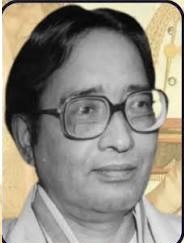
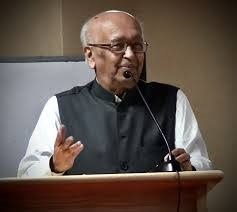
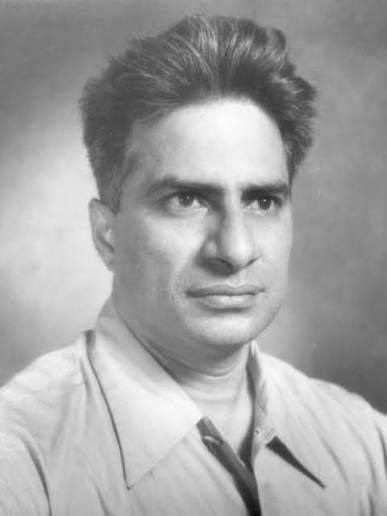
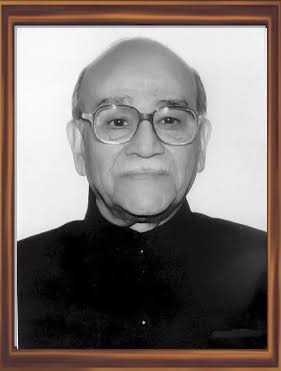
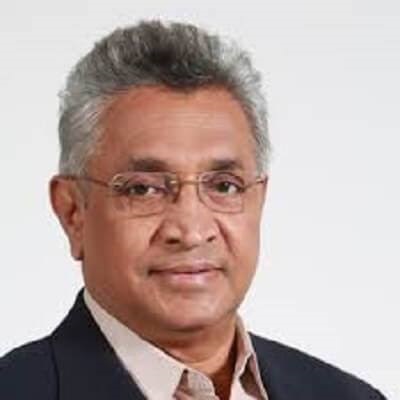
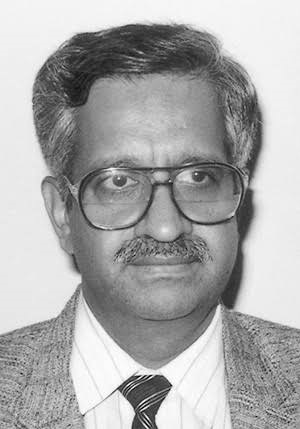
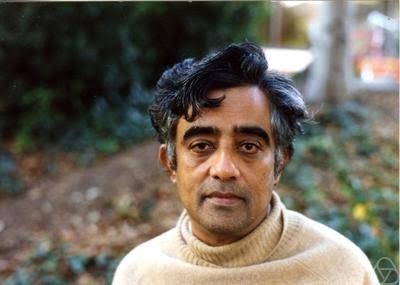
Ramaiyengar Sridharan is a distinguished Indian mathematician renowned for his contributions to algebra, algebraic K-theory, projective modules, and quadratic forms. His research has significantly influenced modern algebra and has helped establish India’s reputation in advanced mathematical research. Sridharan’s work bridges abstract algebra and geometry, providing important insights into the structure of rings and modules.
Early Life and Education
Ramaiyengar Sridharan was born in India and developed an early interest in mathematics. He pursued higher education in mathematics at leading Indian institutions and later specialized in algebra. During his academic training, he was influenced by some of the prominent mathematicians of his time, which helped shape his future research interests in algebraic structures and K-theory.
Scientific Career & Research
Sridharan spent much of his academic career engaged in research and teaching at prestigious institutions in India and abroad. His work focused on several important areas of modern algebra, including:
- Algebraic K-theory
- Projective modules
- Quadratic forms
- Commutative algebra
- Ring theory
He collaborated with leading mathematicians worldwide and contributed to the development of algebraic methods that are widely used in contemporary mathematical research.
Major Discoveries and Inventions
1. Sridharan Modules
One of his most notable contributions is the study of structures that came to be known as Sridharan modules, which have applications in understanding projective modules over rings.
2. Work on Projective Modules
Sridharan made significant advances in the theory of projective modules, helping mathematicians understand when modules can be decomposed into simpler components.
3. Contributions to Algebraic K-Theory
His research contributed to the growth of algebraic K-theory, an important branch of mathematics that studies algebraic structures using topological and geometric methods.
4. Research on Quadratic Forms
He produced influential results concerning quadratic forms and their applications in algebra and number theory.
5. Ring-Theoretic Methods
Sridharan developed techniques for analyzing rings and modules that continue to influence modern algebraic research.
Awards and Honours
Throughout his career, Ramaiyengar Sridharan received recognition from the mathematical community for his research contributions. His work has been widely cited and respected by algebraists around the world.
Some notable distinctions include:
- Fellowship and membership in prestigious mathematical societies.
- Invitations to speak at international mathematical conferences.
- Recognition for advancing algebraic research in India.
Later Life and Death
Ramaiyengar Sridharan continued his involvement in mathematical research, mentoring students and collaborating with researchers. His academic influence extended through generations of mathematicians who benefited from his teachings and publications.
Legacy and Impact
Sridharan’s legacy lies in his profound contributions to algebra and algebraic K-theory. His research has:
- Advanced the understanding of projective modules.
- Influenced developments in commutative algebra.
- Contributed to modern K-theory.
- Inspired generations of Indian mathematicians.
- Strengthened India’s position in international mathematical research.
Many of his papers remain important references for researchers working in algebra and related fields.
Conclusion
Ramaiyengar Sridharan is regarded as one of India’s notable algebraists whose work on projective modules, quadratic forms, and algebraic K-theory has had a lasting impact on mathematics. Through his research, teaching, and mentorship, he helped advance modern algebra and inspired future generations of mathematicians. His contributions continue to be studied and appreciated within the global mathematical community.
About the Author