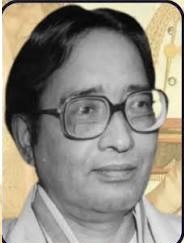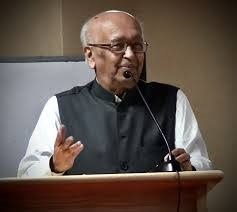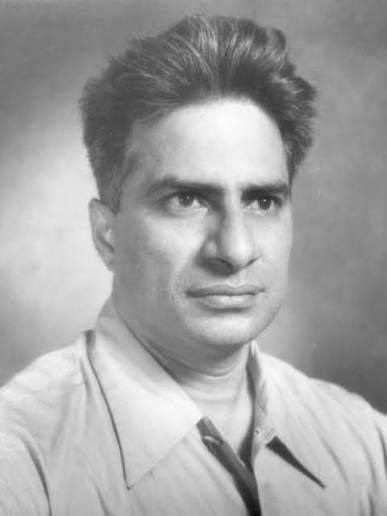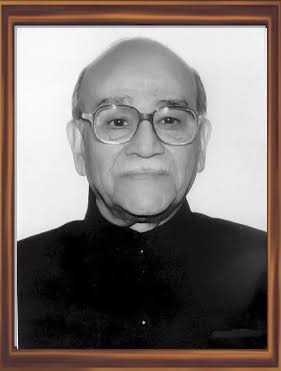
Introduction
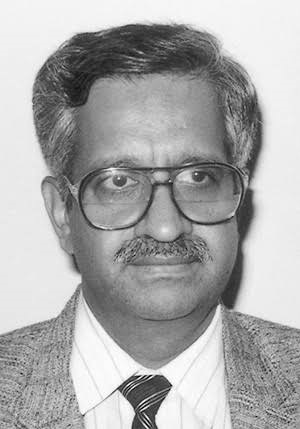
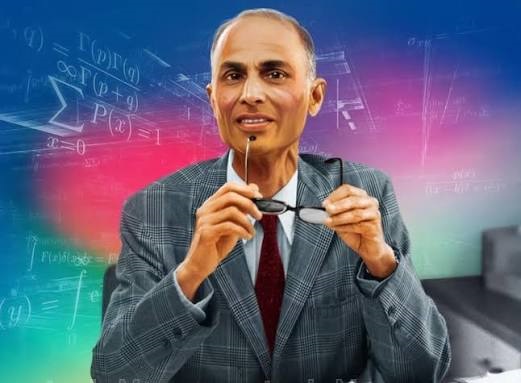
Harish-Chandra was one of the most influential mathematicians of the 20th century and a pioneer in the field of representation theory. His groundbreaking work on Lie groups, harmonic analysis, and representation theory transformed modern mathematics and established deep connections between algebra, geometry, and mathematical physics. His contributions continue to influence research in number theory, quantum mechanics, and theoretical physics.
Early Life and Education
Harish-Chandra was born on October 11, 1923, in Kanpur, Uttar Pradesh, India. He displayed exceptional talent in mathematics from an early age. He completed his undergraduate studies at the University of Allahabad and later pursued higher studies under the guidance of the Nobel Prize-winning physicist C. V. Raman at the Indian Institute of Science.
Initially trained as a physicist, Harish-Chandra became interested in mathematics through his interactions with renowned physicist Paul Dirac. He subsequently moved to the University of Cambridge, where he studied under Dirac and gradually shifted his focus from physics to pure mathematics.
Scientific Career & Research
Harish-Chandra held academic and research positions at several prestigious institutions, including:
- Institute for Advanced Study
- Columbia University
- Princeton University
His research focused on:
- Representation theory of semisimple Lie groups
- Harmonic analysis
- Lie algebras
- Invariant differential operators
- Mathematical foundations of quantum mechanics
His work laid the foundations for modern representation theory and became essential to many branches of mathematics.
Major Discoveries and Inventions
1. Representation Theory of Semisimple Lie Groups
Harish-Chandra developed a comprehensive theory for the representations of semisimple Lie groups. His methods provided powerful tools for understanding symmetries in mathematics and physics.
2. Harish-Chandra Modules
He introduced the concept of Harish-Chandra modules, which became fundamental objects in representation theory and are still widely studied today.
3. Character Theory
Harish-Chandra established deep results concerning characters of infinite-dimensional representations. His character formulas helped mathematicians classify complex representations of Lie groups.
4. Harmonic Analysis on Lie Groups
He pioneered harmonic analysis on semisimple Lie groups, extending ideas similar to Fourier analysis into highly sophisticated mathematical settings.
5. Plancherel Formula
One of his most celebrated achievements was deriving the Plancherel formula for semisimple Lie groups, providing a framework for decomposing functions into fundamental components.
6. Influence on the Langlands Program
His work became a cornerstone for the development of the modern Langlands Program, one of the most important areas of contemporary mathematics.
Awards and Honours
Harish-Chandra received numerous prestigious recognitions, including:
- Fellow of the Royal Society (1973)
- Member of the National Academy of Sciences
- Cole Prize in Algebra from the American Mathematical Society (1954)
- Honorary degrees and international recognition for his contributions to mathematics
In his honor, the American Mathematical Society established the Harish-Chandra Prize for outstanding work in representation theory and harmonic analysis.
Later Life and Death
Harish-Chandra continued his research at the Institute for Advanced Study in Princeton for much of his later career. He remained one of the world’s leading experts in representation theory until his death on October 16, 1983, in Princeton, New Jersey, USA.
Legacy and Impact
Harish-Chandra’s contributions revolutionized representation theory and modern algebra. His work:
- Created the foundation of modern representation theory of Lie groups.
- Influenced number theory, algebra, geometry, and mathematical physics.
- Provided essential tools for quantum mechanics and symmetry analysis.
- Inspired generations of mathematicians worldwide.
- Remains central to contemporary research in the Langlands Program and harmonic analysis.
Many of his theories and methods continue to be actively used and expanded upon by mathematicians today.
Conclusion
Harish-Chandra was a visionary mathematician whose pioneering work in representation theory transformed the study of symmetry and abstract algebra. Through his profound insights into Lie groups, harmonic analysis, and character theory, he established mathematical frameworks that remain indispensable in modern research. His legacy endures as one of the greatest contributors to 20th-century mathematics, bridging the worlds of pure mathematics and theoretical physics.
About the Author