
Introduction
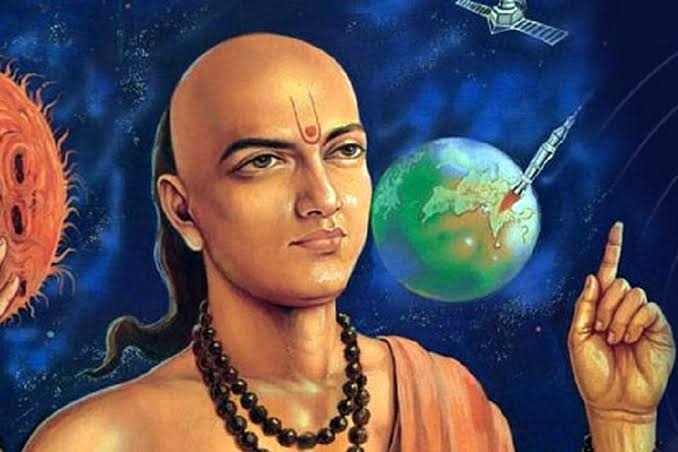
Aryabhata was one of the greatest mathematicians and astronomers of ancient India. Born during the Gupta period, he made groundbreaking contributions to mathematics, astronomy, and scientific thought. His most famous work, the Aryabhatiya, introduced innovative concepts in algebra, trigonometry, arithmetic, and planetary motion. Aryabhata’s discoveries were centuries ahead of their time and influenced scientific developments in India, the Islamic world, and later Europe. He is widely regarded as a pioneer of mathematical astronomy.
Early Life and Education
Aryabhata was born in 476 CE, though the exact location remains uncertain. Many historians believe he was associated with the region of Kusumapura (modern-day Patna, Bihar), an important center of learning in ancient India.
Very little is known about his family and early life. However, historical records suggest that he received extensive education in mathematics, astronomy, and philosophy. He likely studied at prominent educational centers of the Gupta Empire, where scholarly activities flourished.
His exceptional intellectual abilities enabled him to develop advanced mathematical and astronomical theories at a young age.
Scientific Career & Research
Aryabhata devoted his life to studying celestial movements, planetary positions, eclipses, and mathematical calculations. Around the age of 23, he composed the Aryabhatiya, a concise yet influential treatise containing 121 verses covering mathematics and astronomy.
His work challenged several traditional beliefs and introduced scientific explanations for natural phenomena. Aryabhata used mathematical methods to solve astronomical problems and developed highly accurate calculations for planetary motions and time measurement.
His research laid the foundation for later Indian mathematicians and astronomers, including Brahmagupta and Bhaskara I.
Major Discoveries and Inventions
1. Aryabhatiya
Aryabhata’s most important work, the Aryabhatiya, covered arithmetic, algebra, trigonometry, geometry, and astronomy. It became one of the most influential scientific texts in ancient India.
2. Approximation of Pi (π)
Aryabhata calculated the value of pi as approximately 3.1416, remarkably close to the modern value. This was one of the most accurate approximations known during his era.
3. Development of Trigonometry
He introduced concepts related to sine functions and trigonometric tables, laying the groundwork for modern trigonometry.
4. Earth’s Rotation
Aryabhata correctly proposed that the Earth rotates on its axis, explaining the apparent daily motion of the stars. This idea was revolutionary for its time.
5. Scientific Explanation of Eclipses
Instead of attributing eclipses to mythological causes, Aryabhata explained solar and lunar eclipses scientifically as the result of shadows cast by the Earth and Moon.
6. Astronomical Calculations
He accurately estimated:
- Length of the solar year
- Planetary periods
- Earth’s circumference
- Positions of celestial bodies
Many of these calculations were impressively accurate considering the limited instruments available.
Awards and Honours
Formal awards as understood today did not exist during Aryabhata’s lifetime. However, he received immense respect from scholars and rulers of ancient India.
Modern honors include:
- The Indian satellite Aryabhata, launched in 1975, named in his honor.
- Numerous educational institutions, observatories, and research centers bearing his name.
- Recognition as one of the greatest scientists in Indian history.
Later Life and Death
Historical information about Aryabhata’s later years is limited. Scholars believe he spent much of his life teaching, conducting research, and refining his astronomical calculations.
He is thought to have died around 550 CE. Although details of his death remain unknown, his scientific contributions survived through generations of scholars who preserved and expanded upon his work.
Legacy and Impact
Aryabhata’s influence extended far beyond India. His mathematical and astronomical ideas were translated into Arabic and studied throughout the Islamic world, where they contributed to advancements in science and mathematics.
His work influenced:
- Algebra and arithmetic
- Trigonometry
- Astronomy
- Navigation
- Calendar calculations
- Scientific methodology
The concept of using mathematics to explain celestial phenomena became a cornerstone of later scientific developments.
Today, Aryabhata is celebrated as one of the earliest scientists to combine observation, mathematics, and logical reasoning in the study of the universe.
Conclusion
Aryabhata was a visionary mathematician and astronomer whose discoveries transformed scientific understanding in ancient India and beyond. Through his masterpiece Aryabhatiya, he introduced advanced concepts in mathematics and astronomy that remained influential for centuries. His accurate calculations, scientific explanations of eclipses, and recognition of Earth’s rotation demonstrate his extraordinary intellect. Aryabhata’s legacy continues to inspire scientists, mathematicians, and students worldwide, securing his place among the greatest minds in human history.
About the Author