Introduction
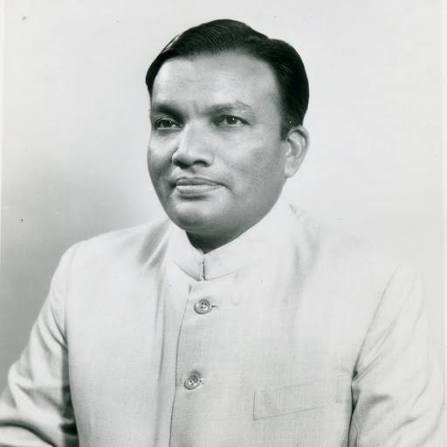
Vikram Sarabhai is widely regarded as the “Father of the Indian Space Program.” He was a visionary scientist, industrialist, and institution builder who laid the foundation for India’s achievements in space science and technology. His pioneering efforts led to the establishment of India’s space research infrastructure and inspired generations of scientists. Sarabhai believed that space technology could be used for national development, education, communication, and weather forecasting, making him one of India’s most influential scientific leaders.
Early Life and Education
Vikram Ambalal Sarabhai was born on 12 August 1919 in Ahmedabad into a wealthy and socially active family. His father, Ambalal Sarabhai, was a prominent industrialist, and his family strongly supported education and social reform.
Sarabhai received his early education at a progressive school established by his parents. He later attended Gujarat College before moving to England to study at University of Cambridge. He earned a degree in Natural Sciences and later completed his doctoral research in cosmic rays, a field that became the focus of his early scientific career.
Scientific Career & Research
After returning to India, Sarabhai joined the Indian Institute of Science, where he worked under the guidance of Nobel Prize-winning physicist C. V. Raman.
In 1947, he founded the Physical Research Laboratory (PRL), which became a leading center for space and atmospheric research in India. His research primarily focused on cosmic rays, upper atmospheric physics, and solar-terrestrial relationships.
Sarabhai recognized the potential of space technology for India’s development. Under his leadership, India began organized space research activities, eventually leading to the formation of the Indian space program.
Major Discoveries and Inventions
1. Establishment of India’s Space Program
Sarabhai played a key role in creating the framework for India’s space activities and scientific research.
2. Formation of INCOSPAR
He established the Indian National Committee for Space Research in 1962, which later evolved into ISRO.
3. Founding of ISRO
Sarabhai was instrumental in establishing the Indian Space Research Organisation in 1969, laying the foundation for India’s future space missions.
4. Thumba Equatorial Rocket Launching Station
He established the Thumba Equatorial Rocket Launching Station, India’s first rocket launching facility.
5. Space Applications for Development
Sarabhai promoted the use of satellites for:
- Remote sensing
- Weather forecasting
- Telecommunications
- Education and rural development
6. Institutional Development
He helped establish several major scientific and educational institutions, including:
- Physical Research Laboratory
- Indian Institute of Management Ahmedabad
- Space Applications Centre
Awards and Honours
Vikram Sarabhai received numerous honors for his scientific contributions:
- Padma Bhushan (1966)
- Padma Vibhushan (1972)
- Several national and international recognitions for his work in science and space research.
Many institutions, research centers, and awards have been named in his honor.
Later Life and Death
During the later years of his life, Sarabhai continued expanding India’s space and scientific infrastructure. He also served as Chairman of the Atomic Energy Commission of India after the death of Homi J. Bhabha.
On 30 December 1971, Vikram Sarabhai passed away unexpectedly due to a cardiac arrest while staying in Thiruvananthapuram. He was only 52 years old. His death was a significant loss to India’s scientific community.
Legacy and Impact
Vikram Sarabhai’s vision transformed India into a nation capable of pursuing advanced space research and technology. The institutions he founded continue to drive scientific innovation and national development.
His belief that space technology should serve society remains a guiding principle of ISRO. Modern achievements such as satellite communication, remote sensing programs, lunar missions, and Mars exploration can all be traced back to the foundation he established.
Today, Sarabhai is remembered as a visionary leader whose contributions shaped India’s scientific future and positioned the country among the world’s leading space-faring nations.
Conclusion
Dr. Vikram Sarabhai was a pioneering scientist whose vision and leadership laid the groundwork for India’s space program. Through the establishment of ISRO, the promotion of space applications for development, and the creation of world-class research institutions, he transformed India’s scientific landscape. His legacy continues to inspire scientists, engineers, and students, making him one of the most respected figures in Indian science and technology.
About the Author