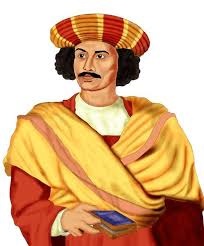
Raja Ram Mohan Roy was one of the greatest social and educational reformers of modern India. He is often called the “Father of the Indian Renaissance” for his efforts to modernize Indian society and eliminate social evils.
Early Life and Education
Raja Ram Mohan Roy was born on 22 May 1772 in Radhanagar, Bengal Presidency (now West Bengal) in a well-educated Brahmin family.
From a young age, he showed strong interest in languages, religion, and philosophy. He studied:
- Sanskrit (Hindu scriptures)
- Persian and Arabic (Islamic texts)
- Later English language and Western philosophy
This diverse education helped him develop a broad and rational outlook on religion and society.
Education & Skills
Raja Ram Mohan Roy was a highly multilingual scholar. He was skilled in:
- Sanskrit literature and Vedic texts
- Persian and Arabic writings
- English literature and Western political thought
- Comparative religion and philosophy
His major skills included:
- Logical thinking and rational analysis
- Writing essays and reformist literature
- Public speaking and debate
- Translation of religious and philosophical texts
He believed in reason over blind faith.
Contribution to Tamil Literature
Although Raja Ram Mohan Roy did not directly contribute to Tamil literature, his influence was felt across India, including Tamil-speaking regions.
His contributions indirectly influenced Tamil society through:
- Promotion of modern education in India
- Spread of English education and rational thinking
- Inspiration for Tamil social reformers like later Dravidian and reform movements
- Encouragement of women’s education and widow remarriage, which became important social themes in Tamil reform literature
Thus, his reform ideas shaped the intellectual environment in which modern Tamil literature and social thought developed.
Role in India’s Freedom Movement
Although he was not a freedom fighter in the later sense, Raja Ram Mohan Roy laid the intellectual foundation of Indian nationalism.
His contributions included:
- Founding Brahmo Samaj (1828) to promote monotheism and social reform
- Opposing Sati system (widow burning) and helping it get banned in 1829
- Advocating press freedom and civil rights
- Promoting modern education and scientific thinking
- Supporting constitutional methods of reform rather than violence
He is considered a pioneer who inspired later national leaders.
Personal Life
Raja Ram Mohan Roy lived a simple and disciplined life.
He was known for:
- Strong moral values
- Interest in spirituality and philosophy
- Deep concern for social justice
He was married but later lived a largely detached life, focusing on reform activities and public service.
Death
Raja Ram Mohan Roy died on 27 September 1833 in Bristol, England.
He had traveled to England to represent the Mughal Emperor and to promote social and political reforms in India. He was buried in Bristol, and later a memorial was built in his honor.
Conclusion
Raja Ram Mohan Roy was a visionary reformer who transformed Indian society with his progressive ideas. His efforts against social evils like Sati, and his promotion of education, rational thinking, and human rights, made him a key figure in India’s modern history. His legacy continues to inspire social reform and educational progress in India today.
About the Author