Early Life and Education
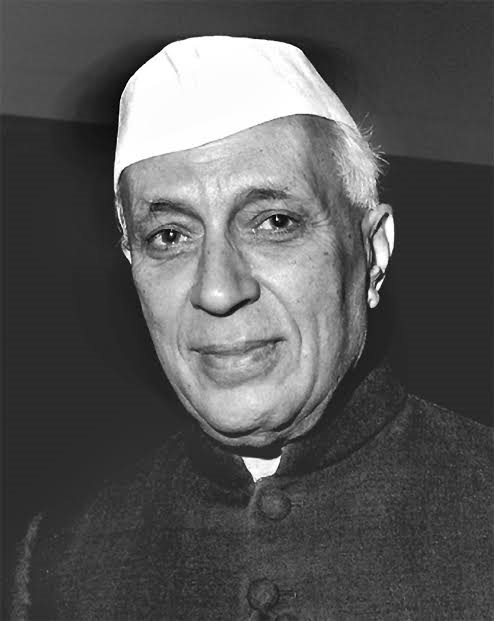
Jawaharlal Nehru was born on 14 November 1889 in Allahabad (now Prayagraj). He was the son of Motilal Nehru and Swarup Rani Nehru. He grew up in a wealthy and educated family that encouraged intellectual development and public service.
Nehru received his early education at home from private tutors. In 1905, he went to England and studied at Harrow School. He later attended Trinity College, Cambridge, where he studied natural sciences. After completing his studies, he trained in law at the Inner Temple and qualified as a barrister in 1912.
Education & Skills
Jawaharlal Nehru was highly educated and possessed a wide range of skills that contributed to his success as a political leader.
Key Skills
- Leadership and public administration.
- Excellent communication and public speaking.
- Political strategy and diplomacy.
- Strong knowledge of history, science, and economics.
- Writing and literary skills.
- Nation-building and policy planning.
His intellectual abilities and vision played a major role in shaping modern India.
Contribution to Tamil Literature
Jawaharlal Nehru did not directly contribute to Tamil literature. However, his books, speeches, and ideas were translated into Tamil and widely read throughout Tamil Nadu. His writings inspired Tamil scholars, students, and political thinkers.
Some of his famous works translated into Tamil include:
- The Discovery of India
- Glimpses of World History
- An Autobiography
These works contributed to historical awareness and national consciousness among Tamil readers.
Role in India’s Freedom Movement
Jawaharlal Nehru was one of the foremost leaders of India’s independence movement.
Joining the National Movement
Inspired by Mahatma Gandhi, Nehru joined the Indian freedom struggle and became an active member of the Indian National Congress.
Non-Cooperation Movement
He participated in the Non-Cooperation Movement launched by Gandhi in 1920 and was imprisoned by British authorities for his activities.
Demand for Complete Independence
In 1929, Nehru became President of the Indian National Congress. Under his leadership, the Congress adopted the goal of Purna Swaraj (Complete Independence) at the historic Lahore Session.
Civil Disobedience and Quit India Movements
Nehru actively participated in the Civil Disobedience Movement and the Quit India Movement. He spent over nine years in British prisons during the freedom struggle.
Leadership During Independence
Nehru worked tirelessly alongside national leaders to secure India’s freedom. When India became independent on 15 August 1947, he delivered the famous “Tryst with Destiny” speech and became the country’s first Prime Minister.
Personal Life
In 1916, Jawaharlal Nehru married Kamala Nehru. The couple had one daughter, Indira Gandhi, who later became one of India’s most influential political leaders.
Nehru was known for his love of children, earning him the affectionate title “Chacha Nehru.” His birthday, 14 November, is celebrated annually as Children’s Day in India.
Death
Jawaharlal Nehru passed away on 27 May 1964 in New Delhi after suffering a heart attack. His death marked the end of an important era in Indian politics and nation-building.
Millions of people mourned the loss of the leader who had guided India through its formative years after independence.
Conclusion
Jawaharlal Nehru was a distinguished freedom fighter, visionary leader, author, and the first Prime Minister of independent India. His contributions to the freedom movement, democratic governance, scientific development, and national unity laid the foundation for modern India. Although he did not directly contribute to Tamil literature, his writings and ideas greatly influenced readers across the country. Nehru’s legacy continues to inspire generations of Indians through his commitment to democracy, education, and progres
About the Author