1. Introduction
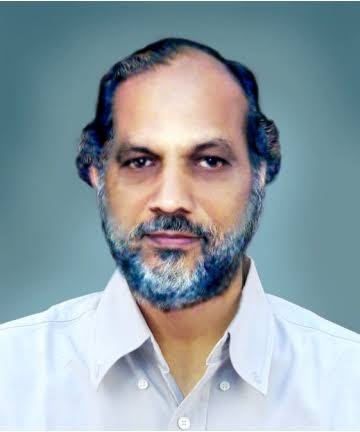
Dr. Vasant Ranchhod Gowariker was a legendary Indian scientist, chemical engineer, and academic administrator who played a foundational role in shaping India’s space program, agricultural research, and weather forecasting infrastructure. Widely celebrated as the architect of India’s indigenous monsoon model, he served in crucial national leadership positions, leaving a permanent legacy in space rocketry, polymer chemistry, and public science administration.
2. Quick Facts
- Full Name: Vasant Ranchhod Gowariker
- Native Name: वसंत रणछोड गोवारीकर (Marathi)
- Date of Birth: March 25, 1933
- Place of Birth: Pune, Bombay Presidency, British India (now Maharashtra)
- Nationality: Indian
- Occupation/Profession: Scientist, Chemical Engineer, Researcher, and Academic Administrator
- Field of Achievement: Space Research, Propellant Technology, Meteorology, and Biotechnology
- Years Active: 1950s–2010s (Spanning over six decades of research, space administration, and national policy-making)
3. Award Information (Padma Bhushan & Padma Shri)
- Award Name: Padma Bhushan (Previously awarded the Padma Shri in 1984)
- Award Category: Science and Engineering / Public Service
- Award Year: 2008
- Presented By: The President of India (at Rashtrapati Bhavan)
- Date of Ceremony: Republic Day, January 26, 2008
- Citation/Official Reason: For exceptional and distinguished services to science and technology, particularly for pioneering solid propellant development in space research and formulating India’s first objective monsoon forecasting model.
- Other Major Honors: Aryabhatta Award (Astronautical Society of India) and the FIE Foundation Award.
4. Why He Received the Award
Dr. Vasant Gowariker was honored with the Padma Bhushan (and earlier the Padma Shri) in recognition of his monumental lifetime contributions to India’s technological self-reliance. He was chiefly recognized for steering solid propellant development during the nascent years of the Indian Space Research Organisation (ISRO), directing the Vikram Sarabhai Space Centre (VSSC), and creating the groundbreaking indigenous weather forecasting model that accurately predicted monsoon trends based on parameters like Himalayan snow cover.
5. Early Life
Born in Pune in 1933 into a Maharashtrian family, Dr. Gowariker spent his formative years completing his early schooling and graduation across the Pune and Kolhapur districts of Maharashtra. Driven by an innate curiosity for chemical reactions and industrial sciences, he set out for England in the early 1950s to pursue advanced technical studies, laying the bedrock for his brilliant international career.
6. Education
- Undergraduate & Postgraduate Studies: Completed his foundational science training in Maharashtra before moving abroad.
- Doctoral Studies: Earned his Master of Science (M.Sc.) and Ph.D. in Chemical Engineering from the University of Birmingham, UK, under the supervision of renowned professor F.H. Garner.
- Academic Theory: His doctoral collaboration with Prof. Garner led to the formulation of the globally recognized Garner-Gowariker theory, which offered a novel analysis of heat and mass transfer between fluids and solids.
7. Career Journey
- Early Research & UK Stint: Conducted advanced chemical engineering research overseas before returning to India to join its national scientific mission.
- ISRO & Rocket Technology (1960s–1985): Joined space research under Dr. Vikram Sarabhai (initially working out of a church building in Thumba, Kerala). He pioneered solid propellant research, fueling India’s satellite launch vehicles, and served as the Director of the Vikram Sarabhai Space Centre (VSSC) from 1979 to 1985.
- Scientific Advisor & Secretary: Served as the Secretary to the Department of Science and Technology (DST) and subsequently as the Scientific Advisor to the Prime Minister of India (P.V. Narasimha Rao) from 1991 to 1993.
- Academic Leadership: Appointed as the Vice-Chancellor of Pune University (1994–2000) and served as the Chairman of the Marathi Vidnyan Parishad.
8. Major Achievements
- Father of the Indian Monsoon Model: Developed India’s first mathematical, objective weather-forecasting model that successfully predicted monsoon behavior, transforming agricultural planning.
- Solid Propellant Pioneer: Built the foundation of ISRO’s solid rocket motor technology, enabling India to launch heavy satellite vehicles independently.
- The Fertilizer Encyclopedia (2008): Authored and compiled The Fertilizer Encyclopedia alongside international associates—a massive 4,500-entry reference manual covering chemical formulations, industrial manufacturing, environmental impact, and economic considerations of agricultural fertilizers.
9. Contribution to the Nation
Dr. Gowariker’s contributions directly safeguarded India’s security, space ambitions, and food economy. By laying down robust chemical propellants, he made India self-reliant in space rocketry. Later, by decoding monsoon forecasting mechanics, he provided millions of farmers and policymakers with reliable weather predictability. Furthermore, his administrative leadership at the helm of DST and Pune University nurtured an entire generation of Indian technocrats and scientists.
10. Other Awards and Honours
- Padma Shri (1984): Conferred by the Government of India.
- Padma Bhushan (2008): Conferred by the President of India.
- Aryabhatta Award: Presented by the Astronautical Society of India.
- Fellowship Honors: Elected Fellow of the Indian National Science Academy (FNA), Indian National Academy of Engineering (FNAE), and various other elite scientific bodies.
11. Legacy and Influence
Dr. Vasant Gowariker is remembered as a titan of Indian science who effortlessly crossed boundaries between aerospace rocketry, meteorology, and agricultural chemistry. His disciplined, hands-on approach to problem-solving continues to inspire students at VSSC, ISRO, and universities across India, cementing his role as a true nation-builder.
12. Interesting Facts
- Humble Beginnings at Thumba: During his early days with the Indian space program under Vikram Sarabhai, his office was literally set up inside the building of the local St. Mary Magdalene Church in Thumba, Kerala!
- Encyclopedic Scope: Demonstrating his diverse intellectual range, late in his career he spent years meticulously compiling a definitive global reference text on fertilizers featuring thousands of distinct chemical compounds.
13. Quotes
“Scientific research holds real meaning only when its applications directly touch the lives of ordinary citizens, securing their livelihoods and shaping the nation’s future.” — Dr. Vasant R. Gowariker
14. Timeline
- 1933: Born on March 25 in Pune, British India
- 1950s: Moved to England to complete his M.Sc. and Ph.D. in Chemical Engineering
- 1979: Appointed as the Director of the Vikram Sarabhai Space Centre (VSSC), serving until 1985
- 1984: Conferred with the Padma Shri by the Government of India
- 1991: Assumed office as the Scientific Advisor to the Prime Minister of India (until 1993)
- 1994: Appointed Vice-Chancellor of Pune University
- 2008: Conferred with the Padma Bhushan by the President of India; released The Fertilizer Encyclopedia
- 2015: Passed away on January 2 in Pune at the age of 81
15. References
- Wikipedia – Vasant R. Gowariker Biography Profile.
- Vikram Sarabhai Space Centre (VSSC) – Official Archives & Former Directors Portal.
- Indian Academy of Sciences (IAS) – Fellow Profile Records.
- Government of India – Padma Awards Directory.
16. Related Personalities
- Dr. Vikram Sarabhai (Founding father of the Indian space program and early mentor)
- P.V. Narasimha Rao (Former Prime Minister of India whom Gowariker advised)
- Prominent aerospace scientists and directors of the Vikram Sarabhai Space Centre (VSSC).
17. Frequently Asked Questions (FAQ)
Q1: Who was Dr. Vasant R. Gowariker? A: Dr. Vasant R. Gowariker was an eminent Indian space scientist, chemical engineer, and former Director of the Vikram Sarabhai Space Centre (VSSC) who is celebrated for creating India’s first objective monsoon forecasting model.
Q2: What are his key contributions to ISRO? A: He pioneered solid propellant technology, which provided the core propulsion fuel necessary for India’s satellite launch vehicle programs.
Q3: What civilian honors has he received? A: He was decorated with India’s Padma Shri (1984) and Padma Bhushan (2008).
About the Author