1. Introduction
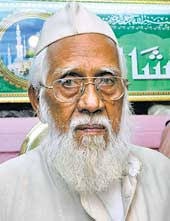
Dr. Syed Mohammad Sharfuddin Quadri was a remarkable figure of modern Indian history—bridging the eras of the freedom struggle and contemporary India. Known affectionately as a quintessential Gandhian, freedom fighter, and a dedicated practitioner of the Unani system of medicine, Quadri lived through extraordinary historical shifts. Marching alongside Mahatma Gandhi in the historic Salt Satyagraha, spending time behind British bars, and dedicating over seven decades to treating the poor completely free of charge, his life was defined by selfless national service, medical pioneering, and unwavering humanism.
2. Quick Facts
- Full Name: Syed Mohammad Sharfuddin Quadri
- Native Name: سید محمد شرف الدین قادری
- Date of Birth: December 25, 1901 (claimed)
- Place of Birth: Kumhrawan village, Nawada district, Bihar, India
- Nationality: Indian
- Occupation/Profession: Freedom Fighter, Unani Physician, Medical Editor
- Field of Achievement: Indian Freedom Struggle & Traditional Medicine (Unani)
- Years Active: 1920s – 2010s
3. Award Information
- Award Name: Padma Bhushan
- Award Category: Third-highest civilian award in India
- Award Year: 2007
- Presented By: Government of India (Presented by President A. P. J. Abdul Kalam)
- Date of Ceremony: March 2007
- Citation/Official Reason: For his distinguished contributions to Indian medicine and lifelong social service.
- Previous Recipients (optional): Notable figures across arts, public affairs, science, and literature recognized in the 2007 civil investiture lists.
- Next Recipients: Subsequent annual batches of Padma Bhushan honorees in 2008.
4. Why They Received the Award
Dr. Quadri was honored with the Padma Bhushan primarily for his lifelong commitment to the medical service of the underprivileged. For more than 75 years, he ran a charitable dispensary at Haji Mohsin Square (Ripon Street area) in Kolkata, where he treated thousands of patients completely free of cost. Furthermore, his pioneering role in institutionalizing Unani medicine, co-founding the Calcutta Unani Medical College and Hospital, and his monumental sacrifices during the Indian independence movement made him a revered icon of national dedication.
5. Early Life
Born in the rural expanse of Nawada district, Bihar, during an era when formal birth registration was rare, Quadri grew up amidst traditional values. Imbued with a deep sense of discipline and empathy from an early age, he was deeply influenced by the socio-political ferment of the 1920s. Witnessing the subjugation of his countrymen under British rule propelled a young Quadri to abandon conventional career paths in pursuit of national liberation and community healing.
6. Education
Quadri received his initial grounding in traditional knowledge and healing arts directly from his father, who was well-versed in indigenous medicine. He pursued formal training in the Unani system of medicine, mastering ancient Greco-Arabic pharmacological principles, herbal treatments, and diagnostic methods, which he would later modernize and practice throughout his century-long life.
7. Career Journey
- Freedom Struggle: In 1930, Quadri actively joined the Indian Independence Movement, marching shoulder-to-shoulder with Mahatma Gandhi during the iconic Salt March (Dandi March). He was subsequently imprisoned by British authorities, sharing a jail cell with Mahatma Gandhi in Cuttack.
- Medical Practice: Post-independence, Dr. Quadri settled in Kolkata, West Bengal, establishing a small clinic that became a sanctuary for the sick and destitute.
- Academic & Publishing Ventures: He founded Hikmat-e-Bangala, a specialized medical magazine intended to advance and document Unani medical practices. He was also instrumental in setting up the Calcutta Unani Medical College and Hospital to formally train future generations of Unani practitioners.
8. Major Achievements
- Participated directly in the historic 1930 Salt Satyagraha alongside Mahatma Gandhi.
- Provided free medical consultations and medicines to the poor for over seven decades.
- Co-founded the Calcutta Unani Medical College and Hospital to boost traditional medicine education.
- Authored and edited medical literature, including founding the journal Hikmat-e-Bangala.
- Awarded the prestigious Padma Bhushan by the Government of India in 2007.
9. Contribution to the Nation
Dr. Quadri’s contributions span two distinct pillars of nation-building: freedom and public health. On the political front, he stood firm against colonial rule and opposed divisive communal politics during the partition era. On the humanitarian front, his free medical clinic filled a vital welfare gap for Kolkata’s urban poor for generations, embodying true Gandhian ideals of selflessness, communal harmony, and service to humanity. Notably, he even treated India’s first President, Dr. Rajendra Prasad, during a respiratory illness in 1942–43.
10. Other Awards and Honours
- Felicitated by various freedom fighter associations and state bodies in West Bengal and Bihar.
- Honored by medical institutions for his lifetime service to Unani pharmacology.
11. Legacy and Influence
Dr. Quadri passed away on December 30, 2015, at his Ripon Street residence in Kolkata at the remarkable reported age of 114. His legacy remains a shining beacon of Gandhian simplicity, secularism, and medical ethics. He proved that true wealth lies in service, inspiring modern medical practitioners to remember the humanitarian core of the healing profession. His mortal remains were laid to rest at Phulwari Shareef.
12. Interesting Facts
- Centenarian Lifespan: He lived to be 114 years old, retaining sharp mental faculties and a routine of service well into his later years.
- Jailmate to the Mahatma: He spent time incarcerated alongside Mahatma Gandhi during the freedom struggle.
- Zero-Fee Doctor: Across more than 75 years of practice, he never charged a single penny from his patients for consultations.
13. Quotes
“The true purpose of medicine is not commerce, but compassion; a doctor’s hands should heal anyone who suffers, regardless of their ability to pay.”
(Reflecting his lifelong practice of treating patients free of charge).
14. Timeline
- December 25, 1901: Born in Kumhrawan village, Nawada district, Bihar.
- 1930: Marched alongside Mahatma Gandhi in the Salt Satyagraha and was imprisoned.
- 1942–43: Treated Dr. Rajendra Prasad during his illness.
- 2007: Conferred the Padma Bhushan by the Government of India.
- December 30, 2015: Passed away in Kolkata at the age of 114.
15. References
- Wikipedia contributors. Syed Mohammad Sharfuddin Quadri. Wikipedia, The Free Encyclopedia.
- Ministry of Home Affairs, Government of India. Padma Awards Directory (2007).
- The Telegraph & Times of India archives (Reports on Dr. Quadri’s life, 114th birthday, and free healing legacy).
- Bharat Icons & Chakra Foundation biographical profiles on Indian Freedom Fighters.
16. Related Personalities
- Mahatma Gandhi (Leader of the Indian Independence Movement)
- Dr. Rajendra Prasad (First President of independent India)
- Khan Abdul Ghaffar Khan (Prominent Gandhian freedom fighter)
17. Frequently Asked Questions (FAQ)
- Q: Who was Syed Mohammad Sharfuddin Quadri?
- A: He was an Indian freedom activist, close associate of Mahatma Gandhi, and a renowned Unani physician who treated the poor for free.
- Q: When did he receive the Padma Bhushan?
- A: He received the Padma Bhushan, India’s third-highest civilian award, in the year 2007.
- Q: How long did he practice medicine?
- A: He practiced medicine for over 75 years, running a charitable clinic in Kolkata.
- Q: How old was he when he passed away?
- A: He passed away on December 30, 2015, at the remarkable age of 114.
About the Author