Early Life and Education
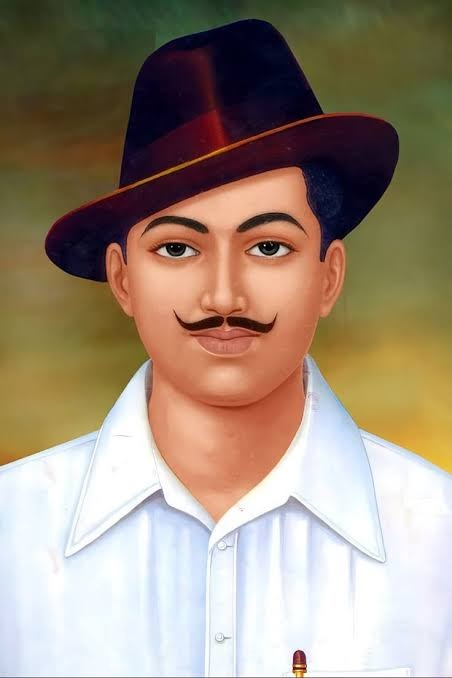
Bhagat Singh was born on September 28, 1907, in Banga. He was born into a patriotic Sikh family deeply involved in the struggle against British rule. His father, Kishan Singh, and his uncles were active participants in the freedom movement.
Bhagat Singh received his early education at the Dayanand Anglo-Vedic School in Lahore. Later, he joined National College Lahore, where he studied history, politics, and revolutionary thought. From a young age, he showed a keen interest in India’s history and the fight for independence.
Education & Skills
Although Bhagat Singh did not pursue higher education in the conventional sense, he was an avid reader and self-educated intellectual. His skills included:
- Strong leadership and organizational abilities
- Excellent writing and public communication
- Deep knowledge of political philosophy and history
- Revolutionary strategy and activism
- Proficiency in Punjabi, Hindi, Urdu, and English
- Critical thinking and analytical reasoning
He extensively studied the works of international revolutionaries and political thinkers, which shaped his ideology and vision for an independent India.
Contribution to Tamil Literature
Bhagat Singh did not directly contribute to Tamil literature. However, his life, writings, and revolutionary ideals have inspired many Tamil writers, poets, and dramatists.
His essays, letters, and speeches have been translated into Tamil and are widely read in Tamil Nadu. Numerous Tamil poems, biographies, stage plays, and articles celebrate his courage, patriotism, and sacrifice. His ideas on freedom, social justice, and youth empowerment continue to influence Tamil literary and intellectual circles.
Role in India’s Freedom Movement
Bhagat Singh was one of the most influential revolutionary leaders of India’s independence movement. He believed that direct action against colonial oppression was necessary to awaken the masses and challenge British authority.
His major contributions include:
- Joining the Hindustan Socialist Republican Association (HSRA).
- Participating in revolutionary activities aimed at ending British rule.
- Seeking revenge for the death of Lala Lajpat Rai by targeting British police officer J.P. Saunders in 1928.
- Throwing non-lethal bombs in the Central Legislative Assembly Bombing in Delhi to protest repressive laws.
- Using his trial and imprisonment to spread revolutionary ideas.
- Undertaking a historic hunger strike demanding better treatment for political prisoners.
Bhagat Singh became a symbol of courage, sacrifice, and resistance against colonial rule, inspiring countless young Indians to join the freedom struggle.
Personal Life
Bhagat Singh devoted most of his life to the cause of national freedom. He chose not to marry, believing that his commitment to India’s independence should come before personal life.
He was known for his discipline, intellectual curiosity, and dedication to social equality. During his imprisonment, he spent much of his time reading and writing about politics, revolution, and human rights.
Death
Bhagat Singh was sentenced to death along with his associates Shivaram Rajguru and Sukhdev Thapar.
On March 23, 1931, the three revolutionaries were executed by hanging in Lahore. Their execution sparked widespread protests across India and further strengthened the independence movement.
Today, March 23 is observed as Shaheed Diwas (Martyrs’ Day) in honor of their sacrifice.
Conclusion
Bhagat Singh remains one of India’s most revered freedom fighters. His bravery, patriotism, and unwavering commitment to justice made him a legendary figure in the struggle against British rule. Though he died at the young age of 23, his ideas and sacrifice left an enduring impact on India’s history. He continues to inspire generations with his courage, selflessness, and dedication to the cause of freedom.
About the Author