1. Introduction
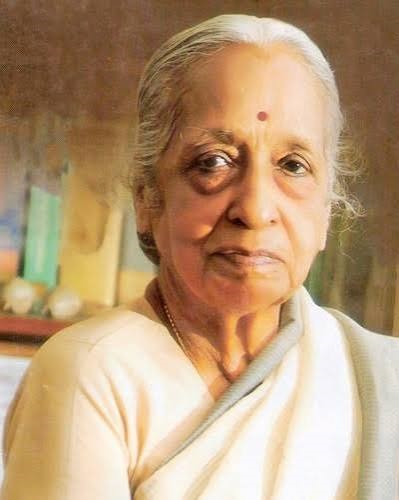
Dr. Viswanathan Shanta was a legendary Indian oncologist and the guiding light of the Adyar Cancer Institute in Chennai. For over six decades, she dedicated her life to making cancer treatment accessible, affordable, and humane for all, regardless of socio-economic background. As a tireless clinician, researcher, and institutional builder, Dr. Shanta fundamentally reshaped oncology in India, turning a modest 12-bed cottage hospital into a world-renowned comprehensive cancer center.
2. Quick Facts
- Full Name: Viswanathan Shanta
- Native Name: வி. சாந்தா (Tamil)
- Date of birth: March 11, 1927
- Place Of birth: Mylapore, Chennai (Madras), Tamil Nadu, India
- Nationality: Indian
- Occupation/ Profession: Oncologist, Physician, and Healthcare Administrator
- Field of Achievement: Medical Oncology, Cancer Research, and Public Health
- Years Active: 1950s–2021
3. Award Information (Focus: Padma Bhushan)
- Award Name: Padma Bhushan
- Award Category: Civil Honour (Third-Highest Civilian Award in India)
- Award Year: 2006
- Presented By: Dr. A.P.J. Abdul Kalam (President of India)
- Date of Ceremony: March 20, 2006
- Citation/Official Reason: Recognized for her pioneering contributions to medicine, especially in the field of oncology, and her lifelong commitment to affordable cancer care and patient welfare.
- Previous Recipients (Notable peers in 2006): Prominent medical professionals and scientists.
- Next Recipients: (Succeeding civilian award cycles encompass distinguished national leaders in medicine and public health).
4. Why She Received the Award
Dr. Shanta received the Padma Bhushan for her visionary leadership in establishing modern oncology protocols in India and for transforming the Adyar Cancer Institute into a sanctuary of hope for underprivileged cancer patients. Her steadfast crusade against cancer focused not only on medical treatment but also on early detection, palliative care, and de-stigmatizing the disease across rural and urban India.
5. Early Life
Born in Mylapore, Chennai, into an illustrious, highly intellectual family, Dr. Shanta grew up surrounded by scientific brilliance. However, from a very young age, she set her sights on medicine, defying conventional social expectations of women from elite families during the pre-independence era. Inspired by her family’s ethos of public service and a personal resolve to heal, she committed early on to pursuing a rigorous path in medicine.
6. Education
- Schooling: Completed her early education in Chennai under high academic standards.
- Medical Graduation: Bachelor of Medicine, Bachelor of Surgery (MBBS) from Madras Medical College (1949).
- Post-Graduation: Doctor of Medicine (MD) in Obstetrics and Gynecology from Madras Medical College (1953), followed by specialized training in oncology abroad before returning to dedicate her life to service.
7. Career Journey
- Early Medical Days (1950s): Trained under pioneering visionaries like Dr. Muthulakshmi Reddy, who founded the Cancer Institute.
- Joining Adyar Cancer Institute (1955): Moved onto the campus of the newly founded Cancer Institute, choosing to live in a modest room on-site so she could be accessible to patients 24/7.
- Leadership & Expansion (1980s–2010s): Served as Director and later Chairperson of the Institute, steering its growth into a premier research, treatment, and training hub equipped with advanced radiotherapy and nuclear medicine.
- Lifetime of Service (Up to 2021): Actively consulted, operated, and advocated for affordable cancer medications until her final days.
8. Major Achievements
- Spearheaded the transformation of the Adyar Cancer Institute into a world-class institution treating hundreds of thousands of patients annually, with a vast majority receiving subsidized or free care.
- Pioneered early cancer detection programs and community outreach in rural Tamil Nadu.
- Advocated successfully for government policies to reduce import duties on life-saving cancer drugs, making them accessible to the common person.
- Conferred India’s second-highest civilian honor, the Padma Vibhushan, in 2016.
9. Contribution to the Nation
Dr. Shanta dismantled the notion that cancer was an incurable death sentence or a disease exclusive to the wealthy. By building an institution rooted in empathy, she ensured that poverty was never a barrier to receiving dignified medical care. Her research contributions and training programs created a generation of Indian oncologists who carry forward her ethos of patient-first medicine.
10. Other Awards and Honours
- Padma Shri (1986)
- Ramon Magsaysay Award (2005) – often regarded as Asia’s Nobel Prize, for her dynamic leadership in making cancer care affordable.
- Padma Bhushan (2006)
- Padma Vibhushan (2016)
- WHO World No Tobacco Day Award (1998) for her relentless anti-tobacco advocacy.
11. Legacy and Influence
Dr. Shanta’s legacy is living masonry—embodied by the millions of lives touched by the Adyar Cancer Institute. She demonstrated that institutional excellence can be achieved with profound simplicity, absolute integrity, and unconditional love for humanity. She remains an enduring icon of Indian medical ethics and women’s leadership in science.
12. Interesting Facts
- Nobel Laureate Lineage: She was the grandniece of Nobel Laureate Sir C.V. Raman and the niece of Nobel Laureate Subrahmanyan Chandrasekhar, though she forged a legacy entirely anchored in clinical empathy rather than theoretical physics.
- Campus Resident: She lived in a small room inside the Adyar Cancer Institute campus for over 50 years, embodying a monk-like devotion to her patients.
- The Anti-Tobacco Crusader: Long before public smoking bans became mainstream, Dr. Shanta relentlessly campaigned against tobacco use, identifying it as the leading preventable cause of cancer in India.
13. Quotes
“Cancer is curable if detected early. There is no need to fear it; what we need is awareness, timely diagnosis, and affordable treatment.”
“A doctor’s primary duty is not just to treat the disease, but to heal the human being sitting in front of them with dignity.”
14. Timeline
- 1927: Born on March 11 in Chennai, Tamil Nadu.
- 1949: Completes her MBBS degree from Madras Medical College.
- 1955: Joins the newly established Cancer Institute (WIA) in Adyar, Chennai.
- 1986: Honored with the Padma Shri by the Government of India.
- 2005: Receives the prestigious Ramon Magsaysay Award.
- 2006: Conferred the Padma Bhushan by the President of India.
- 2016: Awarded the Padma Vibhushan, India’s second-highest civilian honor.
- 2021: Passes away on January 19 in Chennai at the age of 93.
15. References
- Adyar Cancer Institute (WIA) Official Archives & Historical Records
- Ramon Magsaysay Award Foundation Citation (2005)
- Government of India Padma Awards Directories (1986, 2006, 2016)
- Tributes and biographical obituaries published in The Hindu and The Indian Express (January 2021)
16. Related Personalities
- Dr. Muthulakshmi Reddy (Founder of the Adyar Cancer Institute and mentor)
- Dr. A.P.J. Abdul Kalam (Former President of India who presented the Padma Bhushan)
- Sir C.V. Raman (Granduncle and Nobel Laureate in Physics)
17. Frequently Asked Questions (FAQ)
- Q: What is Dr. V. Shanta best known for?
- A: She is best known for her lifelong dedication to oncology as the Chairperson of the Adyar Cancer Institute, revolutionizing affordable cancer care and early detection in India.
- Q: What major civilian awards did Dr. Shanta receive?
- A: She received all four major civilian honors from the Government of India: Padma Shri (1986), Padma Bhushan (2006), and Padma Vibhushan (2016) (alongside international recognitions like the Ramon Magsaysay Award).
- Q: Did Dr. Shanta live on the hospital campus?
- A: Yes, true to her uncompromising dedication, she lived in a small room on the Adyar Cancer Institute campus for over five decades to remain constantly available to her patients.
About the Author