1. Introduction
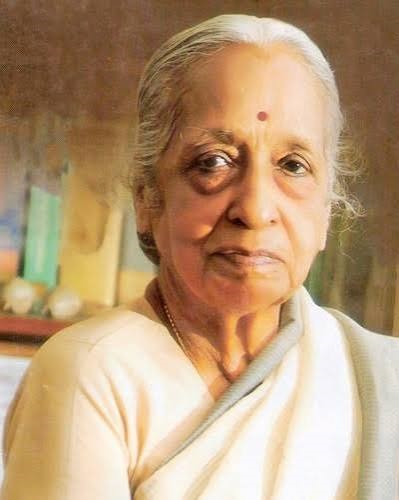
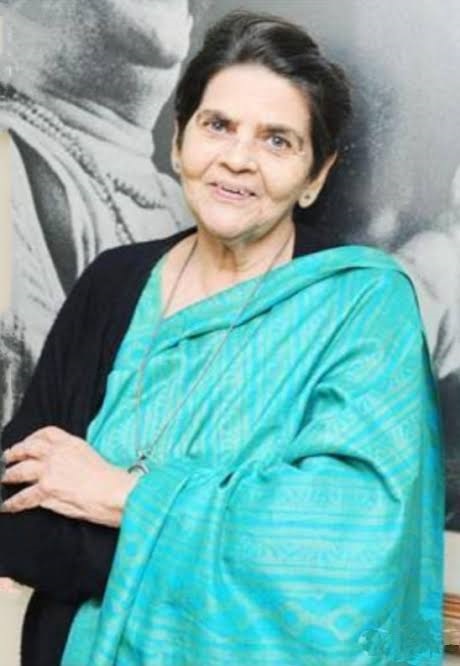
Sai Paranjpye is an eminent Indian film director, screenwriter, and playwright who holds a legendary status in Indian cinema. Best known for her work in parallel cinema and lighthearted, slice-of-life social comedies, she broke barriers at a time when the male-dominated film industry offered little space for women directors. With critically acclaimed masterpieces like Sparsh and Chashme Buddoor, Paranjpye infused Indian cinema with remarkable warmth, humanism, and sharp middle-class realism.
2. Quick Facts
- Full Name: Sai Paranjpye
- Native Name: सई परांजपे
- Date of birth: July 30, 1938
- Place Of birth: Lucknow, Uttar Pradesh, India
- Nationality: Indian
- Occupation/ Profession: Film Director, Screenwriter, Author, and Playwright
- Field of Achievement: Parallel Cinema, Children’s Theatre, and Literature
- Years Active: 1960–Present
3. Award Information (Focus: Padma Bhushan)
- Award Name: Padma Bhushan
- Award Category: Civil Honour (Third-Highest Civilian Award in India)
- Award Year: 2006
- Presented By: Dr. A.P.J. Abdul Kalam (President of India)
- Date of Ceremony: March 20, 2006
- Citation/Official Reason: Recognized for her distinguished contributions to the arts, filmmaking, and enriching Indian cinema and theatre through socially conscious storytelling.
- Previous Recipients (Notable peers in 2006): Prominent artists, writers, and cultural figures.
- Next Recipients: (Succeeding civilian award cycles encompass diverse national honorees across arts and literature).
4. Why She Received the Award
Sai Paranjpye received the Padma Bhushan for her pioneering artistic vision, which carved out a unique space for realistic, empathetic, and witty storytelling in Indian cinema. Through films that humanized marginalized groups (such as the visually impaired in Sparsh) and captured the gentle struggles of urban middle-class youth, she transformed the cinematic landscape, proving that parallel cinema could be both profoundly deep and universally entertaining.
5. Early Life
Born in Lucknow to an illustrious family, Sai Paranjpye inherited a rich cultural and intellectual legacy. Her mother, Shakuntala Paranjpye, was a renowned author, parliamentarian, and pioneer in family planning, while her grandfather was Sir R.P. Paranjpye, a renowned mathematician and educator. Following her parents’ separation, she spent her formative years between her grandfather’s progressive household in Pune and her mother’s world. Her exposure to children’s literature, radio broadcasting at All India Radio, and theatre from an early age deeply shaped her artistic sensibilities.
6. Education
- Schooling: Completed her early education under progressive academic environments encouraged by her family.
- Higher Education: Graduated with a Bachelor of Arts (B.A.) in Political Science and Sociology from the University of Pune.
- Specialized Training: Studied direction and production at the National School of Drama (NSD), Delhi, honing her craft in stage production and dramaturgy.
7. Career Journey
- Early Media Beginnings (1950s–1960s): Worked extensively as a children’s radio announcer and writer for All India Radio (AIR) in Pune and Delhi; authored several popular children’s books in Marathi.
- Theatre Pioneer: Directed numerous plays for children and adults, establishing herself as a formidable force in the Indian theatre circuit.
- Directorial Debut (1970s): Transitioned to television and cinema, directing acclaimed children’s films like The Little Tea Shop and her feature debut Shakkar Paare (1974).
- The Golden Era of Cinema (1980s): Achieved legendary status with iconic back-to-back films: Sparsh (1980), Chashme Buddoor (1981), Katha (1983), and Disha (1990).
- Later Career & Writing: Continued writing memoirs, plays, and directing for television while remaining an active voice for independent cinema.
8. Major Achievements
- Directed Sparsh (1980), which won the National Film Award for Best Feature Film and is celebrated as one of the most sensitive portrayals of romance and disability in Indian cinematic history.
- Created Chashme Buddoor (1981), a cult-classic comedy that redefined urban youth culture, friendship, and romance in Hindi cinema.
- Conceived Katha (1983), a modern, witty adaptation of the classic Hare and the Tortoise fable set in a Mumbai chawl.
- Awarded the prestigious Sangeet Natak Akademi Award for her contribution to theatre.
9. Contribution to the Nation
Sai Paranjpye expanded the moral and emotional boundaries of Indian culture. At a time when commercial cinema heavily relied on formulaic action and melodrama, her films championed humanity, gender sensitivity, dignity for the disabled, and the honest struggles of ordinary citizens. Furthermore, her immense contribution to children’s theatre and literature nurtured generations of young creative minds, fostering a culture of empathy and imagination across India.
10. Other Awards and Honours
- Padma Bhushan (2006)
- National Film Award for Best Screenplay for Sparsh (1980)
- National Film Award for Best Direction for Disha (1990)
- Filmfare Award for Best Dialogue for Chashme Buddoor (1982)
- Sangeet Natak Akademi Award for Theatre Direction (1991)
- V. Shantaram Lifetime Achievement Award from the Government of Maharashtra (2019)
11. Legacy and Influence
Paranjpye’s legacy lies in proving that comedy and social realism do not need loud theatricality to make an impact. She opened doors for women filmmakers in India, demonstrating that nuanced, character-driven storytelling could achieve both critical acclaim and commercial viability. Directors and writers across generations look up to her effortless blend of wit, social commentary, and psychological depth.
12. Interesting Facts
- Radio Roots: Before entering films, Sai was a beloved voice on children’s radio programs, famously writing and voicing scripts that captured the imagination of young listeners across India.
- Multilingual Author: She has written extensively in Marathi, English, and Hindi, penning children’s fiction, plays, and a memoir titled Shedding the Veil: Memoirs of a Pioneer.
- Grandfather’s Legacy: Her grandfather, Sir R.P. Paranjpye, was the senior wrangler at Cambridge University—a rare academic feat at the time—and heavily influenced her intellectual upbringing.
13. Quotes
“I have always made films about people next door. Their small joys, their struggles, and their quiet dignity interest me far more than larger-than-life fantasies.”
“Humour is a very serious business. If you can make people laugh while making them think about human nature, you have achieved your purpose as an artist.”
14. Timeline
- 1938: Born in Lucknow, Uttar Pradesh.
- 1974: Directs her first feature film, Shakkar Paare.
- 1980: Directs the critically acclaimed masterpiece Sparsh, winning multiple National Awards.
- 1981: Releases the cult-classic comedy Chashme Buddoor.
- 1983: Directs Katha, offering a modern spin on a classic fable.
- 1990: Directs Disha, addressing the migration of rural workers to urban slums.
- 2006: Honored with the Padma Bhushan by the Government of India.
- 2019: Receives the V. Shantaram Lifetime Achievement Award.
15. References
- National Film Archive of India (NFAI) Archives
- Directorate of Film Festivals, Government of India records
- Shedding the Veil: Memoirs of a Pioneer by Sai Paranjpye
- Indian Cinema biographical journals and film history texts
16. Related Personalities
- Shakuntala Paranjpye (Mother, author, and social worker)
- Naseeruddin Shah (Lead actor in Sparsh and Katha)
- Farooq Shaikh (Lead actor in Chashme Buddoor and Katha)
- Smita Patil (Acclaimed parallel cinema actress who starred in Sparsh)
17. Frequently Asked Questions (FAQ)
- Q: What is Sai Paranjpye’s most famous film?
- A: She is widely celebrated for Sparsh (1980) for its emotional depth and Chashme Buddoor (1981) for its timeless comedy.
- Q: Is Sai Paranjpye related to any other prominent public figures?
- A: Yes, she is the daughter of prominent author and parliamentarian Shakuntala Paranjpye and the granddaughter of mathematician Sir R.P. Paranjpye.
- Q: Did Sai Paranjpye work in theatre as well as films?
- A: Absolutely. Before and alongside her film career, she was a pioneering director of children’s and adult theatre, earning the Sangeet Natak Akademi Award for her contributions.
- Q: Has she written any books?
- A: Yes, she has authored several children’s books in Marathi and published her autobiography, Shedding the Veil: Memoirs of a Pioneer.
About the Author