1. Introduction: Remembering a Living Legend of Music
Standalone Title:Dr. Shanno Khurana: The Doyen of the Rampur-Sahaswan Gharana
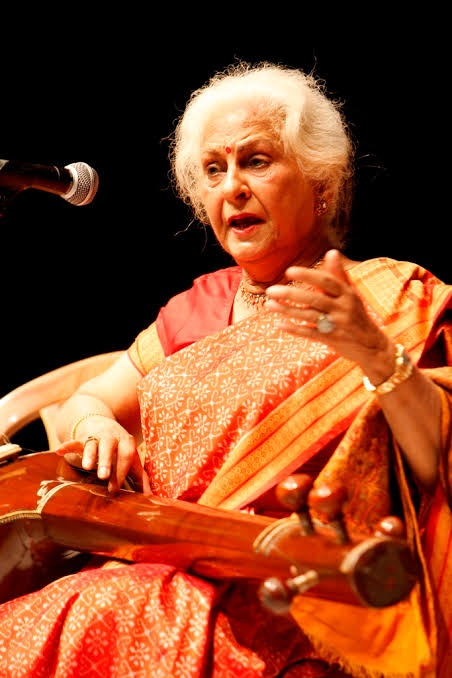
Dr. Shanno Khurana (born 23 December 1927) is a celebrated Indian classical vocalist, composer, and musicologist. Hailing from the prestigious Rampur-Sahaswan Gharana, her musical journey spans over eight decades. A fierce trailblazer who fought social conventions to pursue her art, she is globally renowned for unearthing rare bandishes, mastering the complex tappa form, and introducing operatic theater to Indian classical music.
2. Quick Facts: At a Glance
Standalone Title:Dr. Shanno Khurana: Quick Facts and Profile Overview
Full Name: Shanno Khurana
Native Name: शन्नो खुराना (Hindi)
Date of Birth: 23 December 1927
Place of Birth: Jodhpur, Rajasthan, British India
Nationality: Indian
Occupation/Profession: Classical Vocalist, Composer, Researcher, Music Educator
Field of Achievement: Hindustani Classical Music, Folk Music Research, Musical Opera Direction
Years Active: 1940s – Present
3. Award Information: The Padma Bhushan and Fellowship Honors
Standalone Title:Recognizing Musical Excellence: Dr. Shanno Khurana’s National Awards
Award Name: Padma Bhushan (following the Padma Shri)
Award Category: Civilian Award (Third Highest Civilian Honor in India)
Award Year: Padma Shri (1991); Padma Bhushan (2006)
Presented By: Government of India (Presidents of India)
Date of Ceremony: Republic Day Award Cycles
Citation/Official Reason: For distinguished services and lifelong contributions to the field of arts, Hindustani classical music, and cultural research.
Other Major Accolades: Sangeet Natak Akademi Fellowship (2002), Punjab Akademi Award, and Baba Alauddin Khan Award.
4. Why Did She Receive the Award?
Standalone Title:A Lifetime of Sonic Dedication: Why Dr. Shanno Khurana Was Honored
Dr. Shanno Khurana received India’s highest civilian and cultural honors in recognition of her monumental contributions to the preservation and expansion of Hindustani classical music. Beyond her mastery over khayal, tarana, and tappa, she was recognized for pioneering extensive academic research into Rajasthan’s folk music traditions and creating large-scale musical operas.
5. Early Life: Formative Years in Jodhpur
Standalone Title:The Roots of a Singer: Overcoming Tradition in Princely Rajasthan
Born in Jodhpur in December 1927, Shanno Khurana grew up in a conventional family where public performances by women faced severe social stigmas. However, her deep captivation with classical music broadcasts on the radio and her fierce determination eventually moved her father to permit her early training under Pandit Raghunath Rao Musalgaonkar of the Gwalior Gharana.
6. Education: Academic Rigor and Doctoral Research
Standalone Title:Academic Mastery: From Bhatkhande to Folk Music Research
Formal Training: Grounded her initial techniques through traditional talim under master gurus, later absorbing the rich aesthetics of the Rampur-Sahaswan Gharana under the legendary Ustad Mushtaq Hussain Khan.
Higher Education: Earned her M.Phil. and Ph.D. in Music from Khairagarh University, undertaking extensive study-tours across Rajasthan to document endangered folk idioms and structural variations in regional folk songs.
7. Career Journey: From Lahore Radio to National Stages
Standalone Title:A Storied Career: Broadcasting, Composing, and Mentoring
Early Broadcasts (1945): Began her professional radio journey at the All India Radio station in Lahore, a milestone that triggered her lifelong scholarly quest into raga grammar.
Concert Circuit: Performed across major national music festivals, captivating audiences with her powerful voice and rare repertoire.
Institutional Leadership: Served in prominent advisory roles, including board member of the Sangeet Natak Akademi, mentoring generations of young disciples.
8. Major Achievements: Pioneering Musical Operas
Standalone Title:Milestones in Theatre and Music: Directing Grand Operas
Musical Operas: Between the 1950s and 1970s, she revolutionized cultural programming by composing and directing massive classical-folk operas such as Heer Ranjha, Chitralekha, and Jahanara (which utilized a staggering 60 distinct ragas).
Preserving Rare Bandishes: Rescued hundreds of rare and forgotten compositions from extinction through meticulous archival work and oral recordings.
Women’s Music Festivals: Founded the landmark festival Bairav se Sohni in 1983, dedicated exclusively to showcasing women classical musicians and instrumentalists.
9. Contribution to the Nation: Enriching Cultural Heritage
Standalone Title:Nation Building: Expanding the Boundaries of Classical Art
Dr. Khurana successfully democratized classical music by bringing complex traditional forms into public-facing theatrical productions without diluting their artistic integrity. Through her definitive publications—such as Rajasthan Ka Loksangeet—she secured the folk history of Western India within the formal framework of national musicology.
10. Other Awards and Honours
Standalone Title:Beyond the Padma Awards: A Lifetime of Tributes
Sangeet Natak Akademi Fellowship (2002): The highest national recognition in the performing arts.
Indira Gandhi Priyadarshani Award for national contribution.
Punjabi Akademi Award (2006–07) for lifetime achievement in music.
11. Legacy and Influence: An Unyielding Student of Music
Standalone Title:An Enduring Legacy: A Life Spent in Pursuit of Melody
Dr. Shanno Khurana’s legacy is defined by her unbreakable resilience against gender barriers and her tireless work ethic. Even well into her nineties, she maintained an active daily practice routine, viewing herself fundamentally as a student on an endless musical journey.
12. Interesting Facts: Surprising Insights
Standalone Title:Did You Know? Fascinating Facts About Dr. Shanno Khurana
The Lahore Awakening: Her debut radio broadcast in Lahore in 1945 was praised, but a probing technical question by a producer about raga nuances sparked her lifelong obsession with mastering the deep theory behind every note.
A Prophetic Encounter: During her early childhood, a wandering ascetic visited her home in Jodhpur and predicted to her father that the little girl was destined for the grand stage.
All-Female Ensembles: Long before gender parity was a conscious topic in mainstream event curation, she created performance spaces exclusively run by women artists to combat professional bias.
13. Quotes: Words of Wisdom
Standalone Title:In Her Words: Insights on Art and Persistence
“Twenty people who can appreciate my music – that is all I need. I don’t care for those people who land up in jamavars and diamonds and have no clue what music is about.” — Dr. Shanno Khurana
“A trailblazing icon who fought patriarchy and tradition to ensure that women could claim their rightful place on the classical stage.” — Musical Historian Tribute
14. Timeline: Key Milestones in Her Life
1927: Born on December 23 in Jodhpur, Rajasthan.
1945: Makes her historic debut on All India Radio in Lahore.
1950s–1970s: Composes and directs pioneering classical operas like Heer Ranjha and Jahanara.
1983: Launches Bairav se Sohni, a festival dedicated to women classical musicians.
1991: Conferred the Padma Shri by the Government of India.
2002: Receives the Sangeet Natak Akademi Fellowship.
2006: Honored with the Padma Bhushan by President Dr. A.P.J. Abdul Kalam.
15. References: Sources and Further Reading
Standalone Title:Sources and Archives: Further Reading on Dr. Shanno Khurana
Wikipedia & Open Biographical Archives: Shanno Khurana Profile
Rajasthan Ka Loksangeet by Shanno Khurana (Siddhartha Publication)
Scroll.in Magazine: Profile on Shanno Khurana’s Musical Resistance
The Week & The Hindu Archives: Interviews and Career Retrospectives
16. Related Personalities: Mentors and Contemporaries
Standalone Title:In Good Company: Gurus and Contemporaries
Ustad Mushtaq Hussain Khan: Legendary doyen of the Rampur-Sahaswan Gharana and her primary advanced musical mentor.
Pandit Raghunath Rao Musalgaonkar: Her first traditional guru from the Gwalior tradition in Jodhpur.
Roshan Ara Begum: Iconic classical vocalist whose radio performances deeply inspired her childhood.
17. Frequently Asked Questions (FAQ)
Standalone Title:All Your Questions Answered: FAQs About Dr. Shanno Khurana
Q: Who is Dr. Shanno Khurana?
A: She is a veteran Indian classical vocalist, composer, and researcher belonging to the Rampur-Sahaswan Gharana.
Q: What are her major contributions to music?
A: She is famous for directing large-scale musical operas, conducting extensive research on Rajasthani folk music, and preserving rare bandishes.
Q: What prestigious awards has she received?
A: She has received the Padma Shri (1991), the Sangeet Natak Akademi Fellowship