Standalone Title:Ustad Ghulam Mustafa Khan: The Titan of the Rampur-Sahaswan Gharana
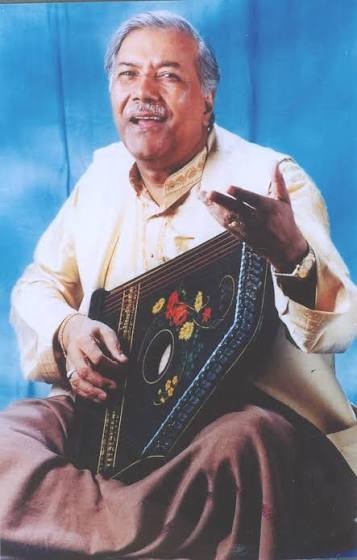
Ustad Ghulam Mustafa Khan (3 March 1931 – 17 January 2021) was an iconic Indian classical vocalist and one of the most celebrated maestros of the Rampur-Sahaswan Gharana. Possessing a voice of extraordinary range, depth, and agility, he was a bridge between traditional courtly classical music and modern Indian artistic expressions. Beyond his stellar solo career as a performer, he is internationally revered as an extraordinary guru who shaped the voices of multiple generations of playback singers and classical prodigies.
2. Quick Facts: At a Glance
Standalone Title:Ustad Ghulam Mustafa Khan: Quick Facts and Profile Overview
Full Name: Ustad Ghulam Mustafa Khan
Native Name: استاد غلام مصطفی خان (Urdu) / उस्ताद गुलाम मुस्तफा खान (Hindi)
Date of Birth: 3 March 1931
Place of Birth: Badaun, United Provinces, British India (now Uttar Pradesh, India)
Nationality: Indian
Occupation/Profession: Classical Vocalist, Composer, Music Educator
Field of Achievement: Hindustani Classical Music (Khayal, Tarana, Thumri), Playback Singing Mentorship
Years Active: 1940s – 2021
3. Award Information: The Padma Vibhushan Honor
Standalone Title:Recognizing Musical Excellence: Ustad Ghulam Mustafa Khan’s Padma Accolades
Award Name: Padma Vibhushan (following earlier national honors including Padma Shri and Padma Bhushan)
Award Category: Civilian Award (Second Highest Civilian Honor in India)
Presented By: Ram Nath Kovind (President of India)
Date of Ceremony: March 2018 (Republic Day Announcement)
Citation/Official Reason: For distinguished services and lifelong contributions to the field of arts, classical music, and cultural education.
Other Major Accolades: Sangeet Natak Akademi Award (2003), National Lata Mangeshkar Award (2003).
4. Why Did He Receive the Award?
Standalone Title:A Lifetime of Sonic Mastery: Why Ustad Ghulam Mustafa Khan Was Nationally Honored
Ustad Ghulam Mustafa Khan received India’s highest civilian honors in recognition of his nearly eight-decade-long dedication to preserving and propagating the rigorous Khayal tradition. His peerless mastery over gayaki (singing style), his historical contributions to film and devotional music, and his unmatched legacy as a mentor who trained top-tier playback icons secured his place as a national treasure.
5. Early Life: Formative Years in Badaun
Standalone Title:The Roots of a Maestro: Musical Lineage in Uttar Pradesh
Born on March 3, 1931, in Badaun, Uttar Pradesh, Ghulam Mustafa Khan was born into a family deeply embedded in musical royalty. He was the son of the renowned musician Ustad Waris Hussain Khan, and his maternal grandfather was the legendary sarangi and vocal maestro Ustad Inayat Hussain Khan, the founder of the Rampur-Sahaswan Gharana. Surrounded by riyaz from infancy, music was his natural vernacular.
6. Education: Rigorous Training under Family Masters
Standalone Title:Traditional Gurukul Training: Mastering the Rampur-Sahaswan Style
Under the strict guidance of his father and his cousin, the legendary Ustad Mushtaq Hussain Khan (the first recipient of the Sangeet Natak Akademi Award), young Ghulam Mustafa underwent grueling, disciplined talim. He mastered complex ragas, lightning-fast taans, rhythmic control (layakari), and rich emotional expression (bhava), emerging as a child prodigy who performed brilliantly across royal durbars and concert stages.
7. Career Journey: From All India Radio to Global Concert Stages
Standalone Title:A Storied Career: Broadcasting, Composing, and Global Performance
Early Success: Began performing professionally as a teenager, rapidly becoming a premier artist on All India Radio (AIR) and national music conferences.
Cinematic Encounters: Composed and sang for landmark films and documentaries, famously lending his voice to German filmmaker Mrinal Sen’s acclaimed film Bhuvan Shome (1969) and Marathi cinema.
Global Outreach: Toured extensively across Europe, the United States, and the Middle East, introducing international audiences to the intricate beauty of Hindustani classical music.
8. Major Achievements: A Rare Triple Padma Crown and Legendary Mentorship
Standalone Title:Milestones in Music: The Rare Triple Padma Honors
The Padma Hat-Trick: He is one of the rare artists in Indian history to be honored consecutively with all three civilian Padma awards—Padma Shri (1991), Padma Bhushan (2006), and Padma Vibhushan (2018).
Shaping Star Singers: As a master guru, he personally mentored a stellar galaxy of artists who went on to rule Indian music, including his own sons, playback legends like Hariharan, Sonu Nigam, Shaan, Alisha Chinai, Shilpa Rao, and even classical icons like Geeta Dutt and Asha Bhosle at various stages of their training.
9. Contribution to the Nation: Preserving an Endangered Musical Heritage
Standalone Title:Nation Building: Cultivating the Next Generation of Indian Voices
Ustad Ghulam Mustafa Khan viewed teaching as a sacred religious and cultural duty. Rejecting modern shortcuts, he ran an open-house gurukul in Mumbai where students lived, ate, and practiced music under his roof entirely free of cost. His uncompromising commitment to raga purity protected the Rampur-Sahaswan tradition from dilution, ensuring it remains robust in modern India.
10. Other Awards and Honours
Standalone Title:Beyond the Padma Awards: A Lifetime of Tributes
Sangeet Natak Akademi Award (2003): India’s apex national recognition for performing artists.
National Lata Mangeshkar Award (2003): Conferred by the Government of Madhya Pradesh.
Pandit Bhimsen Joshi Lifetime Achievement Award (2018).
Master Deenanath Mangeshkar Award for contributions to Indian music.
11. Legacy and Influence: The Ultimate Guru
Standalone Title:An Enduring Legacy: The Unfading Echo of a Master Mentor
Ustad Ghulam Mustafa Khan’s legacy is preserved not just in his archival recordings, but in the living voices of the hundreds of students he trained. He embodied humility, profound spiritual devotion through music, and absolute dedication to his craft. Even after his passing on January 17, 2021, in Mumbai at the age of 89, his disciples continue his mission of keeping true classical music alive.
12. Interesting Facts: Surprising Insights
Standalone Title:Did You Know? Fascinating Facts About Ustad Ghulam Mustafa Khan
Multi-Generational Guru: He famously taught three generations of families—training parents and later mentoring their children and grandchildren in the fine art of voice culture.
A Voice for Art Cinema: His haunting classical vocals for Mrinal Sen’s Bhuvan Shome set the tone for the parallel cinema movement in India during the late 1960s.
Deep Interfaith Respect: Though deeply rooted in his Islamic faith and traditional Sufi values, his mastery over Hindu devotional compositions, bhajans, and taranas reflected a universal spiritual vision through sound.
13. Quotes: Words of Wisdom
Standalone Title:In His Words: Insights on Music and Teaching
“Music is not merely entertainment; it is an act of prayer, a bridge that connects the human heart directly to the divine.” — Ustad Ghulam Mustafa Khan
“A guru does not just teach notes; he breathes his own soul into his disciple’s voice.” — Musical Tribute
14. Timeline: Key Milestones in His Life
1931: Born on March 3 in Badaun, Uttar Pradesh.
1940s: Emerges as a child prodigy under family mentors of the Rampur-Sahaswan Gharana.
1969: Sings the haunting vocal score for Mrinal Sen’s classic film Bhuvan Shome.
1991: Conferred the Padma Shri by the Government of India.
2003: Receives the Sangeet Natak Akademi Award.
2006: Honored with the Padma Bhushan by President Dr. A.P.J. Abdul Kalam.
2018: Conferred India’s second-highest civilian honor, the Padma Vibhushan, by President Ram Nath Kovind.
2021: Passes away on January 17 in Mumbai at the age of 89.
15. References: Sources and Further Reading
Standalone Title:Sources and Archives: Further Reading on Ustad Ghulam Mustafa Khan
Wikipedia & Open Biographical Archives: Ustad Ghulam Mustafa Khan Profile
The Hindu & The Indian Express: Obituaries and Tributes from Classical and Bollywood Icons
National Center for the Performing Arts (NCPA) Archives: Recorded Concerts and Oral Histories
16. Related Personalities: Peers and Disciples
Standalone Title:In Good Company: Disciples and Contemporaries
Hariharan: Acclaimed playback and ghazal singer who trained closely under his tutelage.
Sonu Nigam: Renowned playback singer who sought advanced classical voice training from the Ustad.
Ustad Mushtaq Hussain Khan: Legendary family mentor and early guiding influence.
17. Frequently Asked Questions (FAQ)
Standalone Title:All Your Questions Answered: FAQs About Ustad Ghulam Mustafa Khan
Q: Who was Ustad Ghulam Mustafa Khan?
A: He was a legendary Indian classical vocalist of the Rampur-Sahaswan Gharana and an acclaimed mentor to numerous playback singers.
Q: What gharana did he belong to?
A: He belonged to the Rampur-Sahaswan Gharana of Hindustani classical music.
Q: What major honors did he receive?
A: He received the Padma Shri (1991), Padma Bhushan (2006), Sangeet Natak Akademi Award (2003), and India’s prestigious Padma Vibhushan (2018).