1. Introduction: Remembering a Global Voice for Social Justice
Standalone Title:Dr. Devaki Jain: The Trailblazing Economist Who Redefined Feminist Theory
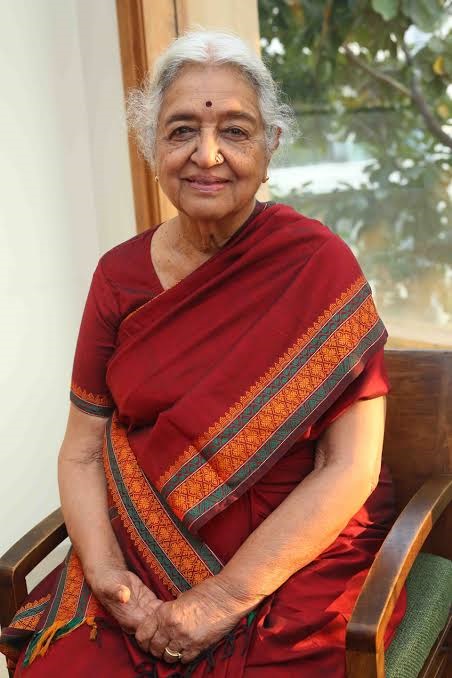
Dr. Devaki Jain (born 1933) is a preeminent Indian economist, writer, and prominent figure in the global feminist economics movement. For decades, she has dedicated her life to restructuring mainstream economic thought, ensuring that the unpaid labor, grassroots struggles, and lived realities of women—particularly in the Global South—are recognized in public policy and national development.
2. Quick Facts: At a Glance
Standalone Title:Dr. Devaki Jain: Quick Facts and Profile Overview
Field of Achievement: Feminist Economics, Gender and Development Studies, Social Justice
Years Active: 1960s – Present
3. Award Information: The Padma Bhushan Honor
Standalone Title:Recognizing Social Justice: Dr. Devaki Jain’s Padma Bhushan Award
Award Name: Padma Bhushan
Award Category: Civilian Award (Third Highest Civilian Honor in India)
Award Year: 2006
Presented By: Dr. A.P.J. Abdul Kalam (then President of India)
Date of Ceremony: 29 March 2006
Citation/Official Reason: For distinguished contributions and lifelong service to social justice and the empowerment of women.
Other Major Accolades: Honorary Fellowship at St Anne’s College, Oxford, and an Honorary Doctorate from the University of Westville, Durban, South Africa.
4. Why Did She Receive the Award?
Standalone Title:A Lifetime of Equity: Why Dr. Devaki Jain Was Awarded the Padma Bhushan
Dr. Jain received the Padma Bhushan in recognition of her lifelong crusade to make economic planning gender-sensitive. Through her ground-breaking research on time-use studies, informal labor, and the economic value of women’s household work, she transformed how international bodies and national governments conceptualize poverty, work, and human development.
5. Early Life: Formative Years in Mysore
Standalone Title:The Roots of an Intellectual: Early Life in Princely Mysore
Born in Mysore in 1933, Devaki Jain grew up in an intellectually vibrant household as the daughter of M.A. Sreenivasan, a distinguished civil servant who served as a minister in the princely state of Mysore and later as the Diwan of Gwalior. Her early exposure to administrative governance combined with an innate curiosity about social hierarchies laid the foundation for her critical worldview.
6. Education: From Mysore University to Oxford
Standalone Title:Academic Excellence: Bridging Mysore, Delhi, and St Anne’s College, Oxford
Undergraduate Brilliance: Graduated from Mysore University in 1953, sweeping three gold medals for securing first rank in Mathematics, English, and overall academic performance.
Oxford University: Proceeded to St Anne’s College, Oxford, where she earned her degree in Philosophy, Politics, and Economics (PPE).
Academic Grounding: This elite global training equipped her with rigorous technical economic tools, which she later subverted to question why traditional economic models rendered women invisible.
7. Career Journey: Teaching and Founding the ISST
Standalone Title:A Storied Career: From Delhi University Lecture Halls to Research Institutions
Teaching Economics: Served as a lecturer in Economics at Delhi University from 1963 to 1969.
Institute of Social Studies Trust (ISST): Moved away from conventional teaching to focus entirely on empirical research, founding the ISST in New Delhi in 1966, which became a pioneering institution for women’s studies and labor research in India.
Global Policy Advisory: Served on high-profile international panels, including the prestigious South Commission chaired by Julius Nyerere, bringing grassroots Southern perspectives to global forums.
8. Major Achievements: Time-Use Studies and Landmark Books
Standalone Title:Landmark Milestones: Valuing Women’s Work and Unpaid Labor
Pioneering Time-Use Studies: Conducted some of India’s earliest empirical time-allocation studies, proving that women—particularly in rural areas—work far longer hours than men when combining domestic chores with survival labor.
Pro-Feminist Literature: Authored and edited seminal texts that shaped global feminist discourse, including Women’s Quest for Power (1980), Tyranny of the Household (1985), Women, Development, and the UN (2005), and her acclaimed memoir The Brass Notebook (2020).
9. Contribution to the Nation: Reshaping Public Policy
Standalone Title:Nation Building: Integrating Gender into India’s Economic Framework
Dr. Jain bridged the gap between dry academic data and grassroots activism. Her research directly influenced national planning data collection, ensuring that women working in agriculture, dairy, and informal sectors were counted as active economic contributors rather than mere household dependents. She also maintained active solidarity with historic social movements, such as the Narmada Bachao Andolan and contemporary democratic rights campaigns.
10. Other Awards and Honours
Standalone Title:Beyond the Padma Bhushan: Global Recognition of a Southern Feminist
Honorary Fellowship: Elected as an Honorary Fellow of St Anne’s College, Oxford, recognizing her profound academic legacy.
International Honors: Received an honorary doctorate from the University of Westville, South Africa.
Global Keynotes: Delivered prestigious lectures worldwide on gender equity, human development, and alternative economic models.
11. Legacy and Influence: The Voice of the Southern Feminist
Standalone Title:An Enduring Legacy: Re-centering Development Around Human Dignity
Dr. Devaki Jain’s legacy lies in her relentless interrogation of power, wealth, and labor. By insisting that economic development must be measured by how it impacts the most marginalized women, she permanently shifted the paradigm of feminist economics. Her life and writings continue to inspire generations of economists, policymakers, and activists across the globe.
12. Interesting Facts: Surprising Insights
Standalone Title:Did You Know? Fascinating Facts About Dr. Devaki Jain
Encouraged by Doris Lessing: In 1958, while in London, she met Nobel laureate novelist Doris Lessing, who was then working on The Golden Notebook. Lessing strongly encouraged young Devaki to document her personal and professional observations, planting the seed for her reflective writing and eventual memoir.
A True “Southern Feminist”: She proudly championed the intellectual perspective of the Global South, arguing that Western feminist frameworks often failed to capture the realities of poverty, caste, and survival faced by women in developing countries.
Fearless Activism: Beyond her desk as an economist, she has consistently taken to the frontlines of democratic protests, standing shoulder-to-shoulder with civil rights movements throughout her life.
13. Quotes: Words of Wisdom
Standalone Title:In Her Words: Memorable Quotes by Dr. Devaki Jain
“Development theory and practice must emerge from the actual experiences of women, not from abstract models built in ivory towers.” — Dr. Devaki Jain
“A life spent questioning established conventions, bridging rigorous economic science with the raw courage of grassroots human rights.” — Biographical Tribute
14. Timeline: Key Milestones in Her Life
1933: Born in Mysore, Karnataka.
1953: Graduates from Mysore University with three gold medals.
Oxford Years: Completes her degree in Philosophy, Politics, and Economics (PPE) at St Anne’s College, Oxford.
1963–1969: Teaches Economics at Delhi University.
1966: Founds the Institute of Social Studies Trust (ISST) in New Delhi.
1980s–2000s: Publishes key global texts on feminist economics, time-use studies, and UN development goals.
2006: Conferred the Padma Bhushan by President Dr. A.P.J. Abdul Kalam.
2020: Publishes her celebrated memoir, The Brass Notebook.
15. References: Sources and Further Reading
Standalone Title:Sources and Archives: Further Reading on Dr. Devaki Jain
Wikipedia & Open Academic Archives: Devaki Jain Profile
The Brass Notebook: A Memoir by Devaki Jain (Speaking Tiger Books)
Women, Development, and the UN: A Sixty-Year Quest for Equality and Justice by Devaki Jain (Indiana University Press)
Ideas for India & Economic and Political Weekly (EPW): Archival Articles on Feminist Economics
16. Related Personalities: Peers, Mentors, and Contemporaries
Standalone Title:In Good Company: Contemporaries and Intellectual Peers
Doris Lessing: Legendary author who mentored and encouraged her early reflective writing.
Julius Nyerere: Former President of Tanzania and chairman of the South Commission, with whom she collaborated closely on global economic equity.
Nirmala Banerjee: Renowned feminist economist and long-time collaborator on structural essays regarding women’s labor in India.
17. Frequently Asked Questions (FAQ)
Standalone Title:All Your Questions Answered: FAQs About Dr. Devaki Jain
Q: Who is Dr. Devaki Jain?
A: She is a pioneering Indian economist, writer, and feminist scholar known for her extensive research into women’s unpaid labor and gender-just public policies.
Q: What is her greatest professional contribution?
A: She founded the Institute of Social Studies Trust (ISST) and pioneered time-use studies that exposed how conventional economic metrics rendered women’s labor invisible.
Q: What major awards has she received?
A: She was honored with India’s prestigious Padma Bhushan award in 2006 for her contributions to social justice and women’s empowerment.