1. Introduction
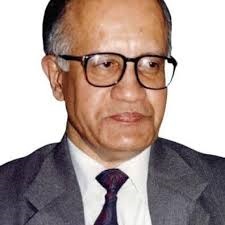
Dr. Narasimaiah Seshagiri (10 May 1940 – 26 May 2013) was a towering figure in India’s technological landscape. Widely regarded as a visionary computer scientist, pioneering technocrat, and the founding Director-General of the National Informatics Centre (NIC), Dr. Seshagiri laid the bedrock for India’s e-governance framework, satellite networking, and software export industry. Operating long before the digital age fully took root in India, he was a driving force who helped transform government administration through information and communications technology (ICT).
2. Quick Facts
- Full Name: Dr. Narasimaiah Seshagiri
- Native Name: ಎನ್. ಶೇಷಗಿರಿ (Kannada)
- Date of Birth: 10 May 1940
- Place of Birth: India (Karnataka)
- Nationality: Indian
- Occupation/Profession: Computer Scientist, Writer, Government Administrator
- Field of Achievement: Information Technology, Satellite Communication, e-Governance, Electronics Policy
- Years Active: 1960s – 2000 (Active government service), later served as Professor Emeritus until 2013
3. Award Information
- Award Name: Padma Bhushan
- Award Category: Civilian Award (Third Highest Civilian Honor in India)
- Award Year: 2005
- Presented By: Dr. A.P.J. Abdul Kalam (then President of India)
- Date of Ceremony: March/April 2005 (Republic Day Announcement on 26 January 2005)
- Citation/Official Reason: For distinguished contributions and pioneering work in the field of Science and Technology.
- Previous/Next Recipients: Part of the prestigious 2005 Padma Bhushan cohort alongside various national and international luminaries.
- Other Notable Accolades: Vikram Sarabhai Award (for optimal design simulation of low-energy consumption spacecraft), Karnataka Rajyotsava Award.
4. Why Did He Receive the Award?
Dr. Seshagiri was honored with the Padma Bhushan in 2005 in recognition of his decades-long dedication to building India’s digital architecture from scratch. He conceptualized and built NICNET (Nationwide Computer Network), championed indigenous electronics and software manufacturing, spearheaded the establishment of Software Technology Parks of India (STPI), and introduced computing into government administration (e-governance) long before it became mainstream.
5. Early Life
Born on May 10, 1940, Dr. Seshagiri exhibited exceptional aptitude for quantitative sciences and engineering from a young age. Growing up in a post-independence India striving for scientific self-reliance, he pursued an academic path heavily aligned with national development, gravitating toward telecommunications, space research, and computer systems.
6. Education
- Doctorate (Ph.D.): Earned his Ph.D. in Microwave Telecommunication Engineering from the prestigious Indian Institute of Science (IISc), Bengaluru.
- His advanced academic grounding enabled him to seamlessly bridge theoretical physics, telecommunications, and early computer engineering.
7. Career Journey
- Early Research & TIFR: Began his career working on satellite communications and spacecraft design at the Tata Institute of Fundamental Research (TIFR) under the mentorship of Prof. M.G.K. Menon.
- Electronics Commission: Guided by Prof. Menon, he assisted in setting up the central Electronics Commission, shaping national technology policies.
- IPAG (Information Planning Analysis Group): Headed the national data center entity focusing on electronics planning.
- National Informatics Centre (NIC): Appointed as the Founder Director-General of the NIC, steering the institution until his voluntary retirement in February 2000.
- Later Years: Served as a Professor Emeritus at IISc Bengaluru and offered technical consultancy in frontier IT areas.
8. Major Achievements
- Architect of NICNET: Architected a nationwide satellite-based computer network connecting India’s capital to every district headquarters 30 years ago.
- First Hindi Desktop System: Masterminded the introduction of the first-ever desktop system supporting Indian languages (Hindi) in 1985.
- Software Technology Parks (STPI): Instrumental in establishing Software Technology Parks across India, paving the way for the country’s software export boom.
- Spacecraft Design: Won the Vikram Sarabhai Award for optimal design simulation of low-energy consumption spacecraft.
9. Contribution to the Nation
Dr. Seshagiri is widely credited with transitioning India from an analog bureaucracy to a digitally connected republic. By establishing institutions like the NIC, C-DAC, and NICSI, he ensured that governance, public data dissemination, and district-level administration had the digital backbone required to scale. He was an institutional builder who believed technology must directly improve the quality of life for the common masses.
10. Other Awards and Honours
- Vikram Sarabhai Award (for space-craft design simulation)
- Karnataka Rajyotsava Award
- Fellowships: Elected Fellow of the National Academy of Sciences, Indian Academy of Sciences, Computer Society of India, and IETE.
- International Roles: Served as an elected Governor of the International Council for Computer Communication.
11. Legacy and Influence
Dr. Seshagiri’s legacy lives on through the digital governance framework of modern India (“Digital India”). The nationwide networks he planned decades ago evolved into the robust e-governance systems utilized today. The National Informatics Centre regularly holds memorial lectures in his honor, featuring stalwarts of Indian industry (such as Infosys founder N.R. Narayana Murthy) to celebrate his vision of blending academic brilliance with administrative execution.
12. Interesting Facts
- Ahead of His Time: Colleagues frequently noted that many of his technological projections for the 21st century were written down and conceptualized decades prior to their market realization.
- Literary Contributions: Aside from high-level technical frameworks, he authored notable books, including The bomb! : fallout of India’s nuclear explosion (1975) and Information systems for economies in transition.
- Multifaceted Role: He seamlessly shifted roles from an academic researcher at IISc/TIFR to a high-ranking bureaucratic policymaker (Special Secretary to the Govt. of India).
13. Quotes
“What we see as e-Governance today is the direct outcome of his vision and its translation through the decades of the 80s and 90s.” — Tribute by the National Informatics Centre (NIC)
Press Release Page | Press Information Bureau
14. Timeline
- 1940: Born on May 10 in India
- 1970s: Associated with TIFR, Electronics Commission, and IPAG; published The bomb!
- 1985: Led the rollout of India’s first desktop computer system supporting Indian languages
- 2000: Retired from active government service as Director-General of NIC and Special Secretary
- 2005: Awarded the Padma Bhushan by President Dr. A.P.J. Abdul Kalam
- 2013: Passed away on May 26 at the age of 73 in Bengaluru
15. References
- Government of India – Press Information Bureau (PIB) Archives (Dr N. Seshagiri: A Life in the Service of Science).
- National Informatics Centre (NIC) Portal & Memorial Lecture Documentation.
- Wikipedia Entry: N. Seshagiri.
- Times of India archives (N Seshagiri, NIC founder, dies at 73).
16. Related Personalities
- Prof. M.G.K. Menon (Physicist and mentor who guided his transition into national science policy)
- Dr. A.P.J. Abdul Kalam (President of India who presented him the Padma Bhushan)
- N.R. Narayana Murthy (IT pioneer who delivered memorial tributes highlighting Seshagiri’s patriotic and administrative contributions)
17. Frequently Asked Questions (FAQ)
- Q: Who was Dr. Narasimaiah Seshagiri?
- A: He was a brilliant Indian computer scientist, writer, and the founder Director-General of the National Informatics Centre (NIC), widely recognized as a pioneer of India’s IT and e-governance sectors.
- Q: What is Dr. Seshagiri best known for?
- A: He is best known for conceptualizing NICNET (the nationwide satellite network for governance), spearheading software technology parks, and establishing foundational computer policies for India.
- Q: When did he receive the Padma Bhushan?
- A: He received the Padma Bhushan, India’s third-highest civilian award, in the year 2005.
About the Author