

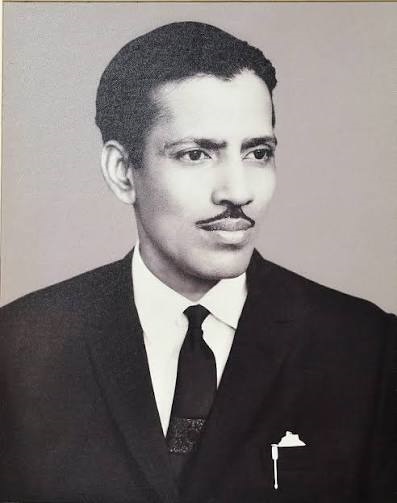
1. Introduction
Dr. Arcot Ramachandran was a towering figure in Indian engineering, science administration, and international diplomacy. Celebrated globally as the founding Executive Director of UN-Habitat, he played a pivotal role domestically in shaping India’s modern technological framework. From establishing the Department of Science and Technology’s early initiatives to spearheading pioneering research in heat transfer and renewable energy, Dr. Ramachandran’s career bridged academic rigor with large-scale national and international institution-building.
2. Quick facts
- Full Name: Arcot Ramachandran
- Native Name: ಆರ್ಕೋಟ್ ರಾಮಚಂದ್ರನ್ (Kannada) / ஆற்காடு ராமச்சந்திரன் (Tamil)
- Date of birth: April 6, 1923
- Place Of birth: Madras (now Chennai), Tamil Nadu, India
- Nationality: Indian
- Occupation/ Profession: Mechanical Engineer, Science Administrator, and UN Under-Secretary-General
- Field of Achievement: Heat Transfer Engineering, National Science Planning, and International Human Settlements Policy
- Years Active: 1947 – 2018
3. Award Information
- Award Name: Padma Bhushan
- Award Category: India’s Third-Highest Civilian Award
- Award Year: 2003
- Presented By: Government of India (Conferred by the President of India)
- Date of Ceremony: Republic Day honors cycle, 2003
- Citation/Official Reason: For exceptional and distinguished service to the fields of science, engineering, and international public administration.
- Previous Recipients (Examples): Prominent scientists, technologists, and public intellectuals.
- Next Recipients: Conferred annually as part of national civilian honors.
4. Why they Receive the award?
Dr. Arcot Ramachandran was conferred the Padma Bhushan in recognition of his monumental lifetime contributions to engineering research, his foundational leadership of India’s scientific infrastructure as Secretary of the Department of Science and Technology, and his prestigious tenure representing India at the highest echelons of the United Nations.
5. Early Life
Born in April 1923 in a Tamil-speaking family with roots in southern India, Ramachandran grew up during a transformative era of nationalist awakening and educational expansion. Demonstrating a sharp analytical intellect early on, he pursued mechanical engineering, aligning his academic ambitions with independent India’s urgent need for technical self-reliance and industrial modernization.
6. Education
- Undergraduate Degree: Graduated in Mechanical Engineering from the University of Madras.
- Master’s Degree: Earned his Master of Science (M.S.) in Engineering from Purdue University, USA.
- Doctoral Research: Completed his Ph.D. in Engineering at Purdue University, specializing in thermodynamic properties and heat transfer mechanics.
- Post-Doctoral Fellowships: Continued advanced research at Purdue University and Columbia University.
7. Carrier Journey
- Early Academic Rites: Served as a prominent faculty member at the Indian Institute of Science (IISc), Bengaluru, where he built the famous School of Research in Heat and Mass Transfer.
- Directorship at IIT Madras: Served dynamically as a professor and later as a key director steering technical education.
- Secretary to the Government of India: Appointed Secretary to the Department of Science and Technology (DST) and Director-General of the Council of Scientific and Industrial Research (CSIR) in 1973.
- United Nations Leadership: Appointed by the UN Secretary-General as the first Executive Director of the United Nations Centre for Human Settlements (UNCHS / UN-Habitat) with the rank of Under-Secretary-General (1978–1993).
8. Major Achievements
- Architect of India’s Science Plan: Implemented India’s first comprehensive Science and Technology Plan, establishing the Science and Engineering Research Council (SERC) and the National Information System for Science and Technology (NISSAT).
- Founding UN-Habitat: Shaped global urbanization policies as the founding head of UN-Habitat based in Nairobi, Kenya.
- Promoting Renewable Energy: Widely regarded as an early architect of India’s renewable energy research initiatives and environmental planning boards.
- International Honors: Awarded the World Habitat Trophy (1995), the Shanti Swaroop Bhatnagar Gold Medal (1998), and the Sir M. Visvesvaraya Life Time Achievement Award (1999).
9. Contribution to the nation
Dr. Ramachandran laid down the institutional scaffolding that allowed modern Indian science to interact with global standards. By setting up autonomous funding structures like the SERC, streamlining multi-disciplinary industrial research through CSIR, and championing environmental conservation frameworks, he ensured that post-independence India possessed the structural bandwidth to support large-scale technological advancement.
10. Other Awards and Honours
- Heat Transfer Memorial Award (1986) – American Society of Mechanical Engineers
- World Habitat Trophy (1995) – Building and Social Housing Foundation, UK
- Shanti Swaroop Bhatnagar Gold Medal (1998)
- Sir M. Visvesvaraya Life Time Achievement Award (1999)
- Padma Bhushan (2003) – Government of India
- World Federation of Engineering Organizations Award (2005)
- Honorary Doctorates from Purdue University (USA), Stuttgart University (Germany), Anna University, IIT Madras, and University of Roorkee.
11. Legacy and influence
Dr. Arcot Ramachandran is remembered as a master institution-builder who combined deep technical scholarship with world-class administrative execution. His foresight in linking urban human settlements, housing safety for the poor, and sustainable environmental protocols placed India’s developmental philosophy on the global map decades before sustainability became a mainstream corporate buzzword.
12. Interesting Facts
- Global Trailblazer at the UN: When UN-Habitat was formally established in 1978, Dr. Ramachandran was handpicked to lead it at the Under-Secretary-General level, making him one of the highest-ranking Indian international civil servants of the 20th century.
- Advocate for World Habitat Day: He was instrumental in conceptualizing and proposing global frameworks like World Habitat Day and the International Year of Shelter for the Homeless, directly impacting housing policies across the developing world.
- Academic Multi-Hyphenate: Despite handling immense administrative desks across New Delhi and Nairobi, he remained an active researcher, authoring core engineering manuals on heat transfer and earth construction technology.
13. Quotes
“Sustainable urban development is not merely a matter of concrete infrastructure; it is about ensuring dignity, adequate shelter, and basic human rights for every citizen of the global community.”
14. Timeline
- 1923: Born on April 6 in Madras (Chennai), India.
- 1947–1950s: Completes engineering degrees in India and obtains his Ph.D. from Purdue University, USA.
- 1973: Takes charge as Secretary to the Department of Science and Technology and Director-General of CSIR.
- 1978: Appointed Under-Secretary-General and Executive Director of UN-Habitat.
- 1993: Retires from active United Nations service and returns to advisory roles in India.
- 2003: Conferred India’s third-highest civilian honor, the Padma Bhushan.
- 2018: Passes away on May 18 at the age of 95, leaving behind an extraordinary global legacy.
15. References
- Wikipedia – Comprehensive Biographical Compilations on Dr. Arcot Ramachandran.
- UN-Habitat Official Archives – Executive Director Profiles and Tributes.
- Ministry of Home Affairs, Government of India – Padma Awards Directories.
- Indian National Academy of Engineering (INAE) – Fellow Registers and Memorial Monographs.
16. Related Personalities
- Sir M. Visvesvaraya (Legendary Indian engineer and statesman)
- M. S. Swaminathan (Iconic agricultural scientist and contemporary national leader)
- Indira Gandhi (Former Prime Minister of India who worked closely with scientific administrators during the 1970s)
17. Frequently Asked Questions (FAQ)
Q1: What is Dr. Arcot Ramachandran best known for?
A: Dr. Arcot Ramachandran is best known as the founding Executive Director of UN-Habitat, where he served as a UN Under-Secretary-General, and as a visionary science administrator who helped shape India’s Department of Science and Technology.
Q2: What major civilian and international awards did he receive?
A: He received the Padma Bhushan from the Government of India in 2003, alongside the Shanti Swaroop Bhatnagar Gold Medal, the World Habitat Trophy, and numerous global engineering fellowships.
Q3: Which academic institutions did he serve?
A: He had an illustrious academic career at the Indian Institute of Science (IISc) in Bengaluru and Purdue University, later contributing to leadership boards across premier Indian and international technological bodies.
Arcot Ramachandran the architect of India’s Science and Technology Plan
This archival video highlights Dr. Arcot Ramachandran’s foundational contributions to building India’s science and technology infrastructure.
About the Author




