

1. Introduction
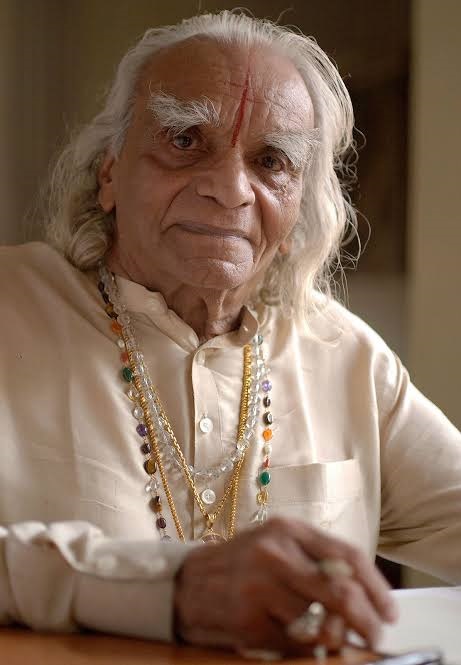
Bellur Krishnamachar Sundararaja Iyengar, universally known as B.K.S. Iyengar, was one of the foremost yoga teachers of the 20th century and the founding father of Iyengar Yoga. Widely credited as a primary force behind the global popularization of yoga, he transformed an ancient, esoteric Indian physical-spiritual discipline into a globally practiced science. Through his rigorous focus on structural alignment, therapeutic precision, and the invention of yoga props, Iyengar changed how millions approach health and wellness today.
2. Quick Facts
- Full Name: Bellur Krishnamachar Sundararaja Iyengar
- Native Name: ಬೆಳ್ಳೂರು ಕೃಷ್ಣಮಾಚಾರ್ ಸುಂದರರಾಜ ಅಯ್ಯಂಗಾರ್ (Kannada)
- Date of birth: December 14, 1918
- Place Of birth: Bellur, Kolar district, Karnataka, India
- Nationality: Indian
- Occupation/ Profession: Yoga Guru, Author, Philosopher
- Field of Achievement: Yoga, Indian Philosophy, and Therapeutic Health
- Years Active: 1934–2014 (Spanning eight decades)
3. Award Information
| Award Name | Award Category | Award Year | Presented By | Date of Ceremony | Official Reason / Citation |
| Padma Vibhushan | Art / Yoga | 2014 | Government of India (President Pranab Mukherjee) | April 26, 2014 | In recognition of his exceptional and distinguished service to the nation in the field of yoga. |
| Padma Bhushan | Art / Yoga | 2002 | Government of India | 2002 | For distinguished service of a high order in popularizing Indian art and philosophy worldwide. |
| Padma Shri | Art / Yoga | 1991 | Government of India | 1991 | For outstanding contributions to the propagation of yoga as a science. |
- Previous Recipients (Padma Vibhushan in Art): Legendary classical maestros, dancers, and artists.
- Next Recipients: Subsequent high-ranking civilian awardees in later national honors lists.
4. Why Did He Receive These Awards?
B.K.S. Iyengar received India’s highest civilian honors—culminating in the Padma Vibhushan—because he single-handedly elevated yoga from a localized, regional ascetic practice into a globally respected system of health, anatomy, and mental wellness. By authoring foundational texts like Light on Yoga and establishing a foolproof method of postural alignment backed by deep anatomical insight, he brought immense global prestige to India’s cultural heritage.
5. Early Life
Born into a poor Sri Vaishnava Iyengar family in Bellur, Karnataka, Iyengar was the 11th of 13 children. His childhood was plagued by severe hardship; his birth coincided with the devastating influenza epidemic, leaving him extremely frail. Throughout his youth, he battled malaria, tuberculosis, typhoid fever, and malnutrition. He described his body as weak, with spindly legs, a protruding stomach, and a head that drooped from lack of strength. At age nine, he lost his father, worsening the family’s financial distress. When he was sent to live with his brother-in-law, the renowned yogi Tirumalai Krishnamacharya, in Mysore at age 15, it completely altered the trajectory of his life.
6. Education
Though his formal schooling was frequently interrupted by chronic illness and poverty, his ultimate education took place on the yoga mat under Krishnamacharya’s intense and demanding tutelage. Later in life, his deep mastery earned him academic recognition, including an honorary Doctorate of Science from the University of Mysore and invitations to lecture at prestigious global universities.
7. Career Journey
- The Struggles in Pune (1936): Sent by Krishnamacharya to Pune to teach yoga at age 18, Iyengar faced immense poverty, isolation, and initial public skepticism. He spent hours practicing alone, studying his own body’s anatomy.
- The Yehudi Menuhin Breakthrough (1952): A pivotal turning point occurred when he met world-famous violinist Yehudi Menuhin in Mumbai. Menuhin, exhausted and high-strung, was given just 15 minutes with Iyengar, after which he experienced profound relaxation. Menuhin became his lifelong student and champion, inviting him to the West and opening doors across Europe and America.
- Global Expansion: Iyengar traveled tirelessly, teaching thousands of students, establishing international centers, and creating a structured teachers’ training program that standardizes yoga instruction globally.
8. Major Achievements
- Publication of Light on Yoga (1966): Often called the “bible of modern yoga,” this international bestseller mapped out over 200 yoga poses with meticulous photographic detail and anatomical breakdowns.
- Time 100 Influence (2004): Named by Time magazine as one of the 100 most influential people in the world.
- Invention of Props: Pioneered the use of belts, blocks, blankets, and ropes to help practitioners of all ages and physical conditions achieve correct alignment safely.
- Global Institutes: Founded the Ramamani Iyengar Memorial Yoga Institute (RIMYI) in Pune, attracting students from every corner of the globe.
9. Contribution to the Nation
B.K.S. Iyengar served as a monumental cultural ambassador for India, establishing yoga as India’s greatest gift to global holistic health. Beyond global stages, he deeply served his roots: through The Bellur Trust, he transformed his impoverished birthplace of Bellur into a model village by building free schools, a high school, a hospital, a clean water supply system, and India’s first modern temple dedicated to Sage Patanjali.
10. Other Awards and Honours
- National Heritage Fellowship (USA, 1999)
- Officier of the Order of Arts and Letters (France, 2003)
- Kyoto Prize (1991 equivalent recognitions / global cultural awards)
- Astrologers & Astronomers Recognition: A star in the northern hemisphere was officially named “BKS Iyengar” by federal star registries in the US (1976).
11. Legacy and Influence
Iyengar Yoga is practiced by millions across more than 40 countries today. His legacy lies in shifting yoga away from mystical performance or dogmatic asceticism into an empirical, anatomical science accessible to ordinary human beings. He proved that alignment in the physical body brings alignment to the mind and spirit.
12. Interesting Facts
- The 3-Hour Daily Practice at Age 90: Even in his late eighties and nineties, Iyengar maintained a rigorous daily routine, practicing asanas for three hours and pranayama for an hour every single day.
- The “Props” Innovation: Because his early students (and he himself) often faced physical stiffness or injuries, he creatively used ordinary household items like bricks, chairs, and ropes, permanently revolutionizing how yoga is taught to injured or aging bodies.
- Google Doodle Honor: On December 14, 2015, what would have been his 97th birthday, Google commemorated him with a global homepage Doodle.
13. Quotes
“Health is a state of complete harmony of the body, mind, and spirit.”
“Yoga allows you to find an inner peace that is not disturbed and troubled by the stresses of everyday life.”
“Penetration of our mind is our goal, but in the beginning to set things in motion, there is no substitute for sweat.”
14. Timeline
- 1918: Born on December 14 in Bellur, Karnataka.
- 1934: Begins intensive yoga studies under T. Krishnamacharya in Mysore.
- 1936: Moves to Pune to begin teaching independently.
- 1952: Meets Yehudi Menuhin, sparking his international career.
- 1966: Publishes his masterwork, Light on Yoga.
- 1975: Opens the Ramamani Iyengar Memorial Yoga Institute (RIMYI) in Pune.
- 1991, 2002, 2014: Conferred the Padma Shri, Padma Bhushan, and Padma Vibhushan sequentially by the Government of India.
- 2004: Named one of Time magazine’s 100 most influential people.
- 2014: Passes away on August 20 in Pune at the age of 95.
15. References
- Encyclopædia Britannica – B.K.S. Iyengar Biography
- Wikipedia – Open Historical Records on B.K.S. Iyengar
- Official B.K.S. Iyengar Yoga Web Archives (bksiyengar.com)
- Light on Yoga by B.K.S. Iyengar (Schocken Books)
16. Related Personalities
- Tirumalai Krishnamacharya (Brother-in-law and primary guru, “father of modern yoga”)
- Yehudi Menuhin (World-renowned violinist and early Western catalyst)
- Geeta Iyengar & Prashant Iyengar (Daughter and son, renowned yoga masters who carried on his lineage)
- Sage Patanjali (Ancient compiler of the Yoga Sutras, whom Iyengar revered deeply)
17. Frequently Asked Questions (FAQ)
Q1: What is Iyengar Yoga?
A: Iyengar Yoga is a form of Hatha yoga that focuses heavily on structural alignment, precision in body posture, and the controlled use of props (such as blocks, belts, and blankets) to make postures accessible and safe for practitioners of all levels.
Q2: How many books did B.K.S. Iyengar write?
A: He authored 14 major books on yoga philosophy and practice, including the seminal international bestsellers Light on Yoga, Light on Pranayama, and Light on the Yoga Sutras of Patanjali.
Q3: Why is B.K.S. Iyengar called the father of modern yoga in the West?
A: Through his clear, anatomically detailed books and his extensive international teaching tours beginning in the 1950s, he translated complex Sanskrit-based ascetic practices into a systematic discipline that Western medical science, dancers, and general populations could easily adopt.
About the Author




