Early Life and Education
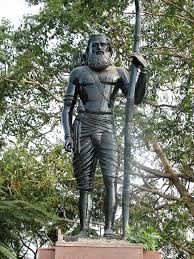
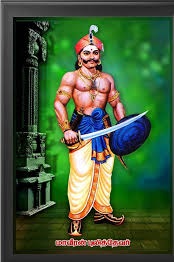
Puli Thevar, also known as Pulithevan, was one of the earliest rulers in South India to resist foreign domination. He was born around 1715 in Nerkattumseval, located in present-day Tirunelveli. He belonged to the Maravar community and served as the Palayakkarar (Polygar) of Nerkattumseval.
Formal educational records from that period are scarce. However, like many regional chieftains of his time, Puli Thevar received training in administration, military strategy, diplomacy, and traditional Tamil values. His upbringing prepared him to lead his people during a politically turbulent era.
Education & Skills
Although Puli Thevar did not receive modern institutional education, he possessed several remarkable abilities:
- Expertise in military tactics and warfare.
- Strong leadership and administrative skills.
- Knowledge of diplomatic negotiations with neighbouring polygars.
- Proficiency in horse riding, swordsmanship, and battlefield planning.
- Deep understanding of local governance and agrarian management.
These skills enabled him to organize effective resistance against external powers.
Contribution to Tamil Literature
There is no historical evidence suggesting that Puli Thevar directly contributed to Tamil literature as a writer or scholar. Nevertheless, his heroic resistance inspired numerous Tamil folk songs, ballads, stage dramas, and historical writings.
His legacy occupies an important place in Tamil cultural memory, where he is celebrated as one of the earliest freedom fighters of the region. Through oral traditions and literary works, his story continues to inspire generations.
Role in India’s Freedom Movement
Puli Thevar is regarded as one of the first Indian rulers to oppose British expansion in South India. During the mid-eighteenth century, the British East India Company sought to strengthen its control over the Tamil region through the Arcot Nawab’s administration.
Refusing to submit to their authority or pay tribute, Puli Thevar led a series of armed confrontations between 1755 and 1767. He formed alliances with neighbouring polygars and challenged both the Nawab’s forces and the East India Company.
His resistance predates the more widely known Indian Rebellion of 1857 by nearly a century. For this reason, many historians recognize him as one of the earliest freedom fighters in Indian history.
Key Contributions:
- Opposed the tax demands imposed by foreign-backed authorities.
- Organized alliances among local chieftains.
- Led military campaigns against British-supported forces.
- Inspired later Polygar leaders who resisted colonial rule.
Personal Life
Historical records provide limited information about Puli Thevar’s personal life. He was devoted to the welfare of his subjects and focused on maintaining the independence of his territory.
As the ruler of Nerkattumseval, he encouraged unity among neighbouring polygars and prioritized the protection of local traditions and self-governance.
Death
The exact circumstances surrounding Puli Thevar’s death remain uncertain. According to various historical accounts, he disappeared around 1767 after prolonged conflicts with enemy forces. Some traditions suggest that he died while evading capture, while others maintain that the details of his final days were never officially documented.
Despite the ambiguity surrounding his death, his courage and resistance ensured that his memory endured in Tamil history.
Conclusion
Puli Thevar occupies a distinguished place in India’s struggle against foreign domination. Long before the rise of organized national movements, he demonstrated extraordinary courage by challenging powerful colonial interests. Though he was not a literary figure, his life story has enriched Tamil historical consciousness and inspired countless cultural works.
Today, Puli Thevar is remembered as a symbol of bravery, patriotism, and the spirit of resistance. His unwavering commitment to protecting his people’s autonomy continues to inspire pride among Tamils and Indians alike.
About the Author