

1. Introduction
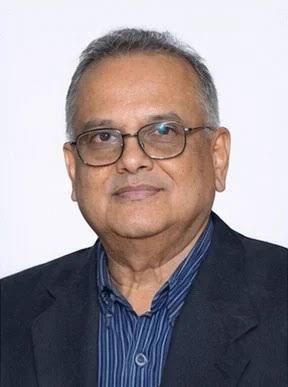
Dr. Palle Rama Rao was an internationally renowned Indian scientist, academic leader, and the preeminent architect of modern physical and mechanical metallurgy in India. Over a career spanning more than six decades, he shaped the nation’s defense manufacturing, scientific research policies, and material science infrastructure. From steering critical defense laboratories to serving as Secretary to the Government of India, Dr. Rama Rao’s visionary contributions laid the bedrock for indigenous technological capability.
2. Quick Facts
- Full Name: Palle Rama Rao
- Native Name: పల్లె రామారావు (Telugu)
- Date of Birth: June 30, 1937
- Place of Birth: Kurnool, Andhra Pradesh, British India
- Nationality: Indian
- Occupation / Profession: Scientist, Metallurgist, Academic Administrator, and Public Servant
- Field of Achievement: Physical & Mechanical Metallurgy and Materials Science
- Years Active: 1960–2026
3. Award Information (Focus: Padma Vibhushan)
- Award Name: Padma Vibhushan
- Award Category: India’s Second-Highest Civilian Award
- Award Year: 2011
- Presented By: Pratibha Patil (President of India)
- Date of Ceremony: March/April 2011
- Citation / Official Reason: For extraordinary and distinguished service to science, engineering, and the development of indigenous metallurgical technologies in India.
- Previous Recipient (2010): E. Sreedharan, Montek Singh Ahluwalia, and others.
- Next Recipient (2012): Bhupen Hazarika, Mario Miranda, T. V. Rajeswar, and others.
4. Why Did He Receive the Award?
Dr. Palle Rama Rao was conferred with the Padma Vibhushan in recognition of his lifetime of pioneering research in metallurgy and his monumental role in building India’s strategic research institutions. He was instrumental in translating fundamental scientific theories into industrial realities, notably helping establish indigenous defense production hubs and advancing high-performance alloy research.
5. Early Life
Born in June 1937 in Kurnool, Andhra Pradesh, Dr. Rama Rao grew up with a deep fascination for the physical sciences. Demonstrating extraordinary academic aptitude, he pursued higher studies during independent India’s formative decades, channeling his passion for physics and material structures into a lifelong mission to make the country self-reliant in critical engineering materials.
6. Education
- Bachelor of Arts (B.A./B.Sc. Hons in Physics): University of Madras (1956–1957).
- Master of Science (M.Sc. in Nuclear Physics): Andhra University (1957).
- Doctor of Philosophy (Ph.D. in Metallurgy): Institute of Technology, Banaras Hindu University (now IIT BHU Varanasi, 1964).
- Post-Doctoral Research: University of Pennsylvania, USA (1966–1967).
7. Career Journey
Dr. Rama Rao began his academic journey as a faculty member at the Indian Institute of Science (IISc), Bangalore, and later served as Professor of Physical Metallurgy at IIT BHU (1975–1982). In 1982, he transitioned into national scientific leadership as the Director of the Defence Metallurgical Research Laboratory (DMRL) in Hyderabad, turning it into a world-class hub for defense materials. He later served as Secretary to the Government of India in the Department of Science & Technology (DST) and Department of Ocean Development, as well as Chairman of the Atomic Energy Regulatory Board (AERB) and Vice-Chancellor of the University of Hyderabad.
8. Major Achievements
- Triple Civilian Honors: One of the rare scientists honored with the Padma Shri (1989), Padma Bhushan (2001), and the Padma Vibhushan (2011).
- Strategic Defense Manufacturing: Played a pivotal role in establishing the Heavy Alloy Penetrator Plant at Tiruchirappalli—India’s first full-fledged ordnance factory built purely on indigenous R&D.
- Research Institution Builder: Founded or catalyzed premier institutions such as the International Advanced Research Center for Powder Metallurgy & New Materials (ARCI) in Hyderabad.
- Global Academic Fellow: Elected as a fellow of prestigious international bodies, including the Royal Academy of Engineering (UK), US National Academy of Engineering, and The World Academy of Sciences (TWAS).
9. Contribution to the Nation
Dr. Rama Rao bridged the gap between academic theory and national security. Under his leadership, India successfully developed ultra-high-strength, high-fracture-toughness specialty steels and advanced alloys essential for aerospace, naval, and armor applications. His policy leadership at the Department of Science and Technology helped shape modern funding frameworks for scientific innovation across India.
10. Other Awards and Honours
- Shanti Swarup Bhatnagar Prize: Awarded in Engineering Sciences (1979).
- Padma Shri (1989), Padma Bhushan (2001), and Padma Vibhushan (2011): Conferred by the Government of India.
- Homi Bhabha Award (1985) & Vasvik Award (1986): Recognizing applied industrial science and technology.
- IIM Tata Gold Medal: Presented by the Indian Institute of Metals (1991).
11. Legacy and Influence
Dr. Rama Rao’s legacy is woven into the physical resilience of India’s defense hardware and the career trajectories of generations of metallurgists he mentored. He demonstrated that Indian science could achieve global excellence and self-reliance through rigorous research and administrative integrity. He passed away on October 3, 2026, at the age of 89, leaving behind an indelible mark on global materials science.
12. Interesting Facts
- Pioneering X-Ray Metallurgy: His early fundamental research on X-ray diffraction line-broadening and stacking faults in deformed metals provided the core scientific basis for modern alloy design.
- Global Footprint: Despite his deep commitment to Indian self-reliance, his research papers and editorial boards spanned top international journals like Materials Science and Engineering and the International Journal of Fatigue.
- Institutional Virtuoso: He successfully balanced pure academic research, heavy defense manufacturing, public policy administration, and university vice-chancellorship with equal aplomb.
13. Quotes
“True scientific progress is measured not just by papers published, but by how effectively research translates into self-reliance, empowering the nation from within.” — Dr. Palle Rama Rao
14. Timeline
- 1937: Born on June 30 in Kurnool, Andhra Pradesh.
- 1964: Earns his Ph.D. in Metallurgy from BHU.
- 1979: Receives the prestigious Shanti Swarup Bhatnagar Prize.
- 1982–1991: Serves as Director of the Defence Metallurgical Research Laboratory (DMRL), Hyderabad.
- 1989: Conferred with the Padma Shri by the Government of India.
- 1991–1995: Serves as Secretary to the Government of India (Department of Science and Technology).
- 2001: Conferred with the Padma Bhushan.
- 2011: Honored with India’s second-highest civilian award, the Padma Vibhushan.
- 2026: Passes away on October 3 in Hyderabad at the age of 89.
15. References
- Wikipedia – Palle Rama Rao Profile & Career Archives.
- Shanti Swarup Bhatnagar Prize Official Portal – Dr. Palle Rama Rao Citation (1979).
- The World Academy of Sciences (TWAS) – In Memoriam & Fellow Profiles.
- Ministry of Home Affairs, Government of India – Padma Awardees Database.
16. Related Personalities
- Dr. A. P. J. Abdul Kalam: Legendary aerospace scientist and contemporary nation-builder who closely collaborated with Dr. Rama Rao on India’s defense technology programs.
- Dr. Raja Ramanna: Renowned nuclear physicist and key figure in India’s scientific institutional ecosystem.
- Prof. C. N. R. Rao: Eminent chemist and fellow visionary of modern Indian scientific research.
17. Frequently Asked Questions (FAQ)
Q1: Who was Dr. Palle Rama Rao? A: Dr. Palle Rama Rao was an eminent Indian scientist, physical metallurgist, and national research leader who made monumental contributions to India’s defense materials and scientific administration.
Q2: What are his major contributions to Indian defense? A: He spearheaded research at the Defence Metallurgical Research Laboratory (DMRL) and played a key role in setting up the Heavy Alloy Penetrator Plant in Tiruchirappalli based on indigenous technology.
Q3: Which highest civilian awards did he receive? A: He was honored with the Padma Shri (1989), Padma Bhushan (2001), and India’s second-highest civilian honor, the Padma Vibhushan (2011).
Q4: When did he pass away? A: He passed away on October 3, 2026, at the age of 89 in Hyderabad.
About the Author




