

1. Introduction
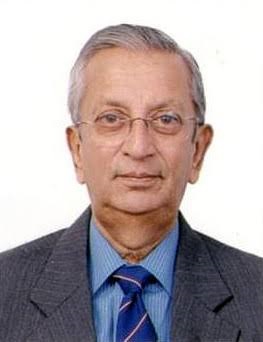
Ashok Harshadray Desai was one of India’s most distinguished constitutional lawyers, jurists, and public intellectuals. Serving as the Attorney General of India and Solicitor General, he was widely regarded as a fierce defender of civil liberties, secularism, and constitutional morality. Throughout a legal career spanning over six decades, Desai appeared in numerous landmark Supreme Court cases that shaped the contours of Indian democracy and administrative law.
2. Quick Facts
- Full Name: Ashok Harshadray Desai
- Native Name: अशोक हरसादराय देसाई
- Date of Birth: December 18, 1932
- Place of Birth: Vadodara (Baroda), Gujarat, India
- Nationality: Indian
- Occupation / Profession: Senior Advocate, Jurist, Public Servant
- Field of Achievement: Constitutional Law, Human Rights, and Public Policy
- Years Active: 1956 – 2020
3. Award Information (Spotlight: Padma Bhushan)
- Award Name: Padma Bhushan
- Award Category: Public Affairs (Civilian Honour)
- Award Year: 2001
- Presented By: Government of India (President of India)
- Date of Ceremony: March 2001
- Citation / Official Reason: In recognition of his distinguished service to public affairs, jurisprudence, and his exceptional contribution to upholding constitutional values within the Indian judicial system.
- Previous Recipients: Eminent jurists, public servants, and nation-builders of preceding years.
- Next Recipients: Successive civilian honorees in subsequent years.
4. Why He Received the Award
Ashok H. Desai received the Padma Bhushan—India’s third-highest civilian honor—for his monumental contributions to the legal domain and governance. Known for his encyclopedic knowledge of constitutional law, unwavering judicial independence, and willingness to take on complex public interest litigations (PILs), he safeguarded institutional integrity and protected fundamental rights during critical phases of Indian democracy.
5. Early Life
Born into a legally prominent and educated family in Vadodara (Baroda), Gujarat, Desai grew up in an environment that deeply valued intellectual rigor and public service. His father, Harshadray Desai, was a noted lawyer. From his youth, Ashok Desai exhibited a sharp analytical mind and an abiding interest in social justice, political history, and democratic freedoms—values that would steer his entire legal trajectory.
6. Education
- Schooling: Completed his early schooling in Gujarat.
- Higher Education: Graduated with a Bachelor of Arts (B.A. Honours) from Elphinstone College, Mumbai.
- Legal Studies: Earned his LL.B. from the Government Law College, Mumbai, and later pursued higher studies at the London School of Economics (LSE), refining his command over international jurisprudence and constitutional theory.
7. Career Journey
- Early Practice (1956): Enrolled as an advocate at the Bombay High Court, quickly earning a reputation for meticulous case preparation and articulate arguments.
- Senior Advocate Designation: Designated as a Senior Advocate by the Bombay High Court in the early 1970s.
- Solicitor General of India (1989–1990): Appointed as Solicitor General, offering crucial legal counsel to the central government during challenging socio-political transitions.
- Attorney General of India (1996–1998): Served as the top law officer of the country under successive governments, maintaining absolute professional neutrality and high ethical standards.
8. Major Achievements
- Highest Law Offices: Successfully served as both Solicitor General and Attorney General of India.
- Landmark Cases: Argued or assisted in historic Supreme Court matters concerning environmental protection, freedom of speech, electoral reforms, and the expansion of the Basic Structure doctrine.
- Padma Bhushan Laureate (2001): Honored nationally for his stellar lifetime contribution to Indian jurisprudence.
9. Contribution to the Nation
- Defending Civil Liberties: Frequently took up pro-bono or public interest briefs to defend freedom of expression, minority rights, and press freedom, notably during and after the Emergency era.
- Legal Mentorship: Mentored generations of young lawyers who passed through his chambers, instilling in them deep respect for ethical lawyering, preparation, and judicial decorum.
- Institutional Integrity: Acted as a moral compass for the Bar, fearlessly voicing concerns whenever executive or legislative actions threatened the independence of the judiciary.
10. Other Awards and Honours
- Padma Bhushan (2001) by the Government of India.
- Honorary Bencher of the Honourable Society of the Inner Temple, London (recognizing his international standing as a jurist).
- Lifetime achievement honors from various national and international bar associations and legal forums.
11. Legacy and Influence
Ashok H. Desai is remembered as a “lawyer’s lawyer” and a true custodian of the Indian Constitution. His arguments were characterized by elegance, precision, and profound moral clarity rather than theatrical aggression. His intellectual footprints remain visible across modern Indian constitutional jurisprudence, reminding practitioners that the law is ultimately an instrument for protecting human dignity.
12. Interesting Facts
- Chambers as an Institution: Working in Ashok Desai’s chambers was considered a masterclass in brief-reading, where he taught juniors that thorough mastery of facts was more powerful than rhetoric.
- Global Legal Stature: As an Inner Temple Bencher in London, he carried the legacy of Indian advocacy onto international legal platforms with immense grace and intellect.
- Lifelong Learner: Even at the height of his career, Desai maintained a massive personal library and read extensively across history, philosophy, and political science, blending broad humanistic learning with technical law.
13. Quotes
“The Constitution of India is not merely a legal document; it is a vehicle of social transformation and a covenant of human dignity.” – Ashok H. Desai
14. Timeline
- 1932: Born on December 18 in Vadodara, Gujarat.
- 1956: Begins practice at the Bombay High Court.
- 1989–1990: Serves as the Solicitor General of India.
- 1996–1998: Serves as the Attorney General of India.
- 2001: Conferred the Padma Bhushan by the Government of India.
- 2020: Passes away on April 13 in New Delhi at the age of 87.
15. References
- Supreme Court of India archives and official gazette notifications.
- Government of India civilian awards database (Padma Awards registry).
- Legal memoirs and journals (Supreme Court Cases, Economic and Political Weekly).
- Tributes and archives from the Bar Association of India and Supreme Court Bar Association.
16. Related Personalities
- Fali S. Nariman: Renowned contemporary jurist and constitutional expert.
- Soli Sorabjee: Fellow legal titan and former Attorney General of India.
- Justice H. R. Khanna: Legendary Supreme Court judge known for his defense of fundamental rights.
17. Frequently Asked Questions (FAQ)
Q1: What was Ashok H. Desai best known for?
A: He was best known as a premier constitutional jurist, a fierce defender of civil liberties, and a former Attorney General of India.
Q2: When did he serve as Attorney General of India?
A: He served as the Attorney General of India from 1996 to 1998.
Q3: What major national honor was conferred upon him?
A: He was awarded the Padma Bhushan in 2001 by the Government of India for his distinguished public service and contributions to law.
About the Author




