

1. Introduction
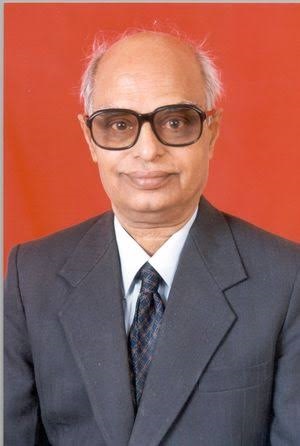
Pavagada Venkata Indiresan (1928–2013) was one of India’s most distinguished engineers, visionary educationists, and institutional administrators. Best known for his leadership as the Director of the Indian Institute of Technology (IIT) Madras and his foundational professorship at IIT Delhi, Professor Indiresan’s life work shaped modern technical education and electrical engineering in India. Beyond academia, he was an astute social commentator, author, and a fierce advocate for academic excellence and administrative reforms.
2. Quick Facts
- Full Name: Pavagada Venkata Indiresan
- Native Name: ಪಾವಗಡ ವೆಂಕಟ ಇಂದಿರೇಶನ್
- Date of Birth: September 6, 1928
- Place of Birth: Chennai (formerly Madras), Tamil Nadu, India
- Nationality: Indian
- Occupation / Profession: Engineer, Academic, Administrator, and Columnist
- Field of Achievement: Electrical Engineering, Higher Education Administration, and Applied Research
- Years Active: 1950s–2013
3. Award Information (Focus: Padma Bhushan)
- Award Name: Padma Bhushan
- Award Category: Civil Honours (Third Highest Civilian Award in India)
- Award Year: 2000
- Presented By: The President of India
- Date of Ceremony: March/April 2000 (Rashtrapati Bhavan, New Delhi)
- Citation / Official Reason: Recognized for his outstanding contributions to science, engineering, and the advancement of technical education in India.
- Previous Recipients: Eminent scientists, educationists, and national leaders across India.
- Next Recipients: Succeeding batches of national icons and scholars in subsequent years.
4. Why They Received the Award
Prof. P.V. Indiresan was awarded the Padma Bhushan for his monumental role in transforming India’s technical education framework. Over decades as a professor at IIT Delhi and Director of IIT Madras, he nurtured generations of world-class engineers, pioneered structured administrative practices (such as introducing the Dean system at IIT Madras), and elevated Indian engineering research to international standards. His leadership extended to serving as the President of the Indian National Academy of Engineering (INAE), cementing his legacy as a pillar of national technical development.
5. Early Life
Born in Chennai in 1928, Indiresan grew up during a transformative era in Indian history. Displaying a sharp analytical mind from an early age, he developed a deep fascination with mathematics, physical sciences, and how systems worked. This natural curiosity laid the groundwork for a lifelong devotion to science and teaching.
6. Education
- Undergraduate & Early Studies: Received foundational science and engineering training in India, studying at elite institutions including the Indian Institute of Science (IISc), Bangalore.
- Doctoral Studies: Pursued his Ph.D. at the University of Birmingham, United Kingdom, mastering advanced concepts in electrical engineering.
7. Career Journey
- Early Academic Roles: Began his teaching career, serving institutions like the University of Roorkee (now IIT Roorkee).
- IIT Delhi (1965–1979 & 1987–1993): Served as a premier Professor of Electrical Engineering, helping build the department’s academic rigor and research foundations from its early stages.
- Director of IIT Madras (1979–1984): Appointed Director on April 16, 1979. He spearheaded structural and administrative updates over his 5-year tenure, fostering closer alignment between industry needs and academic curricula.
- Leadership Roles: Acted as President of the Indian National Academy of Engineering (INAE).
- Columnist: Post-retirement, he remained an active public intellectual, writing a popular science and technology column for The Hindu Business Line for many years.
8. Major Achievements
- Institutional Modernization: Streamlined grading consistency and introduced the framework of Deans at IIT Madras to distribute administrative leadership effectively.
- Mentoring Global Leaders: Served as the Ph.D. supervisor and mentor to world-renowned scientists and academics, including Avinash Kak, Subhash Kak, and Arogyaswami Paulraj (inventor of MIMO wireless technology).
- Legal Advocacy for Merit: Famously challenged the Government of India’s decision regarding caste-based seat reservations in central educational institutions in the Supreme Court (under the 2006 Act), reflecting his unyielding stance on institutional standards and meritocracy.
9. Contribution to the Nation
Prof. Indiresan contributed fundamentally to India’s self-reliance in technical manpower. By training top-tier engineers who later built global tech giants and academic institutions, he directly powered India’s rise as an IT and engineering powerhouse. Through his policy advisories, writings, and institutional leadership, he bridged the gap between theoretical science, engineering implementation, and socio-economic governance.
10. Other Awards and Honours
- Honorary Member of IEEE (1998): Conferred “for contributions to the growth of electrical engineering in India through his leadership in education, applied research and professional engineering institutions.”
- Fellowships: Elected Fellow and President of the Indian National Academy of Engineering (INAE).
11. Legacy and Influence
Prof. Indiresan is remembered as an “endearing teacher” who demanded intellectual discipline balanced with deep empathy for his students. His structural contributions to IIT Madras and IIT Delhi live on in the DNA of those institutions. He remains a symbol of academic integrity, rigorous administration, and fearless public debate.
12. Interesting Facts
- Multidisciplinary Intellect: Though trained as an electrical engineer, he routinely crossed boundaries into economics, social sciences, and administrative management, earning a reputation as a modern polymath.
- Prolific Writer: Even well into his later years, he wrote lucid, thought-provoking essays bridging technology trends with economic realities for major Indian financial dailies.
13. Quotes
“Education should not merely train people to make a living; it must teach them how to build a society founded on merit, integrity, and analytical depth.” — P.V. Indiresan
14. Timeline
- 1928: Born on September 6 in Chennai, India.
- 1950s–1960s: Completed higher education at IISc and earned his Ph.D. from the University of Birmingham.
- 1965: Joined IIT Delhi as a Professor of Electrical Engineering.
- 1979: Appointed Director of IIT Madras (served until 1984).
- 1987: Returned to IIT Delhi as a Professor.
- 1998: Awarded Honorary Membership by the IEEE.
- 2000: Honored with the Padma Bhushan by the Government of India.
- 2013: Passed away at the age of 84.
15. References
- Wikipedia contributors. “Pavagada V. Indiresan.” Wikipedia, The Free Encyclopedia.
- The Hindu Business Line. “P.V. Indiresan: An endearing teacher passes away” (Feb 2013).
- IIT Madras Heritage Centre. “Director’s Gallery – Prof. P.V. Indiresan.”
- Prabook World Biographical Encyclopedia. “Pavagada Indiresan Profile.”
16. Related Personalities
- Arogyaswami Paulraj (Notable student and wireless pioneer)
- Subhash Kak (Prominent scientist and former student)
- Avinash Kak (Computer scientist and researcher)
17. Frequently Asked Questions (FAQ)
- Q: What was P.V. Indiresan best known for?
- A: He was best known for serving as the Director of IIT Madras, a professor at IIT Delhi, and an iconic leader in Indian electrical engineering education.
- Q: When did he receive the Padma Bhushan?
- A: He was awarded the Padma Bhushan in the year 2000.
- Q: Which notable students did he supervise?
- A: He supervised the Ph.D. tracks of eminent scientists like Arogyaswami Paulraj, Subhash Kak, and Avinash Kak.
About the Author




