

1. Introduction
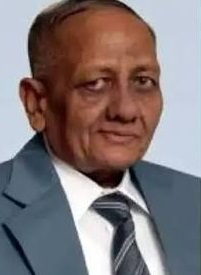
Dr. Ram Narain Agarwal, fondly remembered as the “Father of the Agni Missiles” and affectionately known as “Agniman,” was a legendary Indian aerospace engineer and defense scientist. He played a monumental role in shaping India’s strategic deterrence by spearheading the design and development of the indigenous Agni series of long-range ballistic missiles. Working closely with stalwarts like Dr. A.P.J. Abdul Kalam, Dr. Agarwal’s visionary leadership at the Defence Research and Development Organisation (DRDO) transformed India from a technology-dependent nation into a self-reliant missile power.
2. Quick Facts
- Full Name: Dr. Ram Narain Agarwal
- Native Name: राम नारायण अग्रवाल
- Date of Birth: July 24, 1941
- Place of Birth: Jaipur, Rajasthan, India
- Nationality: Indian
- Occupation/Profession: Aerospace Engineer, Defence Scientist
- Field of Achievement: Missile Technology and Aerospace Engineering
- Years Active: 1960s – 2005 (Retired as Distinguished Scientist)
3. Award Information (Padma Bhushan)
- Award Name: Padma Bhushan
- Award Category: Civil Honour (Third-highest civilian award in India)
- Award Year: 2000
- Presented By: President of India (Government of India)
- Date of Ceremony: March/April 2000 (Annual Investiture Ceremony)
- Citation/Official Reason: For distinguished service of a high order to the nation in the field of science and engineering, specifically for pioneering India’s strategic missile capabilities.
- Previous Recipients (Notable context): Prominent scientists and public figures recognized for exceptional national contribution.
- Next Recipients: Succeeding batches of national civilian honorees.
4. Why They Received the Award
Dr. Agarwal received the Padma Bhushan (and earlier, the Padma Shri in 1990) for his pioneering, single-minded contributions to India’s defense self-reliance. As the first Programme Director of the Agni missile project, he successfully engineered complex re-entry technologies, composite heat shields, high-precision guidance, and onboard propulsion systems under severe international technology denial regimes. His efforts gave India critical long-range strategic deterrence capabilities.
5. Early Life
Dr. Agarwal was born into a traditional trading family in Jaipur, Rajasthan. Growing up in post-independence India, he cultivated a profound curiosity for science, mathematics, and mechanics. Despite belonging to a business-oriented family background, he chose to pursue a rigorous path in technical education and engineering sciences, driven by a deep desire to contribute to nation-building.
6. Education
- Undergraduate Degree: Completed his degree in Aeronautical Engineering from the prestigious Madras Institute of Technology (MIT), Guindy (the same alma mater as Dr. A.P.J. Abdul Kalam).
- Postgraduate Degree: Earned his Master’s degree in Aerospace Engineering from the Indian Institute of Science (IISc), Bengaluru.
- Doctorate: Obtained a Ph.D. from the University of Rajasthan.
7. Career Journey
- Early Research: Began his professional technical journey diving deep into aeronautical and propulsion mechanics.
- Joining DRDO: Joined the Defence Research and Development Organisation (DRDO), where he worked closely with aerospace pioneers like Dr. V.S. Arunachalam and Dr. A.P.J. Abdul Kalam.
- Integrated Guided Missile Development Programme (IGMDP): When the Indian government launched the IGMDP in 1983 under Kalam’s vision, Dr. Agarwal was handpicked to lead India’s most ambitious project—the Agni missile.
- Founder-Director of ASL: He served as the founding Director of the Advanced Systems Laboratory (ASL) in Hyderabad, a premier lab dedicated to developing critical missile systems.
- Retirement: He officially retired from active service in 2005 as a Distinguished Scientist, settling down in Hyderabad.
8. Major Achievements
- Architect of the Agni Series: Successfully directed the design, testing, and induction of the Agni surface-to-surface ballistic missile series, including pioneering work on Agni-I, Agni-II, and subsequent variants.
- Overcoming Technology Denials: Masterminded critical indigenous technologies—such as specialized re-entry heat shields and advanced guidance computers—when Western nations placed strict technology embargoes on India.
- Founding ASL: Established the Advanced Systems Laboratory (ASL) as a world-class hub for aerospace and missile research.
9. Contribution to the Nation
Dr. Agarwal’s work formed the backbone of India’s nuclear deterrence architecture and strategic defense readiness. By anchoring the Agni program, he ensured that India gained sovereign capability over long-range delivery systems, cementing the country’s status as a formidable global technological power. His persistent drive for Atmanirbhar Bharat (self-reliance) saved the nation billions of dollars and protected its borders against escalating geopolitical pressures.
10. Other Awards and Honours
- Padma Shri (1990): Conferred by the President of India for his early breakthroughs in missile technology.
- DRDO Lifetime Achievement Award (2004): Honored for his decades of path-breaking leadership and scientific excellence.
- Fellowships: Elected as a Fellow of prestigious institutions including the National Academy of Engineering and the Aeronautical Society of India.
- State Funeral Honours: Posthumously honored with full state police honours by the Government of Telangana following his passing on August 15, 2024.
11. Legacy and Influence
Dr. Agarwal is remembered as a quiet, intensely focused, and fiercely patriotic scientific leader who chose laboratory breakthroughs over public lime-light. Often spoken of in the same breath as India’s premier scientific icons, his legacy lives on every time an Agni missile successfully safeguards India’s skies. He paved the way for younger generations of Indian scientists to build advanced tactical and strategic systems entirely on home soil.
12. Interesting Facts
- The Nickname “Agniman”: Inside India’s defense circles and labs, Dr. Agarwal was famously called “Agniman” due to his complete identification with the Agni missile project.
- Shared Alma Mater Roots: He studied at the Madras Institute of Technology (MIT, Guindy), meaning both the mastermind behind India’s space launch vehicles/missiles (Kalam) and the mastermind behind long-range Agni missiles (Agarwal) emerged from the exact same engineering institution.
- Beating Embargoes: When foreign powers restricted composite materials and telemetry tracking data after India’s early nuclear tests, Dr. Agarwal and his team built domestic solutions from scratch.
13. Quotes
“Self-reliance in strategic technologies is not a choice; it is a fundamental prerequisite for national security and sovereignty.”
(Reflecting his lifelong mission and philosophy on indigenous defense development).
14. Timeline
- July 24, 1941: Born in Jaipur, Rajasthan.
- 1960s: Completed his Aeronautical Engineering from MIT Guindy and Master’s from IISc Bangalore.
- 1983: Appointed Program Director for the newly minted Agni Missile Project under the IGMDP.
- May 1989: Successfully oversaw the historic first test launch of the Agni Technology Demonstrator.
- 1990: Conferred the Padma Shri by the Government of India.
- 2000: Awarded the Padma Bhushan for his exceptional contributions to aerospace engineering.
- 2004: Awarded the DRDO Lifetime Achievement Award.
- 2005: Retired as Founding Director of Advanced Systems Laboratory (ASL).
- August 15, 2004 / August 15, 2024: Passed away at the age of 83 in Hyderabad, leaving behind a monumental legacy. (Note: He passed away on Independence Day, August 15, 2024).
15. References
- Defence Research and Development Organisation (DRDO) archives.
- Government of India – Ministry of Home Affairs (Padma Awards Directory).
- National news archives and historical documentation on the Integrated Guided Missile Development Programme (IGMDP).
16. Related Personalities
- Dr. A.P.J. Abdul Kalam (Former President of India and chief architect of India’s missile programs)
- Dr. V.S. Arunachalam (Former Scientific Advisor to the Defence Minister)
- Dr. G. Satheesh Reddy (Renowned Indian aerospace scientist and former DRDO Chairman)
17. Frequently Asked Questions (FAQ)
- Q: Why is Dr. Ram Narain Agarwal called the Father of Agni Missiles?
- A: He served as the first Programme Director of the Agni missile project from its inception in 1983 and successfully engineered its development, testing, and operational deployment, laying the foundation for India’s long-range ballistic missile framework.
- Q: What were Dr. Agarwal’s highest civilian honors?
- A: He was awarded the Padma Shri in 1990 and the Padma Bhushan in 2000 by the Government of India.
- Q: Which organization did Dr. Ram Narain Agarwal work for?
- A: He spent his illustrious career with the Defence Research and Development Organisation (DRDO), serving as the founding Director of the Advanced Systems Laboratory (ASL) in Hyderabad.
About the Author




