

1. Introduction
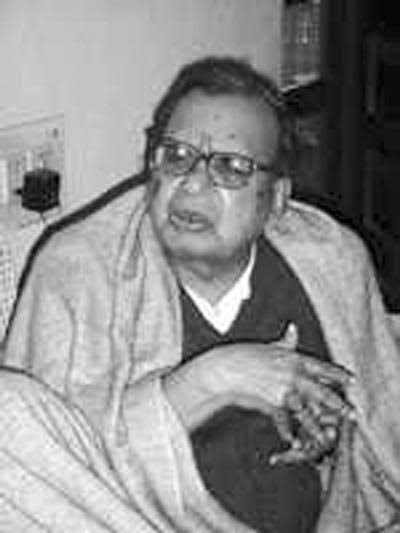
Dr. Vidya Niwas Mishra was an intellectual luminary, renowned Hindi-Sanskrit littérateur, and a master of the Lalit Nibandh (informal essay) genre in modern Hindi literature. With a deep mastery of classical Sanskrit, linguistics, and Indian philosophy, he bridged traditional indigenous knowledge systems with contemporary journalism. Over a prolific career spanning decades, he enriched Indian culture as an editor, educator, institution-builder, and a nominated member of the Rajya Sabha.
2. Quick Facts
- Full Name: Vidya Niwas Mishra
- Native Name: विद्यानिवास मिश्र (Hindi)
- Date of Birth: January 28, 1926
- Place of Birth: Pakardiha village, Gorakhpur district, Uttar Pradesh, India
- Nationality: Indian
- Occupation/Profession: Scholar, Essayist, Journalist, Professor, and Public Intellectual
- Field of Achievement: Hindi and Sanskrit Literature, Cultural Studies, and Journalism
- Years Active: 1940s – 2005
3. Award Information (Focus on Padma Bhushan)
- Award Name: Padma Bhushan
- Award Category: India’s Third-Highest Civilian Award
- Award Year: 1999
- Presented By: Government of India
- Date of Ceremony: 1999
- Citation/Official Reason: In recognition of his exceptional and distinguished contributions to literature, education, and public service.
- Previous Recipients (Notable): Eminent literary figures, scientists, and national leaders.
- Next Recipients (Notable): Co-recipients of the 1999 Padma civilian honours.
4. Why Did He Receive the Award?
Dr. Mishra was honored with the Padma Bhushan for his lifetime dedication to preserving and advancing Hindi and Sanskrit literature. Through his prolific essay writing, deep cultural critiques, editing of authoritative texts, and stewardship of major literary institutions, he helped safeguard the classical and regional linguistic heritage of India for modern generations.
5. Early Life
Born into a traditional family in Pakardiha, Gorakhpur, Dr. Mishra grew up in an environment deeply immersed in Sanskrit learning and rural Indian ethos. These formative years in Uttar Pradesh instilled in him a lifelong love for regional dialects, folk traditions, and classical texts. His early exposure to rural folk literature later became the bedrock of his unique literary style, characterized by poetic prose and sharp cultural insights.
6. Education
- Schooling: Completed his early education locally in Uttar Pradesh.
- Higher Education: Earned his Master of Arts (M.A.) degree in Sanskrit from Allahabad University.
- Research & Linguistic Training: Worked closely under the legendary scholar Rahul Sankrityayan on compiling comprehensive Hindi dictionaries, which sharpened his mastery over structural linguistics and etymology.
7. Career Journey
- Early Academic Work: Collaborated on lexicography projects under Rahul Sankrityayan; taught at various institutions.
- Institutional Leadership: Served as the Vice-Chancellor of Sampurnanand Sanskrit University, Varanasi.
- Literary Leadership: Twice elected as the President of the Hindi Sahitya Sammelan and served as Chairman of the Sahitya Parishad.
- Journalism & Editing: Chief patron and editor of the prestigious Hindi literary monthly Sahitya Amrit, alongside editing multiple national newspapers and cultural journals.
- Parliamentary Role: Served as a nominated member of the Rajya Sabha (Upper House of the Indian Parliament).
8. Major Achievements
- Master of the Lalit Nibandh: Elevated the informal personal essay format in Hindi to new artistic heights, blending personal reflection with profound sociological observations.
- Extensive Bibliography: Authored, edited, and translated over 100 books spanning literary criticism, Vedic studies, cultural philosophy, and folk poetry (such as Hindi ki Janapadiya Kavita).
- Encyclopedia of Hinduism: Played a pivotal role as a key collaborator and guiding voice in bringing out the comprehensive multi-volume Encyclopedia of Hinduism.
9. Contribution to the Nation
Dr. Mishra served as a cultural bridge between India’s ancient classical heritage and its modern democratic identity. By studying and documenting regional dialects, folk songs, and lesser-known traditions, he expanded the horizons of Hindi literature beyond elitist boundaries. His public service in parliament and academia helped shape cultural policy and the preservation of ancient texts.
10. Other Awards and Honours
- Padma Shri (1988)
- Padma Bhushan (1999)
- Moorti Devi Award by Bharatiya Jnanpith (1990)
- Shankar Puraskar by the K. K. Birla Foundation
- Sahitya Akademi Fellowship (Highest literary honor conferred by the Sahitya Akademi)
11. Legacy and Influence
Dr. Vidya Niwas Mishra remains an immortal figure in Hindi letters. He proved that deep scholastic rigor could coexist with accessible, poetic prose. His essays continue to be studied in universities, inspiring generations of writers, journalists, and cultural historians to look closely at India’s civilizational roots. Tragically, his life was cut short on February 14, 2005, when he passed away in a road accident near Deoria while traveling to Varanasi.
12. Interesting Facts
- The Dictionary Pioneer: His early career collaboration with Rahul Sankrityayan gave him an encyclopedic command over regional variations of vocabulary across Northern India.
- Voice of Public Conscience: Beyond formal essays, his newspaper columns were widely read for their subtle satire, moral clarity, and defense of democratic values.
- Deep Roots in Tradition: Despite holding top academic and parliamentary positions, he remained deeply attached to his rural roots and traditional Indian philosophy throughout his life.
13. Quotes
“Culture is not something inherited passively; it is a continuous re-creation through lived experience and dialogue with the past.” — Dr. Vidya Niwas Mishra
14. Timeline
- 1926: Born on January 28 in Pakardiha, Gorakhpur, Uttar Pradesh.
- 1940s–50s: Completed higher education at Allahabad University and began lexicography work under Rahul Sankrityayan.
- 1988: Conferred the Padma Shri by the Government of India.
- 1990: Awarded the prestigious Moorti Devi Award.
- 1999: Honored with the Padma Bhushan.
- 2005: Passed away on February 14 in a tragic road accident.
15. References
- Wikipedia – Dr. Vidya Niwas Mishra
- Sahitya Akademi Fellowship Archives
- Rajya Sabha Secretariat – Official Biodata Archives
16. Related Personalities
- Rahul Sankrityayan (Polymath, historian, and mentor)
- Hazari Prasad Dwivedi (Legendary Hindi essayist and cultural critic)
- Mahadevi Verma (Pioneering Hindi poet and writer)
17. Frequently Asked Questions (FAQ)
- Q: What was Dr. Vidya Niwas Mishra best known for?A: He was celebrated as one of modern India’s finest Hindi-Sanskrit scholars, a master essayist (Lalit Nibandh creator), and a cultural journalist.
- Q: Which major civilian awards did he receive?A: He received both the Padma Shri (1988) and the Padma Bhushan (1999).
- Q: What institutions did he head during his career?A: He served as the Vice-Chancellor of Sampurnanand Sanskrit University and twice as the President of the Hindi Sahitya Sammelan.
About the Author




