

1. Introduction
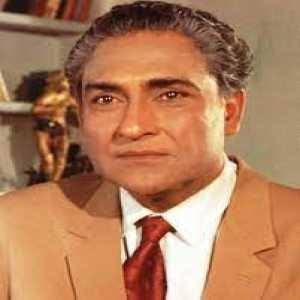
Ashok Kumar stands as one of the towering founding pillars of Indian cinema. Rising to stardom in the mid-1930s, he shattered the prevalent mold of loud, theatrical acting by introducing an effortless, naturalistic screen presence that fundamentally revolutionized Bollywood. Over a phenomenal career spanning more than six decades, he transitioned seamlessly from a romantic heartthrob and a gritty anti-hero to an authoritative, deeply respected character actor and television anchor, leaving an indelible imprint on the cultural history of India.
2. Quick Facts
- Full Name: Kumudlal Ganguly (Professionally known as Ashok Kumar)
- Native Name: কুমুদলাল গঙ্গোপাধ্যায় (Bengali) / अशोक कुमार (Hindi)
- Date of Birth: October 13, 1911
- Place of Birth: Bhagalpur, Bihar (then part of the Bengal Presidency, British India)
- Nationality: Indian
- Occupation/Profession: Actor, Singer, and Painter
- Field of Achievement: Film Acting, Playback Singing, and Indian Cinema
- Years Active: 1936 – 1997
3. Award Information (Focus on Dadasaheb Phalke Award)
- Award Name: Dadasaheb Phalke Award
- Award Category: India’s Highest Award in Cinema
- Award Year: 1988 (Presented at the 35th National Film Awards)
- Presented By: R. Venkataraman (President of India)
- Date of Ceremony: 1988
- Citation/Official Reason: For outstanding lifetime contribution to the growth and development of Indian cinema over more than half a century.
- Previous Recipients (Notable): B. N. Reddi (1987), Raj Kapoor (1987), L. V. Prasad (1982).
- Next Recipients (Notable): Lata Mangeshkar (1989), Akkineni Nageswara Rao (1990), B. R. Chopra (1993).
4. Why Did He Receive the Award?
Ashok Kumar was awarded the Dadasaheb Phalke Award to honor his monumental, multi-decade stewardship of Indian cinema. He witnessed and shaped the industry’s transition from the silent film era into the Golden Age of talkies. Without formal training, he pioneered natural screen acting, mentored generations of artists, and starred in landmark cinematic milestones that defined the evolution of Bollywood.
5. Early Life
Born into a cultured Bengali Brahmin family in Bhagalpur, Bihar, Ashok Kumar spent his idyllic early years along the banks of the Ganges. His father, Kunjalal Ganguly, was a prominent lawyer, and his mother, Gouri Devi, came from a traditional family. He was the eldest of four siblings—his younger brothers included the legendary actor-singer Kishore Kumar and actor Anoop Kumar. Although initially pursuing legal and scientific studies, his life took a cinematic twist when he migrated to Bombay.
6. Education
- Schooling: Completed his early education locally in Khandwa and Bhagalpur.
- Higher Education: Earned a Bachelor of Science (B.Sc.) degree from Presidency College, University of Calcutta.
- Technical Training: Studied law briefly and underwent training in laboratory and processing technology at the Govindram Seksaria Technological Institute in Bombay, initially aiming for a technical career behind the camera rather than acting.
7. Career Journey
- 1936: Entered Bombay Talkies as a laboratory technician, but was thrust unexpectedly in front of the camera as the lead actor for Jeevan Naiyya after the original hero fled.
- 1936 – 1940s: Ascended to superstardom with iconic social dramas and blockbusters like Achhoot Kanya (1936) with Devika Rani and Kismet (1943), the latter setting historic box-office records.
- 1950s – 1960s: Reinvented his career by pioneering anti-hero roles and complex psychological characters in classics such as Mahal (1949), Parineeta (1953), Bandini (1963), and Jewel Thief (1967).
- 1980s – 1990s: Made a memorable transition to Indian television as the warm, dignified narrator of India’s first soap opera, Hum Log (1984).
8. Major Achievements
- Pioneering Natural Acting: Discarded exaggerated theatrical tropes in favor of subtle, realistic expressions that became the benchmark for future generations.
- The Kismet Phenomenon (1943): Starred in Kismet, which ran continuously for over three years at a single theater in Calcutta, establishing a historic cinematic milestone.
- Versatility Across Eras: Successfully transitioned across generations—from a romantic hero in the 1930s/40s to a menacing anti-hero in the 50s and a wise patriarch in later decades.
- Early Playback Singing: Lent his distinct baritone voice to several early classic tracks before playback singing emerged as an independent specialized profession.
9. Contribution to the Nation
Ashok Kumar helped forge the cultural consciousness of modern India through his art. As a cornerstone of Bombay Talkies and subsequent independent projects, he raised the artistic standards of Hindi cinema, turning films into powerful mediums of modern entertainment and social reflection. His professionalism, warmth, and grace earned him the title “Dadamoni” (Beloved Elder Brother), serving as an ethical and professional anchor for the entire film fraternity.
10. Other Awards and Honours
- Padma Shri (1962)
- Padma Bhushan (1999)
- Filmfare Best Actor Award for Rakhi (1962) and Aashirwad (1968)
- Filmfare Best Supporting Actor Award for Afsana (1966)
- Filmfare Lifetime Achievement Award (1988)
- National Film Award for Best Actor for Aashirwad (1969)
11. Legacy and Influence
Ashok Kumar’s legacy is foundational. He proved that an actor could sustain peak popularity across shifting decades without relying on physical action stunts or loud dialogues, but simply through expressive eyes and impeccable timing. He paved the golden pathway for actors like Dilip Kumar, Dev Anand, and Raj Kapoor, while his family dynasty permanently enriched Indian arts.
12. Interesting Facts
- The Accidental Star: He never intended to act; he originally joined Bombay Talkies to handle audio-recording and laboratory chemical equipment.
- Passionate Homeopath & Painter: Away from the arc lights, he was an avid painter and a skilled practitioner of homeopathy, often treating friends and crew members for free.
- Connoisseur of Life: Known for his calm, sophisticated demeanor, he was famously fond of good cigars, bridge card games, and relaxed conversations on set.
13. Quotes
“An actor should never act. If you have to try to look like someone else, you aren’t doing it right. You must simply become the person.” — Ashok Kumar
“Dadamoni was an institution in himself. He taught us how to live in front of the camera with complete ease.” — Dilip Kumar
14. Timeline
- 1911: Born on October 13 in Bhagalpur, Bihar.
- 1936: Makes his accidental acting debut in Jeevan Naiyya.
- 1943: Stars in the massive blockbuster Kismet.
- 1962: Conferred the Padma Shri; wins Filmfare Best Actor for Rakhi.
- 1968: Wins National Film Award and Filmfare Award for Aashirwad.
- 1984: Anchors India’s first television soap opera, Hum Log.
- 1988: Awarded the prestigious Dadasaheb Phalke Award.
- 1999: Conferred the Padma Bhushan by the Government of India.
- 2001: Passes away on March 12 at the age of 89.
15. References
- National Film Awards Directory, Directorate of Film Festivals, Government of India.
- Archives of Bombay Talkies and the Film Heritage Foundation.
- Biographies on Indian Cinema Historians and classical film archives.
16. Related Personalities
- Kishore Kumar (Younger brother, legendary playback singer and actor)
- Devika Rani (Co-star and pioneer of early Indian cinema)
- Himanshu Rai (Founder of Bombay Talkies and mentor)
- Dilip Kumar (Close friend and cinematic peer)
17. Frequently Asked Questions (FAQ)
- Q: Why was Ashok Kumar called Dadamoni?A: “Dadamoni” translates to “beloved elder brother” in Bengali. Colleagues, juniors, and fans affectionately gave him this moniker out of immense respect and warmth for his patriarchal guidance.
- Q: Did Ashok Kumar sing his own songs in films?A: Yes, during the early part of his career (such as in Kismet and Jhula), he frequently sang his own songs before playback singing became a specialized industry norm.
- Q: What was Ashok Kumar’s debut film?A: His acting debut was Jeevan Naiyya in 1936, directed by Franz Osten for Bombay Talkies.
About the Author




