

1. Introduction
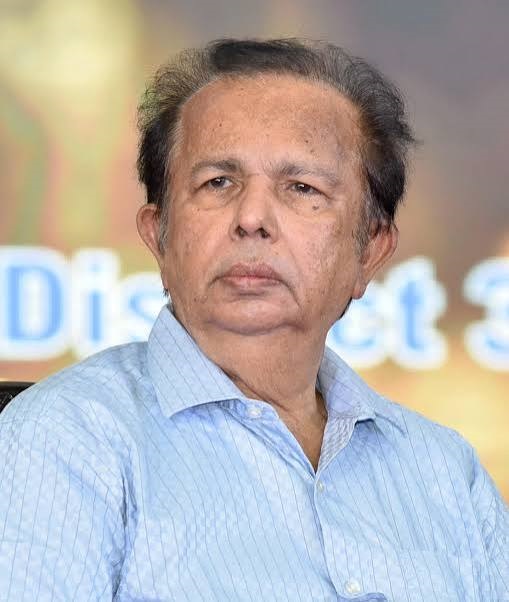
Dr. G. Madhavan Nair is one of India’s most distinguished aerospace technologists and rocket scientists. He served as the Chairman of the Indian Space Research Organisation (ISRO) and Secretary to the Department of Space, Government of India, from 2003 to 2009. Under his dynamic stewardship, India’s space program achieved monumental milestones, most notably executing India’s maiden lunar mission, Chandrayaan-1, and establishing the Polar Satellite Launch Vehicle (PSLV) as a reliable global workhorse for commercial and scientific launches.
2. Quick Facts
- Full Name: Kattokaran Sivankutty Nair Ganesan Madhavan Nair (G. Madhavan Nair)
- Native Name: ജി. മാധവൻ നായർ
- Date of Birth: October 31, 1943
- Place of Birth: Thirunanthikarai, Kanyakumari district (then part of Travancore, British India)
- Nationality: Indian
- Occupation/Profession: Aerospace Scientist, Technologist, and Administrator
- Field of Achievement: Rocket Technology, Space Science, and Public Administration
- Years Active: 1967 – Present
3. Award Information
- Award Name: Padma Vibhushan (India’s second-highest civilian award)
- Award Category: Civil Honour
- Award Year: 2009
- Presented By: Government of India (President of India)
- Date of Ceremony: January 26, 2009
- Citation/Official Reason: For exceptional and distinguished service to the nation, recognizing his pioneering leadership in advancing India’s space capabilities, rocketry, and self-reliance in high technology.
- Previous Major Honor: Padma Bhushan (1998)
4. Why He Received the Award
Dr. Madhavan Nair was honored with the Padma Vibhushan for transforming India into a premier space-faring nation. During his tenure as ISRO Chairman, India successfully completed 27 major space missions, launched Chandrayaan-1 to the Moon, perfected the Polar Satellite Launch Vehicle (PSLV), and expanded space-based applications directly into rural development, telemedicine, and tele-education.
5. Early Life
Born in a modest family in Travancore, Dr. Nair grew up with a deep-seated curiosity for mathematics and science. His formative years in post-independence rural South India instilled in him a strong work ethic, simplicity, and a strong drive to deploy indigenous science for national self-reliance.
6. Education
- Schooling: Completed local primary and secondary education in Kerala.
- Engineering Degree: Graduated with a Bachelor of Science (B.Sc.) in Electrical and Communication Engineering from the College of Engineering, Trivandrum (Kerala University) in 1966.
- Specialized Training: Underwent intensive postgraduate training at the Bhabha Atomic Research Centre (BARC) Training School, Mumbai, in 1967.
7. Career Journey
- Early Career (1967): Joined the Thumba Equatorial Rocket Launching Station (TERLS) as a young engineer, working on telemetry, tracking, and guidance systems.
- Project Director – PSLV (1988–1995): Spearheaded the development of India’s workhorse rocket, the Polar Satellite Launch Vehicle (PSLV), turning it into one of the most reliable launch vehicles globally.
- Center Director Roles: Served as Director of the Liquid Propulsion Systems Centre (LPSC) and subsequently as Director of the Vikram Sarabhai Space Centre (VSSC), Thiruvananthapuram (1999–2003).
- Chairman, ISRO (2003–2009): Led the entire Indian space program, overseeing the Department of Space, Space Commission, and Antrix Corporation.
8. Major Achievements
- Chandrayaan-1 (2008): Successfully launched India’s first unmanned lunar probe, which played a historic role in confirming the presence of water molecules on the Moon.
- PSLV Perfection: Established India’s commercial launch capability, deploying numerous foreign and domestic satellites with high precision.
- International Leadership: Elected as the President of the International Academy of Astronautics (IAA) in 2009—becoming the first Indian to hold the post.
- Societal Applications: Pioneered satellite-based telemedicine and tele-education networks connecting remote rural villages and hospitals across India.
9. Contribution to the Nation
Dr. Nair’s contributions cemented India’s position as a low-cost, high-reliability space pioneer. By championing self-reliance (Atmanirbharata) decades before it became a catchphrase, he ensured that critical rocket propulsion and satellite technologies remained homegrown, insulating India from international technology denial regimes.
10. Other Awards and Honours
- Padma Bhushan (1998)
- National Aeronautical Award
- Vikram Sarabhai Memorial Gold Medal (Indian Science Congress Association)
- Om Prakash Bhasin Award for Science and Technology
- Numerous honorary doctorates (D.Sc.) from premier institutions like IIT Bombay, IIT Delhi, IIT Kharagpur, and the University of Kerala.
11. Legacy and Influence
Dr. Madhavan Nair is remembered as a master architect of modern Indian rocketry. He bridged the gap between complex space research and grassroots societal benefits, inspiring countless young Indian engineers to pursue careers in aerospace and deep-tech innovation.
12. Interesting Facts
- From Thumba to the Moon: His career spanned the entire trajectory of ISRO—starting from humble sounding rocket experiments at Thumba in the late 1960s to commanding a full-scale lunar expedition.
- Global First: He made history in 2009 by heading the Paris-based International Academy of Astronautics, representing India on the global space stage.
- Author: He documented his extraordinary journey and experiences in his Malayalam autobiography, Agnipareekshakal (Trials of Fire).
13. Quotes
“Space technology is not a luxury for a developing nation; it is an essential tool for solving basic developmental problems like education, health, and resource management.”
“Self-reliance is the only way forward in high-technology domains. When you build it yourself, you master the future.”
14. Timeline
- 1943: Born on October 31 in Kanyakumari/Travancore region.
- 1967: Joins TERLS (ISRO) after completing BARC training.
- 1988: Takes charge as Project Director for the PSLV program.
- 1998: Awarded the Padma Bhushan by the Government of India.
- 2003: Appointed Chairman of ISRO and Secretary, Department of Space.
- 2008: Successfully launches Chandrayaan-1, India’s first lunar mission.
- 2009: Conferred the Padma Vibhushan; elected President of the International Academy of Astronautics.
15. References
- ISRO Official Archives & Biographies (
isro.gov.in) - Agnipareekshakal (Autobiography by G. Madhavan Nair)
- Government of India – Padma Awards Directories
16. Related Personalities
- Dr. Vikram Sarabhai (Founding father of the Indian space program)
- Dr. A. P. J. Abdul Kalam (Former President and pioneer of SLV-3)
- Dr. K. Kasturirangan (Former ISRO Chairman)
17. Frequently Asked Questions (FAQ)
Q1: Who is G. Madhavan Nair?
A: Dr. G. Madhavan Nair is a renowned Indian aerospace scientist who served as the Chairman of ISRO from 2003 to 2009 and led missions like Chandrayaan-1.
Q2: What are his major contributions to ISRO?
A: He successfully spearheaded the development of the Polar Satellite Launch Vehicle (PSLV), directed India’s maiden lunar mission (Chandrayaan-1), and expanded satellite applications for rural education and telemedicine.
Q3: What civilian awards has he received?
A: He was awarded the Padma Bhushan in 1998 and India’s second-highest civilian honor, the Padma Vibhushan, in 2009.
About the Author




