

1. Introduction
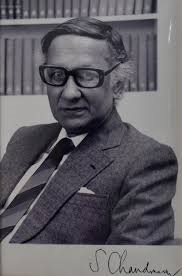
Prof. Sivaramakrishna Chandrasekhar (1930–2015) was a world-renowned Indian physicist whose pioneering work revolutionized the study of liquid crystals. Best known for discovering and demonstrating discotic liquid crystals (columnar liquid crystals), his breakthrough fundamentally altered material science, paving the way for modern flat-panel displays, electronic devices, and advanced organic semiconductors. A nephew of Nobel laureate C. V. Raman and closely related to astrophysicist Subrahmanyan Chandrasekhar, he carried forward a legendary scientific lineage with immense distinction.
2. Quick Facts
- Full Name: Sivaramakrishna Chandrasekhar
- Native Name: ಶಿವರಾಮಕೃಷ್ಣ ಚಂದ್ರಶೇಖರ್
- Date of Birth: January 6, 1930
- Place of Birth: Calcutta, British India (now Kolkata, West Bengal, India)
- Nationality: Indian
- Occupation / Profession: Physicist, Crystallographer, Researcher
- Field of Achievement: Condensed Matter Physics, Liquid Crystals
- Years Active: 1950s–2015
3. Award Information (Focus: Padma Bhushan)
- Award Name: Padma Bhushan
- Award Category: Civil Honours (Third-Highest Civilian Award in India)
- Award Year: 2006
- Presented By: Government of India (President of India)
- Date of Ceremony: 2006
- Citation / Official Reason: Recognized for distinguished services of a high order in the fields of science and engineering, particularly for pioneering contributions to liquid crystal physics.
- Previous Recipients (Examples): Eminent scientists, scholars, and national leaders.
- Next Recipients: Succeeding batches of national civilian awardees.
4. Why They Received the Award
Prof. Chandrasekhar received the Padma Bhushan and numerous global accolades because his discovery of discotic liquid crystals shattered the long-held scientific dogma that liquid crystals could only be formed by rod-shaped molecules. By proving that disc-shaped molecules could form stable, columnar liquid crystalline phases, he opened an entirely new branch of condensed matter physics and advanced technology.
5. Early Life
Born in 1930 in Calcutta into an exceptionally distinguished scientific family—his mother was the sister of Nobel laureate Sir C. V. Raman, and his cousin was Nobel laureate Subrahmanyan Chandrasekhar—he grew up immersed in an environment of intense intellectual curiosity and academic rigor.
6. Education
- Bachelor of Science (BSc Honours) & Master of Science (MSc): University of Nagpur / Madras.
- Doctor of Philosophy (PhD): University of Cambridge, UK (1954), working under the mentorship of legendary crystallographer J. D. Bernal.
- Doctor of Science (ScD): University of Cambridge, UK (1980), recognizing his massive body of advanced published research.
7. Career Journey
- Raman Research Institute (RRI), Bangalore: Served as professor and head of the liquid crystals laboratory, building RRI into a globally recognized center for soft matter research.
- University of Mysore: Head of the Department of Physics, where he established a strong school of crystallography and condensed matter physics.
- Centre for Liquid Crystal Research (CLCR), Bangalore: Founded and directed the CLCR after his retirement from RRI, continuing active research well into his later years.
8. Major Achievements
- Discovery of Discotic Liquid Crystals (1977): Successfully synthesized and proved the existence of columnar mesophases composed of disc-like molecules, a monumental turning point in materials science.
- International Recognition: Recipient of the Royal Society’s Davy Medal (1987), the Bhatnagar Prize (1972), and the Padma Bhushan (2006).
- Extensive Publications: Authored seminal textbooks and numerous research papers that remain foundational texts in soft matter physics.
9. Contribution to the Nation
Prof. Chandrasekhar helped put Indian condensed matter physics on the world map. By choosing to build his research base in India rather than remaining abroad, he created a world-class domestic school of soft matter science, training generations of Indian physicists who continue to lead laboratories worldwide.
10. Other Awards and Honours
- Shanti Swarup Bhatnagar Prize: CSIR, India (1972)
- Fellow of the Royal Society (FRS): Elected in 1983
- Davy Medal: Royal Society, London (1987)
- Padma Bhushan: Government of India (2006)
- Matteucci Medal: Italian Society of Sciences (1998)
11. Legacy and Influence
His discovery of discotic liquid crystals directly influenced the development of organic electronics, discotic mesogens for photovoltaic cells, and advanced display materials. The Centre for Liquid Crystal Research in Bangalore stands as a living testament to his vision and institutional building.
12. Interesting Facts
- An Incredible Scientific Dynasty: Prof. Chandrasekhar belonged to one of the most remarkable scientific families in history—his uncle C. V. Raman won the Nobel Prize in Physics, and his cousin S. Chandrasekhar won the Nobel Prize in Astrophysics.
- Academic Persistence: When he first proposed discotic liquid crystals, many established theorists were skeptical, but his rigorous experimental proof quickly converted the global scientific community.
13. Quotes
“Science thrives on questioning established dogmas with rigorous experimentation and an open mind.” — Prof. S. Chandrasekhar
14. Timeline
- 1930: Born on January 6 in Calcutta.
- 1954: Completes his PhD from the University of Cambridge under J. D. Bernal.
- 1972: Awarded the prestigious Shanti Swarup Bhatnagar Prize.
- 1977: Publishes the landmark discovery of discotic liquid crystals.
- 1983: Elected a Fellow of the Royal Society (FRS), London.
- 1987: Receives the Davy Medal from the Royal Society.
- 2006: Conferred the Padma Bhushan by the Government of India.
- 2015: Passes away on March 8 in Bangalore at the age of 85.
15. References
- Wikipedia contributors. “Sivaramakrishna Chandrasekhar.” Wikipedia, The Free Encyclopedia.
- Royal Society Biographical Memoirs – Sivaramakrishna Chandrasekhar.
- Raman Research Institute (RRI) Archives – Faculty history and contributions.
16. Related Personalities
- Sir C. V. Raman: Nobel laureate uncle and pioneer of Indian physics.
- Subrahmanyan Chandrasekhar: Nobel laureate cousin and renowned astrophysicist.
- J. D. Bernal: Legendary British crystallographer and doctoral advisor at Cambridge.
17. Frequently Asked Questions (FAQ)
- Q: What is Prof. S. Chandrasekhar famous for?
- A: He is globally renowned for discovering and demonstrating discotic liquid crystals, revolutionizing soft matter physics.
- Q: Is he related to C. V. Raman?
- A: Yes, he was the nephew of Nobel laureate Sir C. V. Raman.
- Q: What major international scientific honor did he receive?
- A: He was elected a Fellow of the Royal Society (FRS) in 1983 and was awarded the prestigious Davy Medal in 1987.
About the Author




