

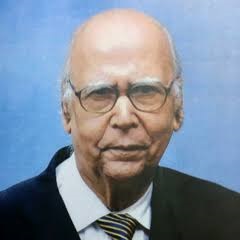
Here is a comprehensive, structured draft formatted specifically for your blog covering the legendary Indian physician, medical scientist, and “Father of Nuclear Medicine in India” — Padma Bhushan Dr. Ramachandra Dattatraya Lele (R. D. Lele).
1. Introduction
Dr. Ramachandra Dattatraya Lele (1928–2022) was a towering figure in modern Indian medical history. Universally recognized as the Father of Nuclear Medicine in India, Dr. Lele transformed the landscape of clinical diagnostics and therapy by bridging atomic science with medical practice. A brilliant educator, clinician, researcher, and hospital administrator, his career spanned over six decades, leaving an indelible mark on nuclear cardiology, endocrinology, medical informatics, and public health.
2. Quick Facts
- Full Name: Ramachandra Dattatraya Lele
- Date of Birth: January 16, 1928
- Place of Birth: Hyderabad, British India (present-day Telangana, India)
- Date of Passing: June 24, 2022 (aged 94)
- Nationality: Indian
- Occupation/Profession: Physician, Medical Scientist, Professor
- Field of Achievement: Nuclear Medicine, Endocrinology, and Internal Medicine
- Years Active: Over 60 years of active clinical practice, teaching, and research
3. Award Information (Highlight: Padma Bhushan)
- Award Name: Padma Bhushan
- Award Category: India’s Third-Highest Civilian Honour
- Award Year: 1992
- Presented By: The President of India (Shri R. Venkataraman)
- Citation/Official Reason: Conferred in recognition of his pioneering contributions to the establishment and advancement of nuclear medicine, medical education, and exemplary service to healthcare in India.
4. Why He Received the Award
Dr. Lele was honored with the Padma Bhushan and numerous other lifetime accolades because he single-handedly pioneered the field of Nuclear Medicine in India. At a time when radioisotopes and atomic applications were largely confined to physics laboratories, Dr. Lele worked alongside Dr. Homi Bhabha to harness them for life-saving clinical diagnostics. He introduced cutting-edge modalities like radioimmunoassays, nuclear cardiology, and sophisticated imaging tools to Indian healthcare, making advanced diagnostics accessible while training generations of doctors.
5. Early Life
Born into a lower-middle-class family in Hyderabad, Dr. Lele was raised under strong Gandhian values imparted by his parents. He credited his mother for nurturing his intellectual discipline and his father for instilling principles of sportsmanship and integrity. Displaying prodigious talent from a young age, he excelled academically while also nurturing a deep love for music, sports (especially cricket), and reading.
6. Education
- Undergraduate: Completed his MBBS from Osmania University, Hyderabad.
- Higher Studies in the UK: Traveled to the United Kingdom, studying at the London School of Hygiene and Tropical Medicine and Hammersmith Hospital. He earned multiple prestigious qualifications including DTM&H (Eng), MRCP (Edin), and FRCP (London).
- Specialized Fellowship: Undertook advanced fellowship training in Nuclear Medicine in Canada under the Colombo Plan.
7. Career Journey
- Return to India (1957): Driven by a deep patriotic resolve to serve his homeland, he returned to India, initially serving as a Reader at Nagpur Medical College and later as Professor of Medicine.
- Leadership at Grant Medical College: Served as Professor, Head of the Department of Medicine, and eventually Dean of Grant Medical College and Sir J. J. Group of Hospitals in Mumbai.
- Pioneering Jaslok Hospital’s Nuclear Medicine Unit: In the 1970s, he joined Jaslok Hospital and Research Centre as Chief Physician and established India’s first full-fledged, state-of-the-art Nuclear Medicine Department in collaboration with the Bhabha Atomic Research Centre (BARC).
- Later Years: Served for over 16 years at Lilavati Hospital, Mumbai, continuing groundbreaking research in diabetology and radio-immunoassay until late in life.
8. Major Achievements & Firsts in India
Dr. Lele’s clinical milestones reshaped Indian medical practice. He was the first in India to introduce:
- Intravenous use of Technetium-99m-based radiopharmaceuticals.
- Nuclear Cardiology (1978)
- The Nuclear Stethoscope (1982)
- Single Photon Emission Computed Tomography (SPECT) imaging (1988)
- Radio-immunoassays covering over 75 clinical ligands.
9. Contribution to the Nation
Dr. Lele shaped public health policy and medical infrastructure at a national level. He served as a member of the Atomic Energy Regulatory Board (AERB) of the Department of Atomic Energy, Government of India (1990–2001). He was a passionate advocate for preventive healthcare, conceptualized health management models like Mission Mumbai Health, and strongly championed non-communicable disease control programs. Furthermore, his authored textbooks—such as Computers in Medicine, Principles & Practices of Nuclear Medicine, and Ayurveda & Modern Medicine—remain foundational texts.
10. Other Awards and Honours
- Distinguished Community Service Award (Rotary Club, 1990)
- Gifted Teacher Award (First recipient, Association of Physicians of India, 1991)
- Padma Bhushan (Government of India, 1992)
- Dhanvantari Award (Governor of Maharashtra, 1997)
- Honorary Doctor of Science (D.Sc.) (NTR University of Health Sciences, 2000)
- Homi Bhabha Lifetime Achievement Award (Indian Nuclear Society, 2008)
11. Legacy and Influence
Referred to by peers as the “Bhishma Pitamaha” of Indian medicine and a “Teacher of Teachers,” Dr. Lele’s legacy lives on through the countless students and physicians he mentored. He published his inspiring life autobiography, Pursuit of Excellence, in 2017. The Association of Nuclear Medicine Physicians of India named its premier national oration in his honor, ensuring that his pioneering spirit continues to guide future generations.
12. Interesting Facts
- Trained under Homi Bhabha: In 1962, when BARC began producing medical radioisotopes, Dr. Lele received hands-on training directly led by the legendary nuclear physicist Dr. Homi Bhabha.
- Relentless Work Ethic: Even into his late 80s and 90s, he remained one of India’s oldest active practicing physicians, keeping fully updated with modern genetics, molecular biology, and medical informatics.
- Prolific Author: He wrote 9 landmark books and over 100 scientific papers spanning diverse fields from modern radiology and informatics to medical law and traditional systems of medicine.
13. Quotes
“Think as if you are going to live forever, act as if you are going to die tomorrow.” — Dr. R. D. Lele
14. Timeline
Birth in Hyderabad
January 16, 1928
Born into a middle-class family rooted in strong Gandhian values.
International Medical Studies
1950s
Earned advanced medical degrees in the UK (MRCP, FRCP) and specialized fellowship training in Canada.
Pioneering Nuclear Medicine
1970s
Established India’s first full-fledged Nuclear Medicine Department at Jaslok Hospital, Mumbai.
Awarded the Padma Bhushan
1992
Honored with India’s third-highest civilian distinction by the President of India.
Homi Bhabha Lifetime Achievement Award
2008
Recognized by the Indian Nuclear Society for his lifetime impact on nuclear sciences in medicine.
Publication of Autobiography
2017
Released his inspiring memoir, Pursuit of Excellence, detailing his journey in Indian medicine.
Passing in Mumbai
June 24, 2022
Passed away at the age of 94, leaving behind an immortal legacy as the father of Indian nuclear medicine.
15. References
- India Journal of Nuclear Medicine archives and biographical tributes.
- Official publications and historical overviews from the Association of Physicians of India (API) and Jaslok Hospital.
- Dr. R. D. Lele, Pursuit of Excellence: An Autobiography (Granthali Publication, 2017).
- National medical archives and historical profiles on Indian science pioneers.
16. Related Personalities
- Dr. Homi J. Bhabha (Father of India’s nuclear program)
- Dr. Farokh Udwadia (Renowned Indian physician and contemporary medical icon)
- Dr. Shashank R. Joshi (Eminent endocrinologist and frequent research collaborator)
17. Frequently Asked Questions (FAQ)
Q1: Who is known as the Father of Nuclear Medicine in India?
A: Dr. Ramachandra Dattatraya Lele (Dr. R. D. Lele) is celebrated as the Father of Nuclear Medicine in India for introducing radioisotope diagnostics, nuclear cardiology, and advanced scanning technologies to the country.
Q2: What are some of Dr. R. D. Lele’s major clinical innovations?
A: He introduced intravenous Technetium-99m usage, nuclear cardiology, the nuclear stethoscope, and Single Photon Emission Computed Tomography (SPECT) to Indian healthcare.
Q3: What major civilian honors did he receive?
A: He received the Padma Bhushan in 1992, alongside the Dhanvantari Award (1997) and the Homi Bhabha Lifetime Achievement Award (2008).
About the Author




