

1. Introduction
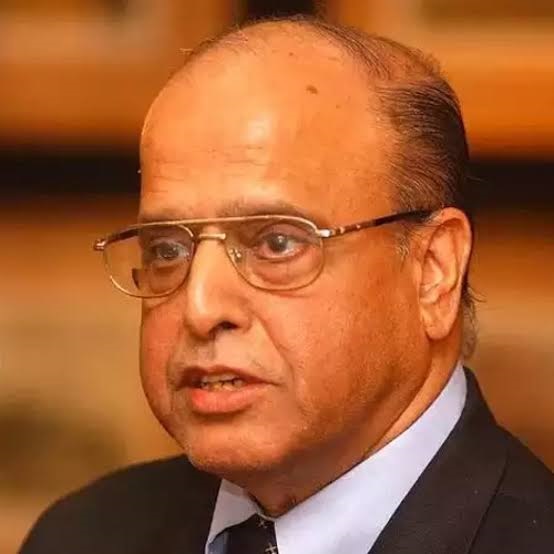
Dr. Krishnaswamy Kasturirangan (1940–2025) was one of India’s most distinguished space scientists, astrophysicists, and national policy architects. He led the Indian Space Research Organisation (ISRO) as its Chairman from 1994 to 2003, overseeing a golden era of space exploration marked by the operationalization of PSLV and IRS systems. Later in life, he left an indelible mark on Indian public life by chairing the drafting committee for the landmark National Education Policy (NEP) 2020. He is one of the rare personalities to be honored with India’s top three civilian honors: the Padma Shri, Padma Bhushan, and Padma Vibhushan.
2. Quick Facts
- Full Name: Dr. Krishnaswamy Kasturirangan
- Native Name: കൃഷ്ണ സ്വാമി കസ്തൂരി രംഗൻ (Malayalam) / ಕೃಷ್ಣಸ್ವಾಮಿ ಕಸ್ತೂರಿರಂಗನ್ (Kannada)
- Date of Birth: October 24, 1940
- Place of Birth: Ernakulam, Kingdom of Cochin, British India (present-day Kochi, Kerala, India)
- Date of Death: April 25, 2025 (aged 84) in Bengaluru, Karnataka, India
- Nationality: Indian
- Occupation / Profession: Space Scientist, Astrophysicist, Academic Administrator, Public Policy Expert
- Field of Achievement: Space Science, Satellite Technology, Higher Education Reform
- Years Active: c. 1960s – 2025
3. Award Information (Focus: Padma Bhushan)
- Award Name: Padma Bhushan
- Award Category: Civil Honour (India’s third-highest civilian award)
- Award Year: 1992 (Preceded by Padma Shri in 1982 and followed by Padma Vibhushan in 2000)
- Presented By: The President of India
- Date of Ceremony: 1992
- Citation / Official Reason: For exceptional and distinguished service to the nation in science and engineering, recognizing his pioneering research in high-energy astronomy and leadership in India’s space program.
- Previous Recipients: Leading scientists, researchers, and nation-builders of India.
- Next Recipients: Succeeding batches of national civilian honorees.
4. Why They Received the Award
Dr. Kasturirangan received the Padma Bhushan in 1992 in acknowledgment of his stellar contributions to experimental high-energy astronomy and his foundational leadership in developing India’s indigenous satellite and remote sensing architectures. His work transformed ISRO into a global powerhouse capable of complex space missions.
5. Early Life
Born on October 24, 1940, in Ernakulam (Kerala), Kasturirangan grew up with an innate curiosity for science and mathematics. Following the sudden death of his grandfather during his youth, he moved to Mumbai to live and study under the guidance of his family, cultivating an academic discipline that would eventually propel him to the forefront of global astrophysics.
6. Education
- Undergraduate & Postgraduate Studies: Earned his Bachelor of Science (BSc) and Master of Science (MSc) degrees in Physics from the University of Mumbai.
- Doctoral Research: Completed his PhD in experimental high-energy astronomy in 1971 at the Physical Research Laboratory (PRL), Ahmedabad, focusing on cosmic X-ray and gamma-ray sources.
7. Career Journey
- Scientific Research at PRL: Began his journey investigating cosmic rays, X-ray astronomy, and celestial gamma-ray sources, publishing over 240 scientific papers.
- Project Director Roles: Served as Project Director for India’s first two experimental earth observation satellites, Bhaskara-I and II.
- Chairman of ISRO (1994–2003): Led the organization through a transformational decade, successfully operationalizing the Polar Satellite Launch Vehicle (PSLV), the Indian Remote Sensing (IRS) satellites, and initiating development on the Geosynchronous Satellite Launch Vehicle (GSLV).
- Public Service & Education: Served as a nominated Member of Parliament (Rajya Sabha) from 2003 to 2009, a member of the Planning Commission of India, and Chancellor of Jawaharlal Nehru University (JNU).
- NEP 2020 Architect: Chaired the committee that drafted India’s landmark National Education Policy (NEP) 2020.
8. Major Achievements
- Triple Padma Honors: One of the rare luminaries to be honored with the Padma Shri (1982), Padma Bhushan (1992), and Padma Vibhushan (2000).
- Mastering Launch Vehicles: Supervised the vital developmental trials and operational flights of the PSLV, making India self-reliant in launching remote-sensing spacecraft.
- Architect of NEP 2020: Formulated a transformative framework to completely overhaul India’s school and higher education systems toward flexibility, critical thinking, and holistic development.
- Shanti Swarup Bhatnagar Prize: Awarded India’s highest science award in Engineering Sciences (1983).
9. Contribution to the Nation
Dr. Kasturirangan’s contributions spanned two critical pillars of national development: technological self-reliance in space and structural transformation in education. Under his watch, India’s space program evolved from experimental stages into a mature commercial and strategic asset. Later, by drafting the National Education Policy, he laid down the educational roadmap for India’s youth in the 21st century.
10. Other Awards and Honours
- Padma Shri (1982)
- Padma Bhushan (1992)
- Padma Vibhushan (2000)
- Shanti Swarup Bhatnagar Prize (1983)
- Theodore Von Karman Award (2007) from the International Academy of Astronautics
- Honorary Doctorates (D.Sc) from over 27 premier universities globally.
11. Legacy and Influence
Dr. Kasturirangan is remembered as a visionary institution builder who seamlessly bridged rigorous scientific research with large-scale public administration. Whether tracking cosmic X-rays or redefining how millions of Indian children learn in schools, his life reflected an unwavering commitment to national progress, operational excellence, and intellectual integrity.
12. Interesting Facts
- Astrophysicist at Heart: Though widely known as an administrator, he remained an active astrophysicist throughout his life, publishing extensive studies on cosmic X-ray sources and atmospheric gamma rays.
- Guided India’s Moon Vision: It was under his stewardship as ISRO Chairman that initial exploratory studies and preliminary discussions for India’s lunar program (which materialized as Chandrayaan-1) took shape.
- Dual Legacy: Very few individuals in modern Indian history have shaped two entirely different strategic domains—space technology and national education policy—with such profound impact.
13. Quotes
“Science and technology are not just tools for economic growth; they are instruments of social transformation, empowering the humblest citizen with opportunity and hope.” — Dr. Krishnaswamy Kasturirangan
14. Timeline
- 1940: Born on October 24 in Ernakulam, Cochin.
- 1971: Earns his PhD in experimental high-energy astronomy from PRL, Ahmedabad.
- 1982: Conferred the Padma Shri by the Government of India.
- 1992: Awarded the Padma Bhushan by the Government of India.
- 1994–2003: Serves as the Chairman of the Indian Space Research Organisation (ISRO).
- 2000: Conferred India’s second-highest civilian honor, the Padma Vibhushan.
- 2020: Submits the final draft of the landmark National Education Policy (NEP).
- 2025: Passes away on April 25 in Bengaluru at the age of 84.
15. References
- Wikipedia contributors. “Krishnaswamy Kasturirangan.” Wikipedia, The Free Encyclopedia.
- Indian Space Research Organisation (ISRO) Archives. “Dr. K. Kasturirangan Profile”.
- The Economic Times. “ISRO stalwart to educationist: Kasturirangan’s legacy…”
- Ministry of Home Affairs, Government of India. “Padma Awards Directory”.
16. Related Personalities
- Vikram Sarabhai: The founding father of India’s space program whose institutional vision was carried forward by leaders like Kasturirangan.
- Satish Dhawan: Legendary ISRO Chairman under whose leadership Kasturirangan grew into key scientific roles.
- A. P. J. Abdul Kalam: Aerospace visionary and former President of India who was a close contemporary and colleague in India’s scientific advancements.
17. Frequently Asked Questions (FAQ)
Q1: Who was Dr. Krishnaswamy Kasturirangan?
A: He was a renowned Indian space scientist, astrophysicist, former ISRO Chairman (1994–2003), and the chief architect of the National Education Policy (NEP) 2020.
Q2: What major national honors did he receive?
A: He is one of the rare figures to receive India’s top three civilian honors: the Padma Shri (1982), Padma Bhushan (1992), and Padma Vibhushan (2000).
Q3: What were his primary contributions to ISRO?
A: He oversaw the successful operationalization of the PSLV, the Indian Remote Sensing (IRS) satellite series, and spearheaded critical advancements in India’s space launch capabilities.
About the Author




