

1. Introduction
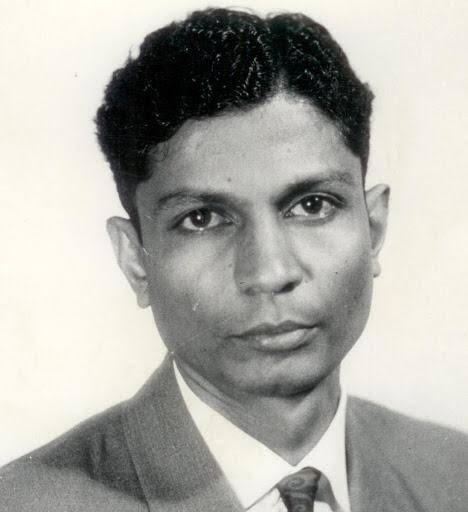
Prof. Ranjan Roy Daniel (1923–2005), widely known as R. R. Daniel, was a distinguished Indian experimental physicist, a pioneer in cosmic-ray physics and space astronomy, and a foundational pillar of the Tata Institute of Fundamental Research (TIFR). Working closely with Dr. Homi J. Bhabha for over two decades, Daniel played an instrumental role in shaping India’s space science programs, high-energy astrophysics, and international scientific diplomacy. He was honored with the Padma Bhushan in 1992 for his exceptional contributions to science and engineering.
2. Quick Facts
- Full Name: Ranjan Roy Daniel (Popularly known as R. R. Daniel)
- Native Name: രഞ്ജൻ റോയ് ഡാനിയൽ (Malayalam)
- Date of Birth: August 11, 1923
- Place of Birth: Nagercoil, Travancore, British India (now in Kanyakumari district, Tamil Nadu, India)
- Date of Death: March 27, 2005 (aged 81) in Nagercoil, Tamil Nadu, India
- Nationality: Indian
- Occupation / Profession: Experimental Physicist, Academic Administrator, Scientific Advisor
- Field of Achievement: Cosmic-Ray Physics, Space Science, Infrared Astronomy
- Years Active: c. 1947 – 2005
3. Award Information (Focus: Padma Bhushan)
- Award Name: Padma Bhushan
- Award Category: Civil Honour (India’s third-highest civilian award)
- Award Year: 1992
- Presented By: The President of India
- Date of Ceremony: 1992
- Citation / Official Reason: For distinguished and exceptional contributions to science and engineering, specifically in advancing India’s capabilities in cosmic-ray research and space physics.
- Previous Recipients: Leading scientists, nation-builders, and scholars of India.
- Next Recipients: Succeeding batches of national civilian honorees.
4. Why They Received the Award
Prof. R. R. Daniel received the Padma Bhushan in 1992 in recognition of his lifetime dedication to experimental physics. As one of the core architects of cosmic-ray research in India, he spearheaded balloon-borne experiments, contributed crucially to early satellite astronomy programs, and served in high-level advisory capacities for the Government of India, elevating the nation’s scientific standing on the global stage.
5. Early Life
Born on August 11, 1923, in Nagercoil (then part of the princely state of Travancore), Daniel came from a disciplined and academically conscious background. He completed his early schooling at Scott Christian Higher Secondary School in Nagercoil. His innate curiosity for the physical sciences blossomed during his college years, setting him on a path toward elite scientific inquiry under the shadow of India’s freedom movement and the dawn of independent scientific institution-building.
6. Education
- Undergraduate Studies: Completed his Bachelor of Science (BSc) in Physics from Loyola College, Chennai (University of Madras).
- Postgraduate Studies: Guided by the advice of Nobel laureate Sir C. V. Raman, he pursued his Master of Science (MSc) in Physics from Banaras Hindu University (BHU), graduating in 1946.
- Doctoral Research: Sponsored by the Government of India to study abroad, he earned his PhD from the University of Bristol (UK) in 1953 under the supervision of renowned physicist Donald Hill Perkins at the H. H. Wills Physics Laboratory, headed by Nobel laureate C. F. Powell, focusing on nuclear emulsions exposed to cosmic rays at high altitudes.
7. Career Journey
- TIFR Years (1947–1988): Joined the newly founded Tata Institute of Fundamental Research (TIFR) in Mumbai in 1947, working closely with Homi J. Bhabha for 23 years until Bhabha’s passing. He built and headed the experimental cosmic ray group.
- Academic Leadership: Served as Dean of the Physics Department at TIFR, shaping generations of doctoral students and researchers.
- National Advisor: Served as an advisor to Prime Minister Indira Gandhi in 1976 on key scientific and technological matters.
- International Leadership: Held influential roles in global scientific bodies, including serving as Scientific Secretary and later Chairman of the Committee on Space Research (COSPAR) and working closely with the International Union of Pure and Applied Physics (IUPAP).
8. Major Achievements
- Pioneering Balloon-Borne Astronomy: Led advanced high-altitude balloon flights launched from Indian soil to study primary cosmic rays and nuclear interactions at ultra-high energies.
- Infrared Astronomy in India: Pioneered far-infrared astronomical observational programs, unlocking new windows for stellar observation.
- Space Programme Contributions: Played a vital steering role in developing payload instruments for India’s early scientific satellite missions under ISRO and TIFR collaborations.
- Fellowships: Elected as a Fellow of the Indian National Science Academy (INSA) in 1975 and the Indian Academy of Sciences (IAS).
9. Contribution to the Nation
Prof. Daniel’s greatest legacy was helping transform India into an independent hub for cutting-edge space and cosmic-ray research. By establishing indigenous balloon-launching facilities (such as the TIFR Balloon Facility in Hyderabad) and training a world-class cadre of experimental physicists, he ensured that India did not merely consume foreign scientific data, but actively generated and contributed breakthrough empirical knowledge to the global scientific community.
10. Other Awards and Honours
- Padma Bhushan (1992) by the Government of India
- Vainu Bappu Award (1992) by the Indian National Science Academy
- Fellow of the Indian National Science Academy (FNA)
- Fellow of the Indian Academy of Sciences (FNASc)
- Fellow of The World Academy of Sciences (FTWAS)
11. Legacy and Influence
Prof. R. R. Daniel is remembered by his peers and students as a quintessential gentleman scientist—deeply rigorous in his research, soft-spoken, and remarkably humble despite his immense international stature. His foundational work laid the structural framework for modern Indian high-energy astrophysics, space weather research, and atmospheric science.
12. Interesting Facts
- The Bhabha Connection: He was one of Homi J. Bhabha’s most trusted core researchers at TIFR, working shoulder-to-shoulder with him during the formative years of independent India’s atomic energy and fundamental physics programs.
- Influenced by C. V. Raman: It was Sir C. V. Raman who personally guided young Daniel to move from Chennai to Banaras Hindu University for his master’s degree.
- Post-Retirement Simplicity: After retiring from active institutional duties in 1988, he quietly returned to his hometown of Nagercoil, living a simple life away from urban metropolitan limelight until his passing in 2005.
13. Quotes
“Experimental physics is not merely about confirming theories; it is about building the instruments that allow nature to reveal secrets we did not even know existed.” — Prof. R. R. Daniel
14. Timeline
- 1923: Born on August 11 in Nagercoil, Tamil Nadu.
- 1946: Completes his MSc in Physics from Banaras Hindu University.
- 1947: Joins the newly established Tata Institute of Fundamental Research (TIFR) under Homi Bhabha.
- 1953: Obtains his PhD from the University of Bristol under Donald Perkins.
- 1976: Serves as a scientific advisor to Prime Minister Indira Gandhi.
- 1988: Retires from active service at TIFR.
- 1992: Conferred India’s prestigious Padma Bhushan.
- 2005: Passes away on March 27 in Nagercoil at the age of 81.
15. References
- Wikipedia contributors. “Ranjan Roy Daniel.” Wikipedia, The Free Encyclopedia.
- Stephens, S. A. “Ranjan Roy Daniel (1923–2005).” Current Science, Vol. 89, No. 7 (2005): 1277–1279.
- Indian National Science Academy (INSA). “Deceased Fellow Profile: Prof. Ranjan Roy Daniel”.
- Ministry of Home Affairs, Government of India. “Padma Awards Directory”.
16. Related Personalities
- Homi J. Bhabha: Legendary nuclear physicist and founder of TIFR, with whom Daniel worked closely for over two decades.
- C. V. Raman: Nobel laureate physicist who heavily influenced Daniel’s educational trajectory.
- C. F. Powell: Nobel laureate British physicist under whose laboratory group Daniel conducted his doctoral research in Bristol.
17. Frequently Asked Questions (FAQ)
Q1: Who was Prof. Ranjan Roy Daniel?
A: He was a prominent Indian experimental physicist who played a foundational role in cosmic-ray research, high-energy astrophysics, and space science at TIFR.
Q2: What major national award was he given?
A: He was awarded the Padma Bhushan in 1992 by the Government of India for his immense contributions to science.
Q3: What was his association with Homi J. Bhabha?
A: He was one of Bhabha’s closest scientific associates at TIFR, collaborating directly with him for 23 years on building India’s premier physics research institute.
About the Author




