1. Introduction
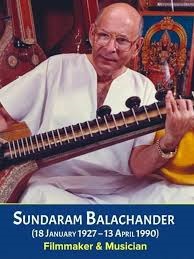
Sundaram Balachander (1927–1990), widely known as S. Balachander, was a multi-faceted genius who left an indelible mark on both Indian classical music and cinema. As a self-taught maestro of the Veena, he revolutionized Carnatic instrumental music by bringing vocal nuances to the strings. Simultaneously, as a fearless filmmaker, actor, and composer, he introduced path-breaking narrative structures to Indian cinema—long before his time.
2. Quick Facts
- Full Name: Sundaram Balachander
- Native Name: சுந்தரம் பாலச்சந்தர் (Tamil)
- Date of Birth: January 18, 1927
- Place of Birth: Madras (now Chennai), British India
- Nationality: Indian
- Occupation/Profession: Musician, Veena Player, Film Director, Actor, Producer, and Composer
- Field of Achievement: Carnatic Classical Music (Instrumental) and Cinema
- Years Active: 1934 – 1990
3. Award Information (Focus: Padma Bhushan)
- Award Name: Padma Bhushan
- Award Category: India’s Third-Highest Civilian Award
- Award Year: 1982
- Presented By: The President of India
- Date of Ceremony: 1982 (Rashtrapati Bhavan, New Delhi)
- Citation/Official Reason: For his distinguished service and pioneering contributions to the art of veena playing and the enrichment of Indian classical music.
- Previous Recipients (Contextual): Eminent artists, scientists, and public figures.
- Next Recipients: Subsequent annual batches of Padma honorees.
4. Why Did He Receive the Award?
S. Balachander received the Padma Bhushan in recognition of his extraordinary mastery over the Veena and his unique, self-taught style that reinvented Carnatic instrumental music. Without formal guidance from a traditional guru, he single-handedly elevated the status of the Veena on global and national platforms, recorded historic albums (such as the 72 Melakarta Ragas), and served as a cultural ambassador for Indian arts.
5. Early Life
Born in Madras into a deeply cultured family originating from Srivanchiyam, Tamil Nadu, Balachander was surrounded by music from infancy. His father, V. Sundaram Iyer, was a lawyer and a passionate patron of Carnatic music who frequently hosted top-tier musicians at their home. Young Balachander was a child prodigy; by age five or six, he was already playing the kanjira and tabla at temple festivals and musical gatherings.
6. Education
- Formal Education: Completed standard schooling in Madras while actively pursuing a parallel path in arts.
- Musical Training: Entirely self-taught. Remarkedly, Balachander did not study under a formal guru. He independently mastered multiple instruments—including the sitar, dilruba, tabla, harmonium, and flute—before completely dedicating himself to the Veena.
7. Career Journey
- Child Artiste & Multi-Instrumentalist: Began his career as a child actor in the landmark 1934 film Seetha Kalyanam. By his teens, he was a regular artist on All India Radio.
- Cinematic Auteur: Transitioned into filmmaking in the late 1940s. He wrote, directed, edited, starred in, and composed music for numerous path-breaking films under his own banners.
- Global Veena Maestro: By the 1960s, he stepped back from mainstream cinema to focus entirely on the Veena, touring worldwide as a cultural icon representing traditional Indian music.
8. Major Achievements
- The 72 Melakarta Project: Recorded a monumental series of long-playing (LP) records executing all 72 parent scales of Carnatic music on the Veena—an unprecedented academic and artistic feat.
- Cinematic Milestone (Andha Naal, 1954): Directed Andha Naal, a psychological thriller produced by AVM Productions that is widely celebrated as India’s first film noir. Notably, the movie featured no songs, a radical departure from commercial norms of the era.
- Innovative Filmmaking: In his film Bommai (1964), he introduced the legendary playback singer K. J. Yesudas to Tamil cinema and pioneered novel title credit formats.
9. Contribution to the Nation
Balachander enriched India’s soft power through his rigorous global tours, projecting the deep intellectual and spiritual core of Carnatic music to international audiences. Domestically, his uncompromising artistic integrity, fierce protection of classical purity, and bold cinematic experiments stretched the boundaries of Indian creative expression.
10. Other Awards and Honours
- Sangeet Natak Akademi Award (1977) for Carnatic Instrumental Music.
- Sangeetha Kalasikhamani (1982) awarded by The Indian Fine Arts Society, Chennai.
- Certificate of Merit for Best Feature Film at the National Film Awards for Andha Naal (Tamil, 1954) and Edi Nijam (Telugu, 1956).
- Titles like Veena Varaprasadi and Kala Sikhamani.
11. Legacy and Influence
S. Balachander remains a legendary figure of duality: a fierce classicist on the Veena and a modern avant-garde creator in cinema. His unorthodox approach proved that traditional art forms could thrive on individual genius and innovation rather than strict lineage alone. His cinematic works, especially Andha Naal, continue to be studied by contemporary filmmakers as blueprints for narrative subversion.
12. Interesting Facts
- Family Affair on Screen: In his cinematic debut Seetha Kalyanam (1934), his father played Janaka, his elder brother S. Rajam played Rama, and his sister S. Jayalakshmi played Sita, while 7-year-old Balachander played a child musician in Ravana’s court.
- The Maverick Critic: Balachander was famously outspoken; he did not hesitate to publicly debate musicologists and historical attributions regarding classical compositions, driven by his passion for historical authenticity.
13. Quotes
“Art is a jealous mistress; it demands absolute dedication, uncompromising truth, and the courage to stand alone.” — S. Balachander
14. Timeline
- 1936: Born on January 18 in Madras.
- 1934: Makes his acting debut as a child artist in Seetha Kalyanam.
- 1948: Directs his first film, En Kanavar.
- 1954: Directs the pioneering songless film noir thriller Andha Naal.
- 1977: Receives the Sangeet Natak Akademi Award.
- 1982: Honored with the Padma Bhushan by the Government of India.
- 1990: Passes away from a heart attack on April 13 while on a musical tour in Bhilai, Madhya Pradesh.
15. References
- Wikipedia contributors. S. Balachander. Wikipedia, The Free Encyclopedia.
- Cinemaazi Archives. Biography and Filmography of S. Balachander.
- Sangeet Natak Akademi Citation Archives — Prof. S. Balachander Profile.
16. Related Personalities
- S. Rajam (Elder brother, renowned Carnatic musician and painter)
- K. J. Yesudas (Legendary playback singer whose Tamil playback debut was directed by Balachander)
- V. Shantaram (Pioneering filmmaker who cast young Balachander in his early cinematic roles)
17. Frequently Asked Questions (FAQ)
Q1: What is S. Balachander best known for?
A: He is best remembered as a legendary self-taught Veena maestro who transformed Carnatic instrumental music, and as the visionary director of India’s classic songless film noir, Andha Naal (1954).
Q2: Did S. Balachander have a music teacher?
A: No, he was entirely self-taught. Without formal training under any single guru, he mastered multiple instruments before dedicating himself completely to the Veena.
Q3: When was he awarded the Padma Bhushan?
A: He was awarded the Padma Bhushan in 1982 for his immense contributions to Indian music.
About the Author