1. Introduction
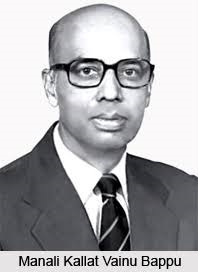
Manali Kallat Vainu Bappu (1927–1982), universally known as M. K. Vainu Bappu, was a pioneering Indian astronomer and the father of modern observational astronomy in India. Internationally renowned for co-discovering the Wilson-Bappu effect and a rare comet, he played a foundational role in establishing world-class domestic astronomical infrastructure, including the modern Indian Institute of Astrophysics (IIA) and the famous Vainu Bappu Observatory at Kavalur. He also served as the President of the International Astronomical Union (IAU).
2. Quick Facts
- Full Name: Manali Kallat Vainu Bappu
- Native Name: மணலி கள்ளத் வைணு பாபு
- Date of Birth: August 10, 1927
- Place of Birth: Madras (now Chennai), Tamil Nadu, India
- Nationality: Indian
- Occupation/Profession: Astronomer and Astrophysicist
- Field of Achievement: Observational Astronomy and Stellar Astrophysics
- Years Active: 1949 – 1982
3. Award Information (Focus: Padma Bhushan)
- Award Name: Padma Bhushan
- Award Category: Civil Honour (Third-highest civilian award in India)
- Award Year: 1981
- Presented By: Government of India (Presented by President Neelam Sanjiva Reddy)
- Date of Ceremony: 1981 (Rashtrapati Bhavan, New Delhi)
- Citation/Official Reason: For exceptional and distinguished services to science, engineering, and the advancement of astronomical research in India.
- Previous Recipients: Notable scientists, academicians, and public figures from preceding years.
- Next Recipients: Notable scientists and leaders from subsequent years.
4. Why They Received the Award
Dr. Vainu Bappu was honored with the Padma Bhushan for his lifetime of extraordinary scientific achievements—most notably the discovery of the Wilson-Bappu effect—and for single-handedly spearheading the creation of indigenous, world-class observational facilities that placed India on the global astronomical map.
5. Early Life
Born in Madras into an aristocratic family originating from Thalassery, Kerala, Vainu Bappu was immersed in science from birth; his father, Manali Kukuzhi Bappu, worked as an astronomer at the Nizamiah Observatory in Hyderabad. Growing up surrounded by celestial charts, telescopes, and scientific discussions, young Vainu developed a profound fascination with the night sky early in life, spending countless hours observing stars and tracking celestial phenomena.
6. Education
- Schooling & Undergraduate: Completed his early schooling and later earned his Bachelor’s and Master’s degrees in Physics and Astrophysics from Madras University.
- Doctoral Studies: Received a Government of Hyderabad scholarship in 1949 to attend the Harvard Graduate School of Astronomy in the USA, where he completed his Ph.D. under legendary astronomers in record time.
7. Career Journey
- Early Discoveries & Post-Doc: Began his meteoric rise while at Harvard by discovering a comet. Returned to India in 1953 to serve as the chief astronomer at the Uttar Pradesh State Observatory (UPSO) in Nainital, selecting Manora Peak as its site.
- Kodaikanal Observatory Director: Appointed Director of the Kodaikanal Observatory in 1960, where he modernized facilities and pushed for complete institutional autonomy.
- Founder of IIA: Successfully transitioned Kodaikanal into the autonomous Indian Institute of Astrophysics (IIA) in 1971 and built the premier optical observatory at Kavalur (now named the Vainu Bappu Observatory).
8. Major Achievements
- The Bappu-Bok-Newkirk Comet: Discovered a bright comet in July 1949 during a routine sky observation at Harvard, officially named C/1949N1 (the only comet with an Indian co-discoverer’s name attached to it).
- The Wilson-Bappu Effect: Co-discovered a monumental astrophysical correlation in 1957 with American astronomer Olin Chaddock Wilson, linking the width of calcium emission lines to absolute stellar luminosity, which revolutionized stellar physics research.
- Building Indigenous Telescopes: Designed and constructed advanced 1-meter and 2.3-meter optical telescopes entirely within India, bypassing heavy foreign dependence.
9. Contribution to the Nation
Dr. Bappu rescued Indian astronomy from a reliance on colonial-era infrastructure and foreign data. By building cutting-edge domestic observatories (such as those in Kavalur and Kodaikanal) and establishing the Indian Institute of Astrophysics, he ensured that Indian scientists could conduct frontline global research on home soil. He also represented India globally, culminating in his election as President of the International Astronomical Union (IAU) in 1979.
10. Other Awards and Honours
- Donohoe Comet Medal (1949) – Astronomical Society of the Pacific
- Shanti Swarup Bhatnagar Prize for Science and Technology (1970) – Highest science award in India
- Padma Bhushan (1981) – Government of India
- President of the International Astronomical Union (1979–1982)
- Honorary Foreign Fellow / Member – American Astronomical Society and Belgium Academy of Sciences
11. Legacy and Influence
Dr. Bappu’s legacy is etched across the night sky and the landscape of Indian science. The 2.3-meter telescope at the Kavalur Observatory—the largest in Asia for many years—was renamed the Vainu Bappu Telescope in his honor. The Professor M.K. Vainu Bappu Gold Medal is awarded internationally by the Astronomical Society of India to recognize exceptional young astrophysical researchers.
12. Interesting Facts
- Record-Breaking Comet Discovery: He spotted his famous comet just two months after arriving at Harvard for his doctoral studies. Calculations revealed its massive orbit means it will not return for another 60,000 years.
- Botanical Enthusiast: Beyond equations and mirrors, Bappu had a deep love for nature and personally designed the lush, manicured gardens surrounding the Indian Institute of Astrophysics campus in Bangalore and the Kavalur observatory.
- Sudden Loss: He tragically passed away unexpectedly at the age of 55 in Munich, Germany, while attending an international scientific meeting in 1982.
13. Quotes
“An observatory is not just a collection of glass and steel; it is a window through which a nation learns to look at its place in the grand design of the cosmos.”
14. Timeline
- 1927: Born on August 10 in Madras, India
- 1949: Discovers the Bappu-Bok-Newkirk comet; moves to Harvard University for his Ph.D.
- 1957: Jointly discovers the revolutionary Wilson-Bappu effect with Olin C. Wilson
- 1960: Takes over as Director of the Kodaikanal Observatory
- 1970: Awarded the Shanti Swarup Bhatnagar Prize
- 1971: Establishes the autonomous Indian Institute of Astrophysics (IIA)
- 1979: Elected President of the International Astronomical Union (IAU)
- 1981: Conferred the Padma Bhushan by the Government of India
- 1982: Passes away on August 19 in Munich, Germany
15. References
- Wikipedia contributors. Vainu Bappu. Wikipedia, The Free Encyclopedia.
- Indian Institute of Astrophysics (IIA) Archives – Vainu Bappu, the Versatile Astronomer (1927–1982).
- Shanti Swarup Bhatnagar Prize Official Portal – Dr. Bappu Manali Kallat Vainu Profile.
- Astronomical Society of India – Professor M.K. Vainu Bappu Gold Medal Archives.
16. Related Personalities
- Olin Chaddock Wilson – American astronomer and co-discoverer of the Wilson-Bappu effect.
- Bart Bok – Dutch-American astronomer and professor who supervised Bappu at Harvard.
- Subrahmanyan Chandrasekhar – Nobel laureate and astrophysicist who was a close contemporary and supporter of Indian astronomical advancements.
17. Frequently Asked Questions (FAQ)
Q: Who was Vainu Bappu?
A: M. K. Vainu Bappu was India’s foremost modern observational astronomer, founder of the Indian Institute of Astrophysics, and a former President of the International Astronomical Union.
Q: What is the Wilson-Bappu effect?
A: It is a fundamental astrophysical relationship discovered by Bappu and Olin C. Wilson which proves that the width of calcium emission lines in certain stars directly correlates with their absolute luminosity.
Q: What is the Vainu Bappu Observatory?
A: It is a premier astronomical observatory located in Kavalur, Tamil Nadu, established under Bappu’s vision, housing the massive 2.3-meter optical telescope named after him.
Q: Did Vainu Bappu receive national honors?
A: Yes, he received the Shanti Swarup Bhatnagar Prize in 1970 and the Padma Bhushan in 1981.
About the Author