
1. Introduction
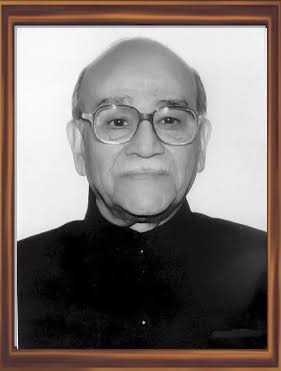
Khusro Faramurz Rustamji, universally known as K. F. Rustamji (22 May 1916 – 23 March 2003), was one of modern India’s most legendary police officers, security strategists, and human rights advocates. As the founding Director General of the Border Security Force (BSF) and the only police officer in independent India to be honored with the Padma Vibhushan, Rustamji fundamentally shaped the nation’s internal security architecture, border defense, and judicial human rights.
2. Quick Facts
- Full Name: Khusro Faramurz Rustamji
- Native Name: खुसरो फरामुरज रुस्तमजी
- Date of Birth: 22 May 1916
- Place of Birth: Kamptee, near Nagpur, British India
- Nationality: Indian
- Occupation / Profession: Police Officer, Public Administrator, Author, and Security Expert
- Field of Achievement: National Security, Border Management, Police Reforms, and Public Interest Litigation
- Years Active: 1936 – 1983
3. Award Information
- Award Name: Padma Vibhushan
- Award Category: Civil Honour (Second-highest civilian award in India)
- Award Year: 1991
- Presented By: Government of India
- Date of Ceremony: Official Investiture Ceremony held in 1991
- Citation / Official Reason: Recognized for his exceptional and distinguished services to the nation, covering multifarious achievements in national security, police modernization, and pioneering public interest jurisprudence.
4. Why He Received the Award
K. F. Rustamji received the Padma Vibhushan for a lifetime of extraordinary contributions that safeguarded India’s sovereignty and protected civil liberties. From successfully raising the BSF and steering it through the 1971 Bangladesh Liberation War to sparking India’s first Public Interest Litigation (PIL) that freed tens of thousands of languishing undertrial prisoners, his work left an institutional legacy unmatched in the annals of Indian public service.
5. Early Life
Born into a Parsi family in Kamptee near Nagpur, Rustamji spent his formative years deeply integrated into the cultural and social fabric of central India. Raised with a strong emphasis on discipline, public service, and academic excellence, he developed a profound affinity for nature, wildlife, and writing early in life—passions he maintained throughout his rigorous administrative career.
6. Education
- Schooling: Completed his primary and secondary schooling at St. Francis de Sales School, Nagpur.
- Higher Education: Attended Science College, Nagpur, securing top academic honors.
- Post-Graduation: Earned a Master of Science (M.Sc.) degree in Zoology in 1936 from Nagpur University, standing first in order of merit.
- Early Academic Tenure: Briefly worked as a Demonstrator (Assistant Professor) in Zoology at Science College from 1936 to 1938.
7. Career Journey
- Imperial Police (1938): Cleared the competitive examination and joined the elite Indian (Imperial) Police service in the Central Provinces and Berar cadre.
- Wartime & Riot Control (1942): Displayed immense personal bravery managing violent Quit India Movement disturbances in Nagpur, earning the Indian Police Medal.
- State Integration & Police Action (1947–1949): Oversaw the peaceful integration of princely states in eastern Madhya Pradesh and actively participated in the Hyderabad Police Action.
- Chief Security Officer to PM Nehru (1952–1958): Handled the sensitive security details of India’s first Prime Minister, accompanying him on numerous international and domestic journeys.
- IG of Madhya Pradesh (1958–1965): Cleaned up notorious dacoit gangs across the Chambal ravines and modernized state police operations.
- Founder DG of the BSF (1965–1974): Appointed as the first Director General of the newly formed Border Security Force, expanding it into a formidable frontline defense organization.
- Special Secretary, Home Ministry (1974–): Structured central police organizations, initiated the formation of the Indian Coast Guard, and helped lay the framework for the National Police Commission.
8. Major Achievements
- Raised the BSF: Handpicked by the government in 1965 to establish a unified border-guarding force, which played a decisive role alongside the Indian Army in the 1971 Indo-Pak War and the liberation of Bangladesh.
- Catalyzed the First PIL: His investigative articles in The Indian Express regarding neglected undertrial prisoners in Bihar jails triggered Hussainara Khatoon vs. State of Bihar, leading to the release of over 40,000 undertrials nationwide.
- Architect of Maritime Security: Headed the high-level committee that conceptualized and recommended the creation of the Indian Coast Guard.
- Dacoit Eradication: Successfully dismantled notorious armed criminal syndicates terrorizing central India during his tenure in Madhya Pradesh.
9. Contribution to the Nation
Rustamji fundamentally redefined internal security and border management in post-independence India. By building the BSF from scratch, he plugged vulnerable international borders against infiltration and external aggression. Beyond policing, his deep empathy for the marginalized led him to champion prison reforms and human rights, permanently altering India’s legal landscape by introducing the mechanism of Public Interest Litigation.
10. Other Awards and Honours
- Indian Police Medal (1942) for gallantry during Nagpur civil unrest.
- Police Medal for Distinguished Services (1958).
- Padma Bhushan (1972) by the Government of India.
- Padma Vibhushan (1991) — making him the sole police officer in Indian history to receive the country’s second-highest civilian honor.
11. Legacy and Influence
K. F. Rustamji remains the gold standard of Indian policing—an intellectual officer who combined tactical brilliance with profound social consciousness. Institutions like the BSF, the Indian Coast Guard, and the National Police Commission stand as functional monuments to his administrative genius. His extensive diaries and analytical writings continue to serve as essential reading for security analysts, historians, and law enforcement personnel.
12. Interesting Facts
- The Unique Funeral: Though born a devout Parsi, Rustamji requested that upon his passing, his last rites be performed according to Hindu cremation rituals, reflecting his deep integration with and affection for the land and people of India.
- Nehru’s Shadow: As Prime Minister Jawaharlal Nehru’s Chief Security Officer, Rustamji traveled to 22 countries with him and penned vivid insider accounts of those years in his book I Was Nehru’s Shadow.
- Literary Mind: He was a prolific writer whose journalistic exposés on prison conditions directly gave birth to modern Indian public interest litigation.
13. Quotes
“The first process of Government of a newly born nation was to commence not in a man-made, gaily decorated and illuminated building… but in a place which had for its canopy the sky, and for its decoration the trees.” (Reflecting on witnessing the historic swearing-in ceremony of the Bangladesh government during the 1971 war)
14. Timeline
- 1916: Born on May 22 in Kamptee, Central Provinces, British India.
- 1938: Joined the Imperial Police service.
- 1952: Appointed Chief Security Officer to Prime Minister Jawaharlal Nehru.
- 1965: Appointed as the founding Director General of the newly raised Border Security Force (BSF).
- 1971: Deployed the BSF strategically during the Indo-Pak War and the liberation of Bangladesh.
- 1972: Awarded the Padma Bhushan.
- 1978: Exposed abysmal prison conditions in Bihar, sparking India’s first PIL movement.
- 1991: Conferred the Padma Vibhushan by the Government of India.
- 2003: Passed away on March 23 in Mumbai at the age of 86.
15. References
- Wikipedia contributors. “Khusro Faramurz Rustamji.” Wikipedia, The Free Encyclopedia.
- Rustamji, K. F. I Was Nehru’s Shadow & The British, The Bandits and The Bordermen.
- Ministry of Home Affairs, Government of India — Padma Awards Directory.
- Archives of The Indian Express & Salute Magazine.
16. Related Personalities
- Jawaharlal Nehru: India’s first Prime Minister, whom Rustamji served closely as chief security officer.
- Lal Bahadur Shastri: Prime Minister who authorized the creation of the BSF under Rustamji’s leadership.
- Indira Gandhi: Prime Minister during the 1971 war who lauded Rustamji and the BSF for their critical defense performance.
17. Frequently Asked Questions (FAQ)
Q: Who was K. F. Rustamji?
A: K. F. Rustamji was a legendary Indian police officer, the founding Director General of the Border Security Force (BSF), and a pioneering advocate for human rights and police reforms.
Q: What is K. F. Rustamji best known for?
A: He is best known for raising and leading the BSF during the 1971 war and for writing the journalistic articles that prompted India’s first Public Interest Litigation (PIL), freeing thousands of undertrials.
Q: Did K. F. Rustamji receive any high civilian honors?
A: Yes, he is famously the only police officer in independent India to have been awarded the Padma Vibhushan (1991), alongside the Padma Bhushan (1972).
About the Author