
1. Introduction
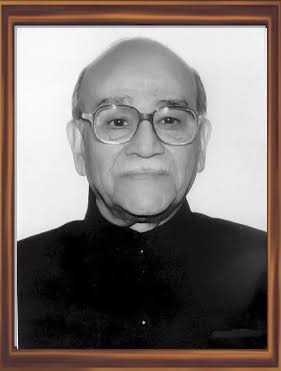
Adya Rangacharya (26 September 1904 – 17 October 1984), widely known by his pen name Sriranga (and born R. V. Jagirdar), was a pioneering Indian playwright, novelist, actor, director, and scholar. He was a monumental force in modern Kannada theatre and literature, introducing social realism, sharp satire, and structural innovation to the Indian stage.
2. Quick Facts
- Full Name: Adya Rangacharya (born R. V. Jagirdar)
- Native Name: ಆದ್ಯ ರಂಗಾಚಾರ್ಯ / ಶ್ರೀರಂಗ
- Date of Birth: 26 September 1904
- Place of Birth: Agarkhed, Bijapur district, Karnataka, India
- Nationality: Indian
- Occupation / Profession: Playwright, Novelist, Essayist, Actor, Scholar, and Professor
- Field of Achievement: Kannada and Indian Literature, Theatre Arts, and Dramaturgy
- Years Active: 1927 – 1984
3. Award Information
- Award Name: Padma Bhushan
- Award Category: Civil Honour (Third-highest civilian award in India)
- Award Year: 1972
- Presented By: Government of India
- Date of Ceremony: 1972 (Official Investiture)
- Citation / Official Reason: Recognized for his exceptional contributions and distinguished service to literature and education.
- Previous Recipients (optional): Prominent national and international intellectuals, artists, and statesmen.
- Next Recipients: Subsequent cohorts of distinguished Indian achievers in literature and public service.
(Note: He also received the Sangeet Natak Akademi Award in 1963, the Sangeet Natak Akademi Fellowship in 1967, and the Sahitya Akademi Award in 1971).
4. Why He Received the Award
Adya Rangacharya received the Padma Bhushan for his lifetime of dedicated work enriching Indian literature and education, particularly through his revolutionary contributions to modern drama and classical theatrical scholarship. His critical texts, extensive body of plays written under the pen name Sriranga, and deep academic exploration of Sanskrit aesthetics established him as a premier intellectual titan of twentieth-century India.
5. Early Life
Born into the Adya Jahagirdar family in Agarkhed (North Karnataka), Rangacharya grew up immersed in traditional learning, developing an early and profound command of Sanskrit and local cultural traditions. His formative years in northern Karnataka brought him into close contact with traditional rural folk theatre as well as professional Marathi drama, sowing the seeds of his lifelong passion for the stage.
6. Education
- Schooling: Completed local schooling in Gadag and Dharwad, regions steeped in rich Kannada literary traditions.
- Higher Education: Studied at universities in Bombay, followed by advanced studies at the University of London, where he absorbed Western theatrical forms, including the works of Bernard Shaw and Shakespeare.
7. Career Journey
- Teaching & Early Directing (1927–1930): Began his career as a schoolteacher in Dharwad, during which he actively organized and directed amateur theatre groups.
- Academic Tenure: Served as a professor at Karnataka College in Dharwad, molding generations of students in literature and critical thinking.
- Prolific Playwriting & Directing: Wrote under the pen name Sriranga, penning dozens of full-length and one-act plays that transformed the thematic scope of Kannada drama.
- Institutional Leadership: Served as the first Director of the Kalidasa Akademi at Ujjain.
8. Major Achievements
- Authored an immense theatrical corpus comprising 47 full-length plays, 68 one-act plays, and 12 novels.
- Published critical masterworks, including Kalidasa (which won the Sahitya Akademi Award).
- Produced a definitive English translation and critical interpretation of Bharata Muni’s ancient text, the Natyashastra.
- Pioneered social realism and intellectual satire in Indian regional theatre, tackling heavy social and political contradictions.
9. Contribution to the Nation
Rangacharya modernized Indian theatre by shifting its focus away from traditional mythological repetition toward contemporary socio-political realities, human ethics, and psychological depth. By translating and interpreting classical Sanskrit texts like the Natyashastra and works on Kalidasa for modern audiences, he built an essential bridge linking India’s ancient aesthetic heritage with modern dramatic expression.
10. Other Awards and Honours
- Sangeet Natak Akademi Award (1963) for direction and contribution to theatre.
- Sangeet Natak Akademi Fellowship (1967) — the highest honor conferred by the Akademi.
- Sahitya Akademi Award (1971) for his literary criticism Kalidasa.
- Honorary Doctorates from Mysore University and Karnataka University.
11. Legacy and Influence
Revered as the “Ibsen of Kannada drama,” Sriranga fundamentally altered how Indian playwrights viewed the stage—treating it not merely as a medium for entertainment, but as a dynamic platform for intellectual debate and social reform. His legacy is carried forward by subsequent generations of writers, actors, and through institutions that teach classical Indian dramaturgy.
12. Interesting Facts
- Dual Identity: Though his legal name was R. V. Jagirdar (and he used it until 1948), he wrote almost all of his celebrated literary and theatrical works under the pen name Sriranga.
- Versatile Scholar: In addition to writing plays, novels, and critical essays, he was an accomplished actor and director who brought his own scripts to life on stage.
- Global Perspective: His academic exposure to London University allowed him to seamlessly blend Western dramatic techniques (such as tight plotting and sharp dialogue) with traditional Indian performance philosophies.
13. Quotes
“Theatre is not just a mirror of society; it is an inquiry into the human condition, a space where conventions are questioned and truths are uncovered.” (Reflecting his philosophy on drama as a tool for social awareness)
14. Timeline
- 1904: Born on September 26 in Agarkhed, Bombay Presidency (now Karnataka).
- 1927: Began his professional career as a teacher and director in Dharwad.
- 1963: Awarded the Sangeet Natak Akademi Award.
- 1967: Conferred the Sangeet Natak Akademi Fellowship.
- 1971: Won the Sahitya Akademi Award for Kalidasa.
- 1972: Awarded the Padma Bhushan by the Government of India.
- 1984: Passed away on October 17 in Bangalore, Karnataka.
15. References
- Wikipedia contributors. “Adya Rangacharya.” Wikipedia, The Free Encyclopedia.
- Grokipedia. “Adya Rangacharya – Biographical Overview.”
- Ministry of Home Affairs, Government of India. Padma Awards Directory.
- Sriranga (Adya Rangacharya), Opening Scene: Early Memoirs of a Dramatist and a Play (Penguin Books).
16. Related Personalities
- Bharata Muni: Ancient Indian sage and author of the Natyashastra, whose work Rangacharya translated and deeply analyzed.
- Kalidasa: Classical Sanskrit poet and dramatist, whose life and writings were the subject of Rangacharya’s Sahitya Akademi-winning critique.
- Shashi Deshpande: Acclaimed Indian novelist and daughter of Adya Rangacharya.
17. Frequently Asked Questions (FAQ)
Q: Who was Adya Rangacharya?
A: Adya Rangacharya was a legendary Indian playwright, scholar, and novelist who wrote extensively in Kannada and English under the pen name Sriranga. He is celebrated as a founding father of modern Indian and Kannada theatre.
Q: What was Adya Rangacharya’s pen name?
A: He primarily used the pen name Sriranga (or Shriranga) for his plays and literary creations.
Q: What are some of his most famous scholarly contributions?
A: He is widely known for his authoritative English translation of the Natyashastra and critical studies such as Kalidasa and Drama in Sanskrit Literature.
Q: Did he receive any major national awards?
A: Yes, he received the Sangeet Natak Akademi Award (1963), the Sangeet Natak Akademi Fellowship (1967), the Sahitya Akademi Award (1971), and the Padma Bhushan (1972).
About the Author